


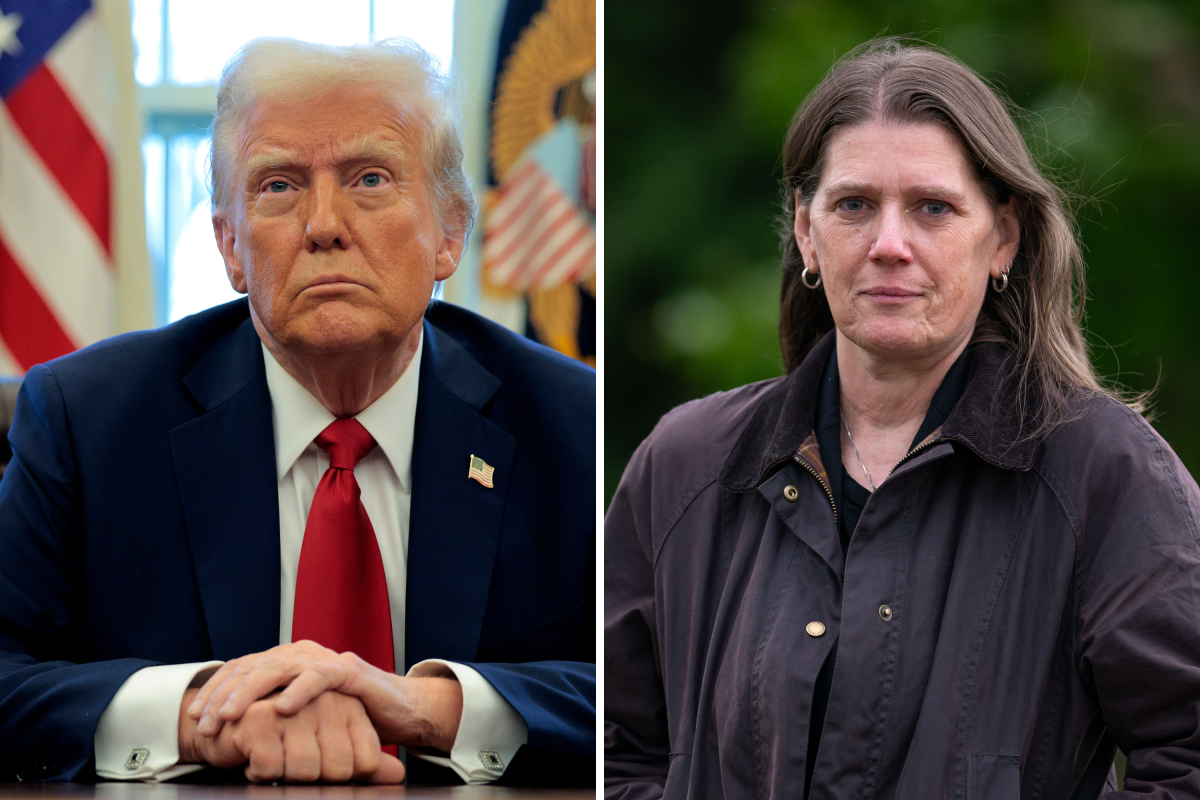
In the high-stakes theater of modern American politics, public interest is routinely captured by grand ideological battles and fierce electoral contests, yet some of the most captivating and telling dramas unfold behind the closed doors of family dynamics. Few familial divides have been as deeply intimate, emotionally taxing, and fiercely contested as the ongoing civil war within the Trump family, a saga that recently reached a quiet, almost anti-climactic resolution. The public announcement of the settlement of a staggering $100 million lawsuit, filed by former President Donald J. Trump against his niece, Mary L. Trump, marks the end of an incredibly bitter chapter in an ongoing public and private feud. For years, observers have watched this deep-seated conflict play out, not just within the solemn halls of justice, but across viral media channels, national bestseller lists, and political commentary platforms. This specific litigation, initiated by Donald Trump in the fall of 2021, accused Mary of orchestrating a malicious and calculated betrayal by leaking highly confidential family tax records to journalists at The New York Times for an explosive exposé on his personal finances. Now, according to joint court records, both sides have quietly agreed to lay down their legal weapons, signaling an end to a dispute that dared to expose the innermost secrets of one of the world’s most polarizing dynasties. This sudden resolution allows both uncle and niece to avoid a grueling, highly publicized trial that would have inevitably dragged decades of deep-seated family grievances, financial maneuverings, and painful emotional dynamics back into the unforgiving glare of the media spotlight. While the legal battle may have officially concluded with a discreet, legally binding agreement, the profound emotional damage of a family fractured by wealth, power, and divergent values remains a poignant reminder of the human cost of political ambition.
To fully understand the gravity of this lawsuit and the emotional weight of its settlement, one must look closely at the unique and painful position Mary Trump occupies within her family. As a trained clinical psychologist, Mary has long possessed a professional diagnostic framework and a deeply personal vantage point from which to analyze her family’s behaviors, a journey heavily influenced by the tragic life of her father, Fred Trump Jr. Fred Jr., Donald’s older brother, was a man who famously struggled to survive under the harsh, competitive expectations of the family patriarch, Fred Trump Sr., ultimately dying of alcohol-related illness at the age of forty-two. Growing up amidst this tragedy, Mary witnessed firsthand the cold, transactional environment that she argues defined the Trump household, where vulnerability was treated as a severe weakness and loyalty was demanded but rarely reciprocated. Her decision to publicly break ranks with her family and criticize her uncle’s presidency was not born out of a simple desire for attention; rather, it was a deeply personal crusade to salvage her father’s memory and speak truth to what she perceived as a highly destructive national force. In her highly acclaimed 2020 memoir, Too Much and Never Enough: How My Family Created the World’s Most Dangerous Man, Mary used both her psychological training and her personal memories to dissect her uncle’s character, painting a portrait of a deeply damaged individual who was utterly incapable of leading the country. By stepping into this role, she became a singular, isolated figure of dissent within a family famous for its insular loyalty, carrying the immense emotional burden of being branded a traitor by her relatives while striving to fulfill what she felt was a vital democratic duty. This emotional burden was compounded by the constant public attacks she faced, yet she remained steadfast, choosing the isolation of truth over the comfort of complicity.
The primary catalyst for this massive legal retaliation was a groundbreaking 2018 investigative report by The New York Times, which fundamentally challenged the central pillar of Donald Trump’s public persona: his identity as a self-made, independent billionaire. The Pulitzer Prize-winning article meticulously detailed how Donald had actually received today’s equivalent of at least $413 million from his father’s real estate empire, much of it allegedly funneled through highly questionable tax-avoidance schemes and outright financial deception. For a man who built his entire political brand, career, and self-worth on the constructed narrative of achieving extraordinary success completely on his own merit, this investigation was an existential threat that stripped away his carefully crafted golden image. Mary Trump was the crucial insider who made this devastating journalistic investigation possible, secretly providing reporters with massive volumes of family financial documents and tax returns she had acquired during an earlier dispute over her grandfather’s estate. In Mary’s mind, releasing these documents was an act of profound civic responsibility, a necessary step to demystify the financial apparatus that had propelled her uncle into the Oval Office. However, for Donald and his legal team, this act of whistleblowing was viewed as a calculated act of institutional sabotage and a blatant violation of a strict confidentiality agreement Mary had signed in 2001. To them, Mary had committed the ultimate sin of familial betrayal, trading sacred family secrets for political leverage and personal notoriety, which sparked a desire for swift legal retribution. This deep sense of betrayal on Donald’s part laid the groundwork for an aggressive legal campaign designed to punish his niece and set an example for anyone else who might consider breaking silence. In their view, family loyalty was absolute, and by crossing that line, Mary had forfeited her right to be treated with any familial leniency.
When Donald Trump launched his $100 million lawsuit in 2021, it was widely interpreted as another classic execution of his long-held legal philosophy: utilizing aggressive, high-cost litigation as a tactical weapon to intimidate and financially exhaust those who dare oppose him. The lawsuit accused Mary, along with The New York Times and three of its investigative reporters, of engaging in an insidious, politically motivated conspiracy to bypass legal agreements and exploit private records for personal profit. Despite the vast resources of the former president, the American legal system did not offer him a complete victory, demonstrating that even the most powerful political figures must operate within constitutional boundaries. In 2023, a New York Supreme Court justice dismissed all claims against the newspaper and its journalists, strongly affirming the First Amendment rights of the press and ordering Donald to personally pay the significant legal fees accumulated by the publication. However, the court did not extend this same legal shield to Mary Trump; in 2024, an appellate court ruled that Donald’s claim for breach of contract against his niece possessed a “substantial” legal basis, allowing the case to move forward toward a potentially devastating trial. This ruling left Mary in an incredibly perilous and stressful position, facing the prospect of being dragged through a grueling trial against an uncle with virtually unlimited financial backing and a public forum to attack her character daily. The sheer psychological pressure of defending oneself against a $100 million claim from a former United States president—vitalized by a loyal base of supporters—represents a level of stress and vulnerability that few private citizens will ever have to endure. It highlighted the sharp asymmetry of power that exists in legal battles of this scale, forcing Mary to constantly balance her personal convictions against the very real threat of financial ruin.
The sudden announcement of the settlement, communicated through a brief joint letter to the presiding court, brought an abrupt and quiet end to this high-stakes family drama, proving once again that even the most venomous public feuds can be concluded with a simple signature. In the formal, dry language typical of corporate legal filings, attorneys representing both Trumps noted that their clients were pleased to have reached an agreement and anticipated a formal dismissal of the lawsuit with prejudice within the coming weeks. The exact details, financial terms, and underlying conditions of this resolution were kept strictly confidential, leaving the public and political analysts to wonder if any monetary exchanges occurred, or if Mary was forced to agree to new nondisclosure parameters. For Donald Trump, settling this case represents a calculated, pragmatic decision to clear his busy legal schedule and avoid the highly risky process of personal depositions during an intense presidential campaign, where any newly revealed financial details could be catastrophic for his political aspirations. For Mary, the settlement likely brings an overwhelming sense of relief and liberation, finally lifting the heavy sword of Damocles that had hung over her head for years and threatened her financial security. This compromise shows that in the world of high-stakes litigation, practical realities often override personal animosity, allowing both sides to prioritize their immediate futures over the uncertain outcome of a public trial. By quietly resolving their differences, they chose the certainty of a confidential peace over the prolonged agony of a highly publicized legal spectacle. Ultimately, this legal compromise demonstrates that while hatred can fuel a lawsuit for years, the sheer exhaustiveness of perpetual battle eventually forces even the most stubborn adversaries to seek a quiet exit.
While the legal files may be closed and archived, the psychological and political legacy of the Trump family feud will undoubtedly reverberate for generations to come, reminding us that some wounds are far too deep for any court to heal. Mary Trump has made it abundantly clear that this confidential settlement will not silence her voice, nor will it lessen her relentless opposition to her uncle’s political movement and public impact. Through her immensely popular Substack newsletter, insightful podcast, and frequent media appearances, she continues to serve as an articulate and devastating critic of Donald Trump, using her professional background as a psychologist to dissect what she describes as his dangerous psychological patterns and authoritarian tendencies. This ongoing conflict serves as a modern-day Shakespearean tragedy, illustrating how the accumulation of massive wealth and the pursuit of ultimate power can distort familial bonds, leaving a legacy of alienation and bitterness in their wake. The story of Donald and Mary Trump is a powerful testament to the reality that families are the primary crucibles of human identity, and when a family is thrust into the global spotlight, their private dysfunctions can shape the course of a nation’s history. As Donald Trump continues his polarizing journey through American political life, his niece’s public testimonies and psychological insights will remain a permanent, deeply personal asterisk alongside his legacy. Ultimately, this settled lawsuit stands as a somber monument to a broken family dynamic, proving that while courts can resolve legal battles, they can never fully reconstruct the shattered trust of those who share reference to the same blood. The quiet pact they signed may have ended the litigation, but it cannot dissolve the decades of grief, rivalry, and divergent paths that have forever defined their relationship under the unforgiving gaze of history.