


In a democratic society, the delicate tapestry of multicultural coexistence relies heavily on the belief that those who wear the badge of law enforcement are impartial guardians of the peace. In the United Kingdom, however, this essential covenant has been severely shaken by a deeply unsettling controversy centering on the National Association of Muslim Police (NAMP). A policy paper championed by the association, titled “From Past Prejudices to Present Policies: Confronting Anti-Muslim Hatred and Promoting Human Rights,” has ignited a fierce national debate, drawing intense backlash from civil rights watchdogs, security experts, and community leaders. What was originally intended to be a document advocating for civil rights and the protection of Muslim officers has instead been accused of harboring antisemitic tropes, echoing extremist rhetoric, and undermining the very foundation of public confidence in the police. As British society already grapples with heightened tensions over foreign conflicts and domestic safety, this revelation has shifted the spotlight toward systemic institutional vulnerabilities, forcing citizens to ask uncomfortable questions about the ideological influences currently shaping British law enforcement.
The pain at the heart of this controversy lies in the paper’s handling of the traumatic events of October 7, 2023, where the raw human cost of terrorism was dismissed with alarming skepticism. Written by former NAMP Vice President Khaldoun Kabbani, the document characterizes Zionism as a colonialist and narrow nationalist viewpoint that breeds Islamophobia, attempting to detach it completely from the compassionate tenets of the Jewish faith. More distressingly for the families of those lost or taken hostage, the paper attempts to cast doubt on the well-documented atrocities committed by Hamas, dismissing reports of violence, assaults, and decapitations as unverified Western media sensationalism designed to foster hostility toward Muslims. By minimizing these horrors, the document inflicts fresh emotional wounds on a Jewish community still in deep mourning. This historical revisionism stands in stark contrast to the grueling, heartbreaking work of forensic pathologists like Dr. Chen Kugel at Israel’s National Center for Forensic Medicine, who documented the charred, headless remains of victims—including infants—and official United Nations data confirming that dozens of children were among those brutally killed.
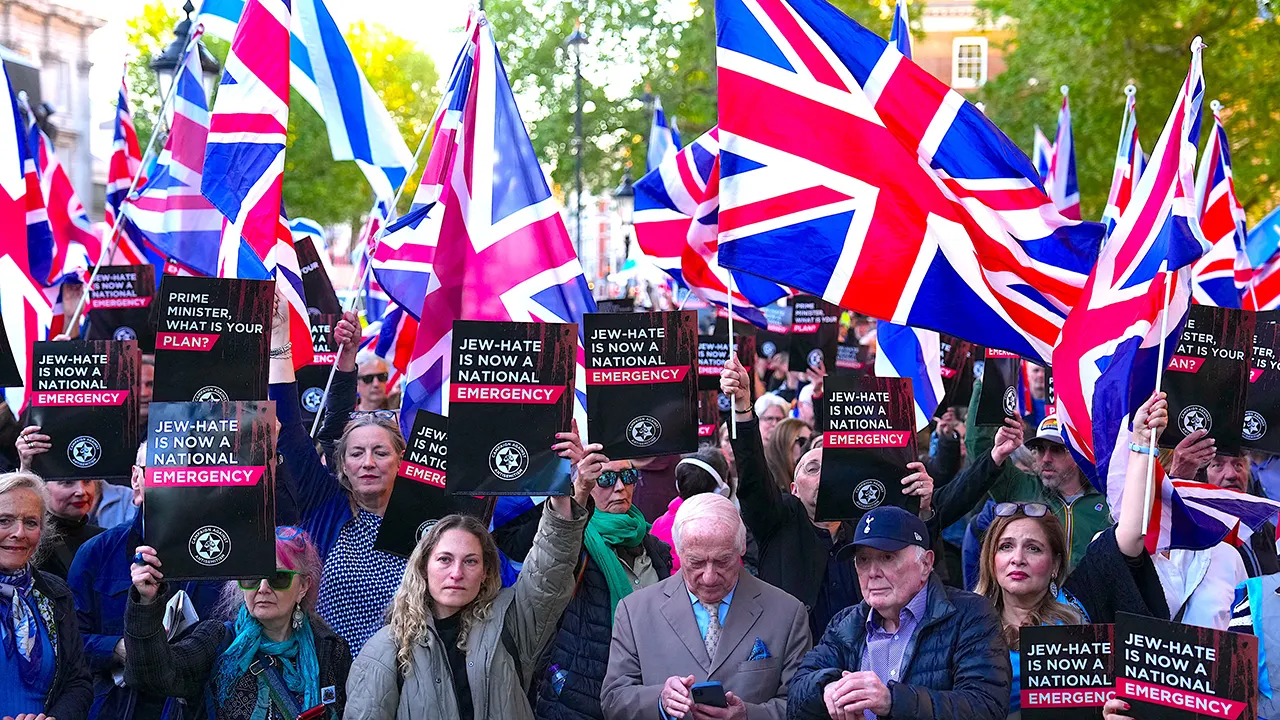
For security analysts and anti-extremism advocacy groups, the contents of the NAMP paper are not mere errors in judgment, but evidence of a much deeper, more insidious subversion of a vital public institution. Stephen Silverman, the Director of Investigations and Enforcement for the Campaign Against Antisemitism, voiced the fears of many when he publicly warned that a major, national policing association appears to have been infiltrated or controlled by Islamists. He demanded that those responsible for drafting and publishing what he termed an “extremist screed” be immediately suspended, investigated by internal professional standards departments, and permanently dismissed from duty. Andrew Fox, a senior associate fellow at the Henry Jackson Society, echoed this sense of urgency, criticizing the paper for propagating “antisemitic lies and blood libels” disguised as administrative policy. For British Jews, who are currently living through a terrifying surge in street-level harassment, vandalism, and hate crimes, the realization that officers within their own police forces are promoting narratives that delegitimize their trauma destroys their sense of security, leaving them feeling profoundly abandoned by the state.
This scandal does not exist in isolation; it unfolds against a broader backdrop of growing public cynicism regarding what many citizens describe as “two-tier policing.” Across the United Kingdom, there is a burgeoning perception that law enforcement operates under double standards—treating patriotic or traditional British demonstrations with a heavy, uncompromising hand while adopting a passive, overly cautious approach toward aggressive, weekly anti-Israel protests. When an official body representing Muslim police officers is found to be minimizing acts of terrorism, castigating the military actions of the world’s only Jewish state, and scrubbing its website of the offending materials once discovered, it validates the worst fears of a skeptical public. The primary duty of a police officer is to treat every citizen with equal dignity, regardless of race, creed, or political affiliation. However, when the internal networks meant to support these officers become vehicles for divisive geopolitical agendas, the uniform itself is compromised, transforming trusted public servants into symbols of ideological division.
Perhaps the most discouraging aspect of this unfolding crisis is the wall of silence and lack of accountability from those in power. When pressed for answers regarding whether they were concerned by the NAMP paper, whether disciplinary actions would be taken, or how they planned to restore public trust, the National Police Chiefs’ Council, the British government, and NAMP itself offered no response. This collective evasiveness has left a frustrating vacuum, sending a troubling message to vulnerable communities that their fears and grievances are being swept under the rug. To many observers, this administrative silence suggests a paralyzing fear of political fallout, where senior police leaders and government bureaucrats choose to avoid confronting extremism within their own ranks rather than face accusations of cultural insensitivity. By choosing self-preservation over transparency, these legacy institutions are actively deepening the divide, leaving the public to wonder if their leaders possess the moral courage required to uphold the rule of law.
Ultimately, this crisis forces a necessary and overdue national conversation about the role of identity-based organizations within public services. While fostering diversity and ensuring that minority officers have a voice is a noble and necessary goal, analysts like Andrew Fox argue that self-segregating internal organizations can be counterproductive, fostering a tribal mentality that erodes the sacred neutrality of the badge. Moving forward, the challenge for British society is to construct a policing model where inclusivity does not come at the cost of impartiality, and where empathy for one marginalized group is never built upon the demonization or erasure of another. True harmony in a diverse society cannot be achieved through protected political enclaves pushing partisan narratives, but through a unified commitment to a single, unyielding standard of justice. Only by dismantling ideological bias within its ranks can British law enforcement hope to rebuild the shattered trust of its citizens, ensuring that every individual, regardless of their background, can look to the police and see an unbiased protector of their fundamental human rights.