


The sun-drenched shores of Spain’s Canary Islands, long celebrated as a pristine paradise for international holidaymakers, have quietly transformed into one of the most fraught frontline theaters of the global migration crisis, serving as a desperate harbor of hope for thousands seeking passage into the European Union. It was onto this emotionally charged landscape that Pope Leo XIV stepped on Thursday, arriving in the Atlantic archipelago just days after delivering a sharp, direct critique of European immigration policies before Spain’s Parliament in Madrid. This apostolic journey, which carries profound symbolic weight, is designed to culminate in an intimate and deeply emotional meeting with approximately one thousand migrants on Friday, putting a human face on a complex geopolitical struggle that has fractured the continent. By choosing to visit the Canary Islands, the pontiff has cast a stark spotlight on a region that represents both the zenith of human desperation and the terminal of a perilous maritime route. Spain, which boasts the sixth-largest Christian population in Europe, finds itself at a historical crossroads, caught between its deep religious heritage of hospitality and the pragmatic, often harsh realities of securing its borders. The Pope’s physical presence on Gran Canaria, the heart of the island chain, serves as a deliberate pastoral intervention, reminding both political leaders and ordinary citizens that behind the dense legislative debates and sterile statistics lie real human lives, hanging in a delicate balance. As he walked among the community, his journey sought to bridge the immense chasm between the cold, policy-driven discourse of parliamentary chambers and the immediate, breathing reality of those who have risked everything on the open sea, searching merely for a chance to survive. This visit acts as a bridge of empathy, attempting to touch the hearts of those who view migration as a threat, showing instead that the movement of people is first and foremost a human story of survival, courage, and the pursuit of a dignified existence free from despair.
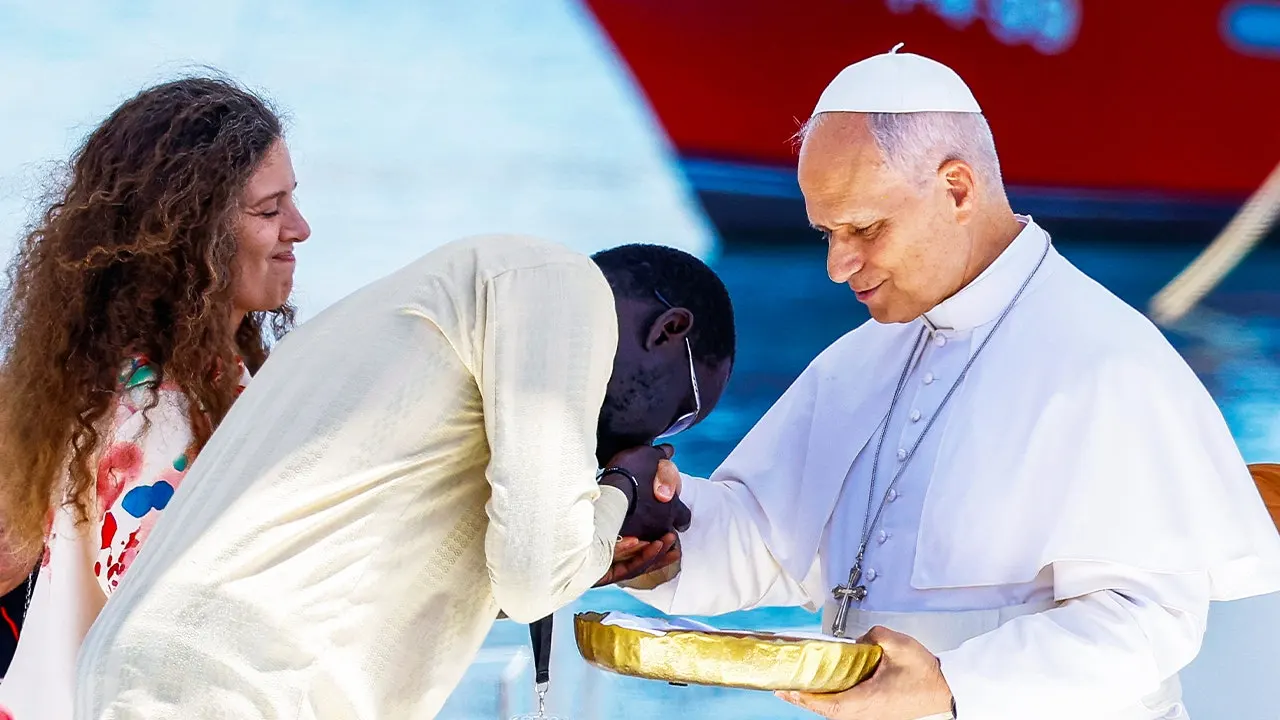
The physical and emotional centerpiece of the pontiff’s visit unfolded at the Port of Arguineguin, a location that has become etched into the collective conscience of the region as a symbol of systemic failure and human suffering. It was here, during the height of the COVID-19 pandemic in 2020, that more than a thousand migrants were left stranded in squalid, overcrowded conditions with little to no shelter, leading humanitarian and relief organizations to dub the concrete pier the “Dock of Shame.” Standing on this very dock, Pope Leo XIV chose to address the gathering not with the detached language of a head of state, but with the profound empathy of a spiritual father, bowing before the assembled migrants to honor their inherent dignity. In a moving address that echoed across the harbor, he insisted that these individuals are far more than just bureaucratic files, numbers, or legal anomalies; they are human beings with rich personal histories, families left behind, and legitimate dreams that no government or policy has the right to despise or invalidate. The Pope led a solemn moment of silence for the staggering number of souls lost to the Atlantic’s treacherous depths—a toll that exceeded three thousand lives in 2025 alone, according to estimates by the non-governmental organization Caminando Fronteras. By condemning the global community’s dangerous tendency to grow numb to these tragedies, the Pope issued a powerful warning against the normalization of mass death at sea, crying out that we cannot grow accustomed to counting the dead. He passionately advocated for the immediate creation of legal and safe immigration pathways worldwide, arguing that the absence of structured, humanitarian channels directly forces vulnerable people into the hands of human traffickers and onto unstable, overcrowded vessels that too often become modern-day coffins. This call for reform challenges international leaders to establish systems that protect the sanctity of life above geopolitical convenience.
The unimaginable human scale of this maritime crisis is perhaps best understood through the eyes of those who spend their lives attempting to pull survivors from the unforgiving water. Among those who spoke during the Pope’s events was Tito Villarmea, a veteran boat captain who has spent eighteen years working alongside various charities and non-governmental organizations to rescue stranded travelers from the volatile waters of the Atlantic. Speaking to reporters, Villarmea shared the devastating psychological burden of his calling, revealing that he has personally assisted in saving over twenty thousand lives throughout his career—a staggering figure that he confessed makes him feel physically ill to contemplate and is impossible to forget. The captain’s poignant admission that he wishes such rescue missions were never necessary highlights the tragic reality of the Canary route, located less than one hundred miles off the coast of West Africa, where a lack of safe passages turns acts of basic human decency into endless triage. This crisis has intensified dramatically over the past decade; the archipelago has witnessed an unprecedented surge in arrivals, escalating from fewer than one thousand irregular migrants in 2015 to a record-breaking 46,843 individuals in 2024. These numbers represent a massive, compounding humanitarian challenge for local authorities and rescue teams who are left to manage the fallout of deep-seated global inequalities. Through the shared testimonies of rescuers like Villarmea and the migrants themselves, the pontiff’s visit lay bare the raw, unfiltered trauma of a journey born of absolute desperation, demonstrating how the turbulent ocean currents have become a tragic mirror reflecting the wider world’s moral failures. It shows that behind every statistic of arrival is a terrifying saga of survival, where the margin between life and death is often as thin as the rotting wood of a makeshift boat.
In response to this escalating humanitarian emergency, Spain’s political landscape has become deeply divided, reflecting a broader ideological civil war occurring across the European continent regarding national identity, security, and humanitarian duty. Under the leadership of Prime Minister Pedro Sanchez, the country’s socialist government has actively sought to pioneer a more compassionate, integration-focused approach to the crisis, culminating in an ambitious legislative plan approved in April to grant legal status to half a million undocumented migrants living within its borders. This sweeping reform aims to lift hundreds of thousands of marginalized people out of the shadows of the informal economy, providing them with legal protections, access to social services, and an opportunity to fully integrate into Spanish society. This progressive policy alignment mirrors the moral imperatives championed by Pope Leo, who has consistently used his global platform to demand that societies treat foreigners with kindness, particularly as he marked the close of the Catholic Holy Year. By advocating for the systemic regularization of undocumented populations, the Spanish government has attempted to offer a constructive counter-narrative to the rising tide of anti-immigrant sentiment sweeping through Europe. However, this compassionate framework exists in constant tension with the logistical realities of managing a sudden influx of thousands of arrivals on remote islands, forcing the state to balance its ethical commitments to human rights with the administrative pressures of processing, housing, and supporting an ever-growing population of asylum seekers. This tension highlights the delicate task of transforming high-minded moral principles into workable, sustainable public policies that satisfy both the physical needs of incoming migrants and the anxieties of the host population, demonstrating that compassion must be matched with structural capability to avoid administrative collapse.
This compassionate legislative agenda has not been met with universal approval, sparking fierce resistance from Spain’s conservative factions who view the government’s approach as a threat to national security and sovereignty. Following Pope Leo’s address to the Spanish Parliament—in which he described migration as a “tragic drama” and declared discrimination based on ethnic, national, or socioeconomic status to be a direct violation of universal human dignity—conservative lawmakers immediately launched a vigorous counter-offensive. Leading this political pushback was Santiago Abascal, the head of Spain’s conservative Vox party, who pointedly highlighted what he characterized as a profound hypocrisy within the Pope’s humanitarian message. Abascal directed public attention toward the Vatican’s own highly restrictive immigration policies, noting that the sovereign city-state imposes strict penalties, including fines, imprisonment, and immediate deportation, for anyone attempting to enter its territory illegally or through force. By demanding that Spain adopt a defensive border posture similar to that of the Holy See, Abascal argued that nations have a fundamental right and duty to protect their citizens, maintain order, and enforce the rule of law. This sharp exchange illustrates the deep philosophical divide characterizing the modern migration debate: a clash between an ethics of absolute solidarity, which prioritizes the universal dignity of the human person above all legal boundaries, and an ethics of political responsibility, which prioritizes the preservation of the state, the integrity of its laws, and the protection of its domestic population. This debate exposes the friction between the ideal of borderless Christian charity and the pragmatic reality of geopolitical borders, leaving societies to struggle with the question of how to be generous without compromising their own internal stability and legal structures.
Ultimately, Pope Leo XIV’s historic journey to the Canary Islands serves as a powerful testament to the defining moral crisis of the twenty-first century, exposing the raw nerves of a world struggle that refuses to be ignored. By standing at the very edge of Europe, where the vast Atlantic meets the shores of Gran Canaria, the pontiff forced a direct confrontation between the abstract world of political rhetoric and the visceral reality of human survival. The journey highlighted that while political leaders in Madrid, Rome, and Brussels continue to debate quotas, border fences, and legal jurisdictions, thousands of real people continue to gamble their lives on the open seas in search of a future free from violence, climate devastation, and poverty. The ultimate success of the Pope’s message lies not in its ability to immediately rewrite complex international laws, but in its capacity to awaken the dormant conscience of a global public that has become increasingly desensitized to human tragedy. As the shadows lengthen over the Port of Arguineguin and the ocean continues to claim the hopes of desperate travelers, the conflict between humanitarian idealism and sovereign self-interest remains unresolved. Yet, by insisting on the sacred dignity of every migrant and demanding safe, legal pathways, the pontiff has left Spain—and the wider world—with an inescapable ethical challenge: to recognize that the treatment of the most vulnerable is the ultimate measure of a civilization’s moral worth. In a world increasingly defined by walls and division, this visit serves as a haunting reminder that we cannot build a stable and prosperous future on a foundation of forgotten souls lost at sea, and that true security can only be achieved when we recognize our shared humanity across every border.