


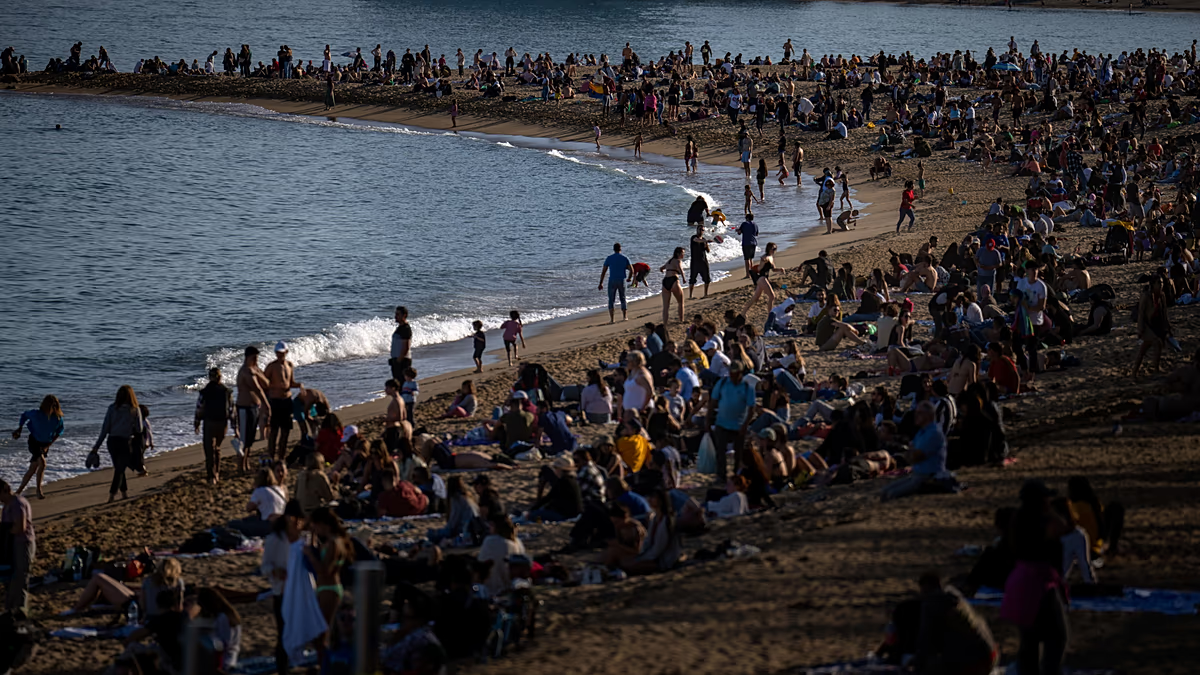
As spring fully blossomed across the Iberian Peninsula in April 2026, Spain’s cobblestone plazas, sun-drenched coastal paths, and bustling tapestry of city centers experienced a spectacular wave of renewal. Fresh data released by the National Statistics Institute (INE) shows that the country opened its arms to an astonishing 9.1 million international visitors during the month—representing a robust 5.2% increase compared to the previous year, which translates to roughly 450,000 additional travelers seeking the warmth of the Spanish sun. When looked at through a broader lens, this spring surge is part of a much larger, highly encouraging story. Between January and April of 2026, the country hosted a grand total of 26.5 million international globetrotters, scoring a solid 3.4% rise over the same period in 2025. This remarkable momentum has reignited intense conversations among hospitality leaders regarding the once-unthinkable milestone of welcoming 100 million annual visitors. What only a few months ago seemed like a distant, overly optimistic projection for the year is now looking more like a tangible, approaching reality, reflecting both the undiminished magnetism of the Spanish lifestyle and the resilient recovery of global travel networks.
A closer look at this vibrant tapestry of visitors reveals a diverse human mosaic, with familiar neighbors leading the charge. The United Kingdom once again proved to be Spain’s most dedicated admirer, sending nearly 1.7 million holidaymakers in April alone—a 2.7% rise that illustrates the enduring British love affair with Spain’s beaches, tapas bars, and relaxed coastal culture. Not far behind, French travelers crossed the Pyrenees in massive numbers, with approximately 1.3 million visitors arriving from Spain’s northern neighbor, marking a significant 5.1% increase as more driving-distance tourists sought quick weekend escapes and cultural immersion. In contrast, the German market presented a curious anomaly, registering a notable 9.1% decline to 1.2 million travelers. This dip has prompted many industry analysts to look closer at shifting economic conditions and changing vacation preferences in Central Europe, yet the robust growth from other markets has more than compensated for this decline. The sounds of different languages mixing in historic plazas serve as a beautiful reminder of how Spain continues to function as Europe’s great emotional retreat, drawing people across borders in search of joy, leisure, and shared experiences.
When these millions of travelers crossed the border, they gravitated toward Spain’s most iconic and culturally wealthy territories, with Catalonia firmly holding its crown as the ultimate cultural magnet. Capturing an impressive 20.8% of all international arrivals in April, Catalonia charmed visitors with Barcelona’s architectural wonders, Girona’s rich medieval history, and the rugged, breathtaking coastlines of the Costa Brava. Meanwhile, the southern region of Andalusia beckoned travelers deeper into its sunny heart, treating them to the soulful rhythms of flamenco, the scent of orange blossoms, and stunning Islamic-era architecture. Close on their heels, the Valencian Community also saw a major influx of foreign guests, who came to enjoy its famous golden beaches, innovative culinary scenes, and laid-back Mediterranean atmosphere. For the local communities in these regions, this steady stream of visitors is much more than a set of positive economic statistics; it represents a daily, living exchange of culture, where local business owners, artisans, and guides share their heritage, regional pride, and culinary traditions with an eager and appreciative world.
This impressive spring rebound marks a welcome turning point for a tourism sector that began the year under a cloud of uncertainty. The early winter months of 2026 had shown worrying signs of a slowdown, causing some industry insiders to wonder if the post-pandemic travel boom had finally run its course. However, as the cold faded and spring arrived, the pace of arrivals quickened dramatically, making April’s year-on-year growth the strongest witnessed in the travel sector over the past twelve months. Experts point to a perfect harmony of factors driving this sudden acceleration, most notably the steady return of long-haul travel from the Americas, a sector that has injected fresh enthusiasm and financial energy into the tourist economy. Additionally, there has been a significant resurgence in corporate travel, with international business conferences and networking events once again filling up hotels. At the same time, Spain’s enduring reputation as a peaceful, politically stable destination has made it highly attractive to global travelers navigating a complex and uncertain international landscape.
Indeed, the underlying reasons for this travel boom are deeply tied to the broader global environment. With ongoing conflicts and instability in regions like the Middle East, many vacationers and event organizers are choosing to reroute their travel plans toward destinations perceived as safe, welcoming, and dependable. Spain and its Western European neighbors have naturally become the primary beneficiaries of this search for security, offering world-class infrastructure, exceptional medical safety, and a comforting sense of predictability. While it is difficult to calculate the exact numerical impact of this geographic shift, the unmistakable rise in long-haul international flights and corporate bookings throughout March and April highlights this trend. For Spanish hoteliers, hospitality staff, and tour operators, this combination of global factors explains why the country’s travel sector has gained such impressive momentum after its quiet start to the year, transforming a cautious winter into a highly optimistic, active spring.
As Spain looks ahead to the crucial summer high season, the central goal of its tourism strategy is shifting from a focus on sheer volume to a more thoughtful pursuit of value and sustainability. While the possibility of reaching the 100-million visitor mark in 2026 is an exciting historical milestone, industry leaders and local governments are increasingly emphasizing the need to improve profitability, extend the average length of stay, and attract travelers with higher spending power. The challenge lies in managing this incredible popularity in a way that respects the quality of life for local residents and protects the natural beauty of Spain’s ecosystems. Booking patterns over the coming months will ultimately determine whether this historic target is reached, but the true success of this landmark year will not merely be measured by statistics. Instead, it will be defined by Spain’s ability to balance its role as a premier global destination with the preservation of the unique cultural warmth, natural beauty, and local charm that make people want to visit in the first place.