


To launch a brand-new airline from the ground up in the modern era is a daunting financial and logistical undertaking, but to do so in the heart of the Middle East is an act of sheer, unadulterated ambition. This is a region already dominated by some of the most luxurious and fiercely competitive aviation titans in the world, including the highly decorated trio of Qatar Airways, Emirates, and Etihad Airways. Yet, Riyadh Air did not merely nudge its way into this crowded playing field; it burst onto the global stage with spectacular confidence late last year, capturing the attention of frequent flyers and industry insiders alike when its sleek, purple-themed aircraft began performing operational proving flights between its state-of-the-art base at King Khalid International Airport and London Heathrow in October. While these initial flights were strictly reserved for training and service refinement, the general public was finally granted the opportunity to book seats this past June. Since that milestone, the airline’s expansion has been nothing short of a whirlwind, with a rapid succession of route announcements linking the Saudi capital to bustling hubs like Cairo, Dubai, and Málaga, alongside upcoming launches to Manchester, Kuala Lumpur, Mumbai, and Dhaka. It was against this backdrop of lightning-fast growth that I found myself stepping onto the tarmac to experience their highly anticipated inaugural flight to Madrid, eager to see if this newcomer could truly hold its own against the established giants of luxury air travel.
The journey began not in the air, but in the serene sanctuary of the Hafawa Lounge, located within Terminal 2 of King Khalid International Airport—a space that boldly positions itself as a contender for the finest premium lounge in the entire Middle East. Taking its name from the traditional Arabic word for “warm welcome,” the lounge is a physical manifestation of Saudi Arabia’s legendary culture of hospitality, a philosophy that is deeply felt the very moment you cross the threshold and are greeted with a steaming cup of rich cardamom-infused coffee and a platter of plump, sweet local dates. Designed by the internationally acclaimed creative studio Yabu Pushelberg, the expansive 2,000-square-meter environment is a masterclass in modern architectural luxury, drawing its design cues directly from the poetic, flowing curves of the shifting Saudi desert sands. Stepping away from the cold, sterile aesthetic of typical airport terminals, the designers wrapped the space in warm, sandy desert tones, organic textures, and undulating architectural lines that instantly soothe the travel-weary mind. Spanning several uniquely curated rooms, the lounge allows passengers to effortlessly self-select their ideal environment, whether they are looking to socialize in a lively atmosphere, catch up on late-night emails in a quiet workspace, or simply watch the frantic hum of the terminal below from the security of the lounge’s peaceful, open-air terrace.
For those flying with an appetite, the culinary options within the Hafawa Lounge are designed to rival the city’s finest five-star restaurants, offering two distinct dining settings that cater to different paces of travel. In the social dining room, passengers seeking a quick but satisfying bite are treated to a beautifully styled, high-end buffet featuring vibrant, freshly prepared Middle Eastern mezze classics like creamy hummus, smoky baba ghanoush, and bright, herbaceous tabbouleh, positioned alongside hearty hot entrees such as succulent lamb kofta and delicate, spice-crusted seabass sayadiya. For travelers with time to spare, the executive dining room offers a sophisticated à la carte service where dishes are cooked to order, featuring a menu that boasts gourmet offerings like traditional prawn machbous, perfectly seared beef tenderloin, and a rich, earthy mushroom ravioli. During my visit, I opted for a starter of silky, fresh burrata salad followed by a fragrant, beautifully spiced paneer tikka, both of which exhibited the high level of ingredient quality and culinary precision you would expect from an upscale land-based bistro. To complement the meal, I wandered over to the dedicated beverage bar, which specializes in an innovative, entirely non-alcoholic menu featuring premium alcohol-free wines, crisp beers, and botanical mocktails like the “Lavender Haze”—a refreshing, floral beverage explicitly crafted as a sensory nod to Riyadh Air’s signature purple branding and ambient scent.
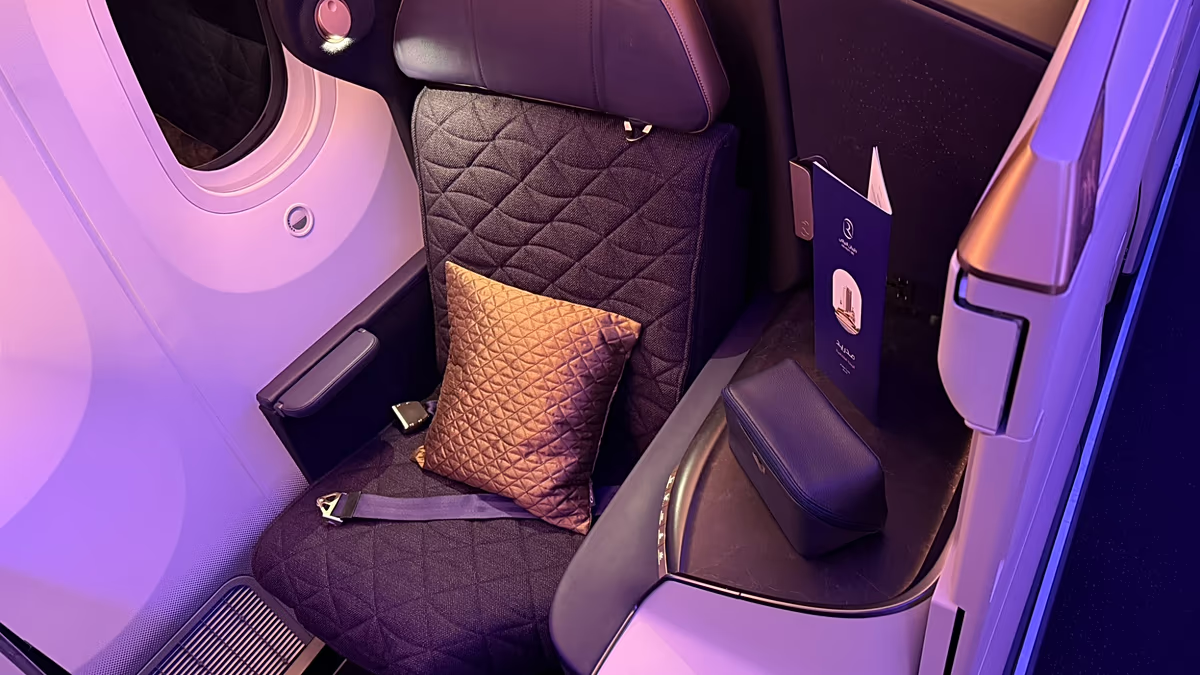
Once on board the aircraft, it became immediately obvious that Riyadh Air’s design team spent an extraordinary amount of time ensuring the business class cabin felt completely distinct from the generic, off-the-shelf configurations used by many of its global competitors. The visual identity of the cabin is anchored by a regal palette of deep purples and warm accents, crowned by an architectural “canopy twist” that arches gracefully over each individual business class suite to create an immediate sensation of open space and high-end residential comfort. Every surface in the suite demands to be touched, showcasing a thoughtful blend of premium textures, from the subtle weave of the seat fabric to the elegant, cool-to-the-touch faux-marble patterning of the private side tables. This physical comfort is balanced by a high degree of acoustic and visual isolation, courtesy of a smooth-sliding screen door that transforms the suite into a private micro-cabin at thirty-five thousand feet. The effortless flow of the onboard service is no accident; it is the direct result of an intense, eight-month operational trial period during which crew members meticulously rehearsed every interaction and dining service on empty flights to London. This rigorous preparation shines through in the flight’s intuitive hospitality, evoking the comforting feeling that the entire cabin experience was engineered specifically by a seasoned, highly discerning frequent flyer who understands exactly what travelers need to feel at ease during a long-haul journey.
The technological integration inside the suite is equally impressive, seamlessly weaving cutting-edge entertainment and convenient connectivity into the fabric of the seat without overwhelming the passenger with unnecessary digital complexity. Aviation enthusiasts and power users will appreciate the generous array of power options, which include two high-speed USB-C ports, a standard USB-A port, and a multi-voltage international socket, ensuring that every phone, tablet, and laptop remains fully charged throughout the trip. Rather than forcing passengers to struggle with cheap airline-issued headphones, Riyadh Air allows you to pair your own high-end wireless headphones directly to the massive 32-inch high-definition screen via a latency-free Bluetooth connection; alternatively, you can enjoy a movie completely wire-free using the innovative, private audio speakers embedded directly into your seat’s headrest. The digital in-flight entertainment system goes far beyond standard movie lists, featuring an immersive geo-entertainment flight map that syncs in real-time with Wikipedia, allowing curious travelers to read engaging, localized historical summaries of the foreign cities and geographical landmarks passing far below. When it is time to unwind, passengers are treated to a luxury, eco-conscious amenity kit packed with premium skincare products, hand creams, and facial mists sourced from the Saudi-owned wellness brand Kayanee, before converting the highly adjustable Safran Unity seat into a wide, perfectly flat sleeping surface, made immensely comfortable by a thick, form-fitting mattress pad.
Ultimately, Riyadh Air’s debut marks a significant, highly strategic shift in the global aviation landscape, reflecting Saudi Arabia’s broader economic diversification goals under its ambitious Vision 2030 program. Introducing a second national carrier alongside the historically established, Jeddah-based Saudia may seem unusual at first glance, but it is a proven structural template utilized effectively by other global aviation powerhouses, such as Japan with JAL and ANA, and the neighboring United Arab Emirates with Emirates and Etihad. For European passengers navigating long-haul journeys to Africa, Asia, or the broader Oceania region, this new airline offers a highly compelling, luxury-oriented alternative to traditional European hubs, promising a seamless connection through a brand-new, world-class terminal in Riyadh. While the airline’s launch routes are currently focused on connecting key financial and leisure markets, Riyadh Air’s aggressive growth strategy aims to scale its network to over 100 international destinations by the end of this decade. If my experience on this inaugural Madrid flight is any reliable indicator of their long-term operational standards and dedication to service quality, this ambitious young carrier is well on its way to cementing its place as a dominant, highly respected player in the skies for decades to come.