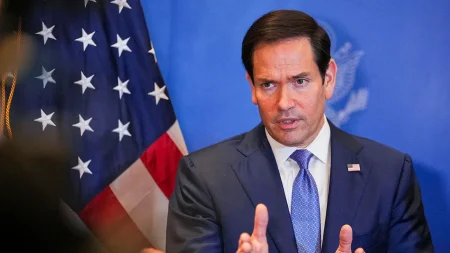


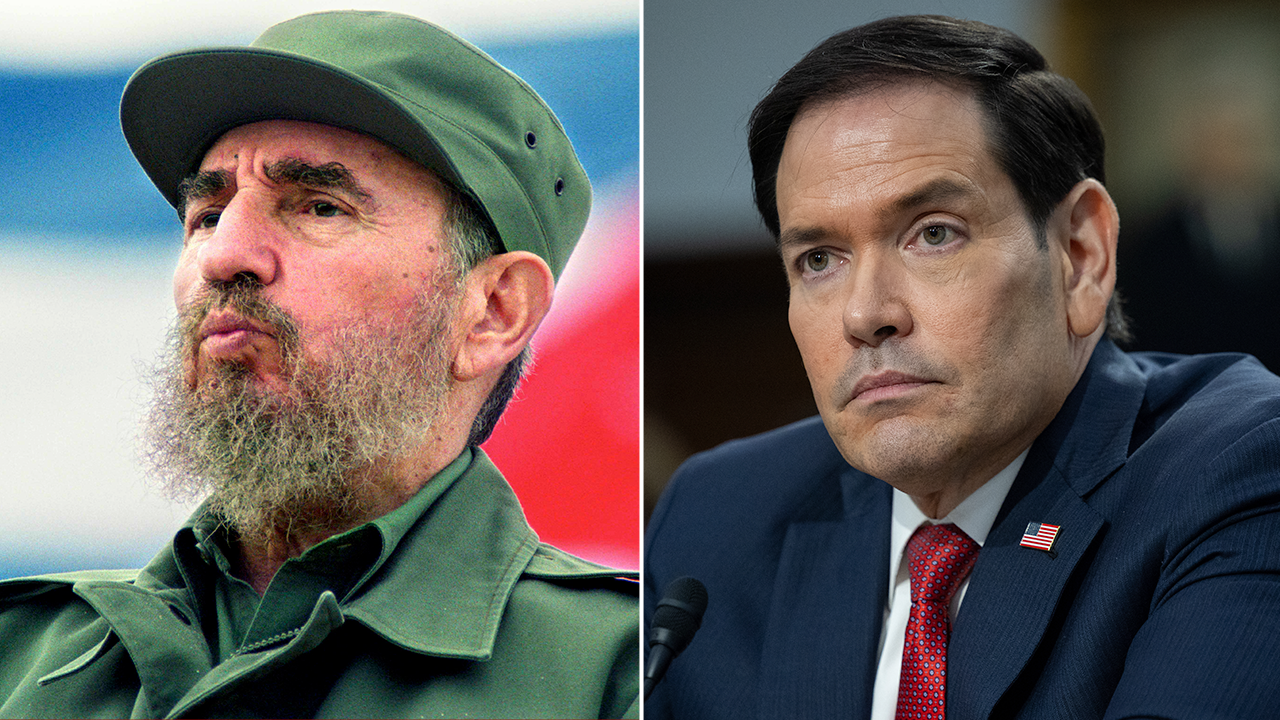
The decades-long ideological chess match between Washington and Havana has entered a fierce new chapter as the U.S. government moves to sever the financial and political lifelines connecting American activists to the Cuban state. Secretary of State Marco Rubio recently delivered a sharp, sweeping ultimatum to domestic organizations, placing them on notice that doing business with Cuba’s long-standing diplomatic and influence arms will no longer be tolerated under federal law. At the very center of this crackdown is the Cuban Institute of Friendship with the Peoples (ICAP), a Cold War-era entity established by Fidel Castro in 1960. While Havana has long framed the institute as a benign cultural bridge promoting international solidarity, U.S. intelligence and foreign policy officials have spent decades documenting a different reality, identifying ICAP as a sophisticated component of Cuba’s intelligence apparatus designed to export Marxist ideology and cultivate sympathetic voices within American civil society.
What distinguishes this modern diplomatic clash from its 20th-century origins is the massive scale of private funding now oiling the wheels of these political linkages. Federal investigators have focused their attention on Neville Roy Singham, an American technology tycoon and avowed Marxist currently residing in Shanghai. Since 2017, Singham has funneled an estimated $285 million through a web of progressive U.S. nonprofits—including the People’s Forum, CodePink, BreakThrough News, and the Tricontinental Institute for Social Research. This financial network is deeply intertwined with personal and political alliances; Singham is married to Jodie Evans, the co-founder of CodePink. Together, these entities have built close working relationships with ICAP, effectively transforming what once were marginal, grassroots solidarity movements into a highly coordinated advocacy machine operating directly within the United States.
The current friction reached a boiling point following a high-profile “humanitarian convoy” to Havana in March of this year, which quickly attracted federal scrutiny. Organized by a coalition of Singham-backed groups, the trip brought prominent progressive influencers, including Marxist streamer Hasan Piker and Progressive International co-founder David Adler, to the island. During the visit, participants were photographed alongside Cuban President Miguel Díaz-Canel and ICAP President Fernando González Llort. Llort’s presence was particularly symbolic; he is one of the “Cuban Five,” a group of intelligence officers convicted in the U.S. on espionage-related charges who served federal prison time before being repatriated. The high-profile trip sparked inquiries from the departments of Treasury and Justice, with CodePink co-founder Medea Benjamin confirming that federal officials have questioned her regarding potential sanctions violations.
This direct connection between American radical activism and the Cuban government is not a modern anomaly, but the evolution of a pipeline established decades ago. Since 1969, programs like the Venceremos Brigade have brought generations of young, idealistic Americans to the island to participate in agricultural work and study the socialist system under the guidance of Cuban state institutions, including ICAP. Notable public figures, such as Los Angeles Mayor Karen Bass in her youth, have historically participated in these exchanges. Today, the Venceremos Brigade operates as a fiscally sponsored project of the People’s Forum, proving that the structural pathways forged during the height of the Cold War remain highly active, modernized, and capable of translating Havana’s ideological priorities into contemporary American political discourse.
The newly announced sanctions seek to hit Cuba’s operational infrastructure far beyond mere messaging. Utilizing authorities established under Donald Trump’s Cuba executive order, Rubio’s designations target not only ICAP but also Cuba’s Ministry of the Revolutionary Armed Forces (MINFAR), the neighborhood-monitoring Committees for the Defense of the Revolution (CDR), the state enterprise Minera La Victoria, and Amistur Cuba S.A., a state-run tourism company responsible for coordinating the highly curated trips for U.S. activists. By explicitly blacklisting these groups, the U.S. government is signaling a paradigm shift in its foreign policy, focusing not just on the Cuban state in isolation, but aggressively targeting the financial, logistical, and institutional networks that allow American organizations to act as domestic force multipliers for Cuban influence.
Unsurprisingly, the announcement ignited an immediate storm of diplomatic and domestic pushback. Cuban President Miguel Díaz-Canel fiercely condemned the moves on social media, accusing Washington of weaponizing illegitimate lists to tighten an economic blockade and manufacture a state of conflict between the neighboring nations. Supporters of the travel programs maintain their efforts are vital humanitarian and educational exchanges designed to promote international understanding and ease decades of hostility. However, the American administration remains resolute. Rubio issued a stark, global warning that any entity—from domestic nonprofits to foreign banks and international businesses—found providing services to these blacklisted organizations will face immediate secondary sanctions, drawing a clear and uncompromising line for those seeking to bridge the political and financial divide with Havana.