

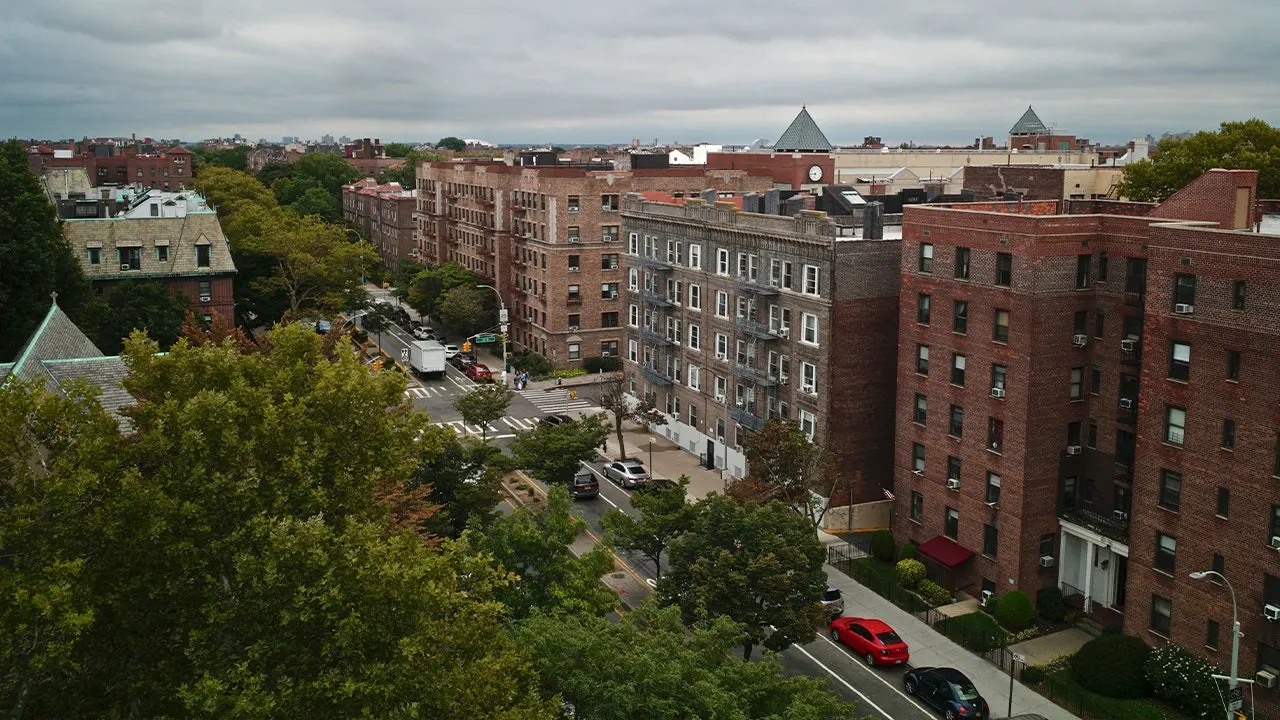
On what should have been a peaceful, ordinary Saturday evening in an established neighborhood of Queens, New York, an unimaginable tragedy unfolded behind closed doors, forever shattering the quiet lives of a devoted elderly couple. Inside their apartment near Peck Avenue and 64th Avenue in Fresh Meadows, a seventy-one-year-old man and his sixty-five-year-old wife were violently attacked in a place that should have been their ultimate sanctuary. Home is meant to be a refuge of absolute comfort, a sacred space built on decades of shared memories, morning coffees, and quiet evening routines, particularly for those who are entering their golden years of retirement. Instead, this humble dwelling became the scene of a devastating, senseless act of brutality that abruptly ended the lives of two individuals who had spent a lifetime navigating the world together, only to face their final moments in a terrifying and chaotic struggle. The sheer shock of such a violent intrusion strikes a deep, painful chord within any community, reminding us of how fragile our sense of security truly is. In a single, horrific instant, a couple who likely spent their days tending to the simple joys of life were transformed from living, breathing pillars of their family and neighborhood into a heart-wrenching headline. The suddenness of this tragedy leaves an agonizing void, not just for the loved ones they left behind who must now face a world without their presence, but for a society that counts on the preservation of peace and dignity for its most vulnerable citizens. It is a stark, sobering reminder of the unseen dangers that can creep into the most unassuming corners of our suburbs, leaving neighbors to grapple with the haunting reality that violence can strike when and where it is least expected, turning an ordinary weekend into a devastating milestone of grief and loss. We must look closely at this tragedy not merely as a police blotter entry, but as a profound human loss that reminds us of the preciousness of every single day we are granted.
The horror of that Saturday night materialized just before eight in the evening, when a frantic emergency call punctured the routine operations of local dispatchers, signaling a crisis of the most urgent nature. According to police records, the initial 911 call reported an assault that was actively in progress, painting a chilling picture of urgency and terror as dispatchers scrambled to send help to the scene. Officers from the New York Police Department rushed to the location, their sirens slicing through the quiet Queens air in a desperate race against time to intercept the unfolding horror. Upon entering the residence, the responding officers were met with a scene of profound tragedy, finding both the husband and wife critically wounded and clinging to survival after suffering multiple, devastating stab wounds. The immediate aftermath was a chaotic, high-stakes scene of flashing emergency lights, urgent medical assessments, and the frantic efforts of Emergency Medical Services personnel who refused to give up hope even in the face of such grim odds. First responders worked feverishly to stabilize the critically injured pair, swiftly dividing them between local medical facilities in a bid to maximize their chances of survival. The seventy-one-year-old man was rushed to NewYork-Presbyterian Hospital, while his sixty-five-year-old wife was transported to North Shore University Hospital, each surrounded by dedicated teams of doctors and nurses fighting valiantly against the clock to repair the damage. Despite the heroic efforts of these medical professionals, who poured their skills, knowledge, and hearts into saving them, the injuries sustained in the attack proved too severe, and both individuals were ultimately pronounced dead. The loss of these two lives in such rapid, violent succession leaves a heavy emotional toll on the emergency workers and medical staff who bore witness to their final moments, highlighting the agonizing gravity of a night where rescue efforts fell tragically short of preventing a double fatality.
Nestled in the northeastern portion of Queens, Fresh Meadows is historically recognized as a picturesque, family-oriented enclave known for its tree-lined streets, quiet parks, and a strong sense of community cohesion where neighbors actually know one another by name. It is a neighborhood where generations of families have chosen to put down deep roots, draw comfort from familiar faces, and raise children away from the bustling chaos of inner-city life. To have such a heinous crime occur within these peaceful boundaries has sent a collective shiver through the hearts of local residents, completely disrupting their deeply held sense of comfort, trust, and predictability. Neighbors who once walked their dogs late at night without a second thought, let children play on lawns, or exchanged pleasantries across backyard fences are now locking their doors with a newfound sense of anxiety and hyper-vigilance. This tragic event has cast a long, somber shadow over the entire community, forcing residents to confront the painful reality that no place is entirely insulated from the dark currents of violence that can bleed into any neighborhood. The collective grief is palpable throughout the area, marked by quiet conversations on street corners, whispered prayers, and an overwhelming desire to understand how such a peaceful neighborhood could become the backdrop for such a horrific double homicide. For the older residents of Fresh Meadows, the news is particularly unsettling and deeply personal, as it highlights a physical vulnerability that many spend their lives trying to guard against through security measures and community watchfulness. The loss of this elderly couple has stripped the neighborhood of a piece of its innocence, leaving behind a community united in mourning but deeply unsettled by the lingering presence of unexplained violence in their midst as they look to the future with cautious hope.
At the heart of this tragedy lies a profound societal loss, as the elderly represent the keepers of our history, the foundation of our families, and the gentle anchors of our neighborhoods. To lose someone at sixty-five and seventy-one under any circumstances is deeply painful, but to have their lives stolen through a calculated act of violence is an offense to our shared humanity and social conscience. These were individuals who had lived through decades of cultural shifts, survived personal hardships, and likely poured their hearts into supporting their children, grandchildren, friends, and neighbors over the run of many years. The golden years of life are universally understood to be a hard-earned period of rest, reflection, and quiet enjoyment—a time of life when one should be surrounded by the warmth of family, the comfort of retirement, and physical safety. When violence targets seniors, it violates a sacred, unspoken social contract that dictates we must protect and cherish those who have paved the way for future generations. This tragedy forces us to look beyond the cold statistics of crime rates and actively empathize with the daily lives, simple hopes, and warm smiles that this couple brought to those around them in their daily interactions. We are left to wonder about the stories they will never get to tell, the family dinners that will now have two agonizingly empty chairs, and the quiet moments of companionship that were violently stolen from them in their final hour. Humanizing their memory means acknowledging the immense value of their lived experiences and recognizing that their untimely deaths represent a profound tear in the social fabric that connects us all, urging us to hold our own loved ones a little closer.
As the days slowly pass, the agonizing search for answers continues to hang heavily over the investigation, with local authorities working tirelessly to piece together the events surrounding that fateful Saturday night. As of the latest updates from law enforcement, no suspects have been apprehended, and no motive has been publicly established, leaving a chilling void where resolution and justice should be. Detectives are meticulously combing through forensic evidence, reviewing neighborhood surveillance footage, and pleading with anyone in the community who may have witnessed suspicious activity to step forward. The absence of immediate answers only exacerbates the grief of the victims’ surviving family members, who are left to navigate the dizzying early stages of bereavement while simultaneously enduring the exhausting uncertainty of an unsolved double murder. Writing about these events requires us to acknowledge the invisible, ongoing trauma experienced by those close to the victims, who must grapple with both the shock of their sudden loss and the haunting question of who could commit such a monstrous act. The quiet resolve of the New York Police Department to find the person or persons responsible represents a vital lifeline of hope for a family desperate for closure in their darkest hours. Until a breakthrough in the case is made, a tense atmosphere of anticipation and vigil will continue to define the area, reminding everyone involved that the path to healing cannot truly begin until the truth is uncovered and accountability is demanded. Every single lead, no matter how minor it may seem, is being treated with the utmost gravity by investigators who are fully aware that safety and trust must be restored to this neighborhood so that its residents can once again sleep in peace.
Ultimately, this devastating loss in Queens serves as a powerful call to action for communities everywhere to foster a deeper culture of care, vigilance, and mutual support. In an increasingly fast-paced and disconnected world, the safety and well-being of our elderly neighbors must remain a paramount priority, requiring us to look out for one another with renewed dedication. We must transform our grief and fear into a collective resolve to build stronger, more watchful communities where the vulnerable are never left to feel isolated or unprotected. As we keep the memories of this seventy-one-year-old husband and sixty-five-year-old wife in our thoughts, we are reminded of the profound beauty of human connection and the vital importance of extending kindness to those around us. While the justice system works to hold the perpetrator accountable, the community must embark on its own journey of healing, honoring the lives of the deceased by embodying the values of compassion, unity, and resilience that define the best of humanity. Their lives were far more than the tragic ending forced upon them; they were a testament to decades of perseverance, love, and community presence. In remembering them not as victims of a senseless crime, but as cherished fellow human beings who deserved a long, peaceful life, we assert that light will ultimately triumph over darkness, and that the warmth of their memories will outlast the fleeting shadow of this tragedy. Let this be a moment of quiet reflection for all, urging us to look out for the seniors next door, to whisper words of gratitude to those we care for, and to cherish every fleeting, precious second we share with one another on this earth.