

Paragraph 1: The Unthinkable After the Unthinkable
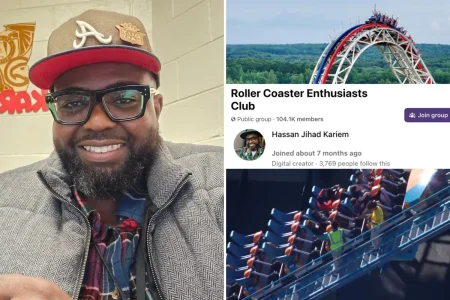
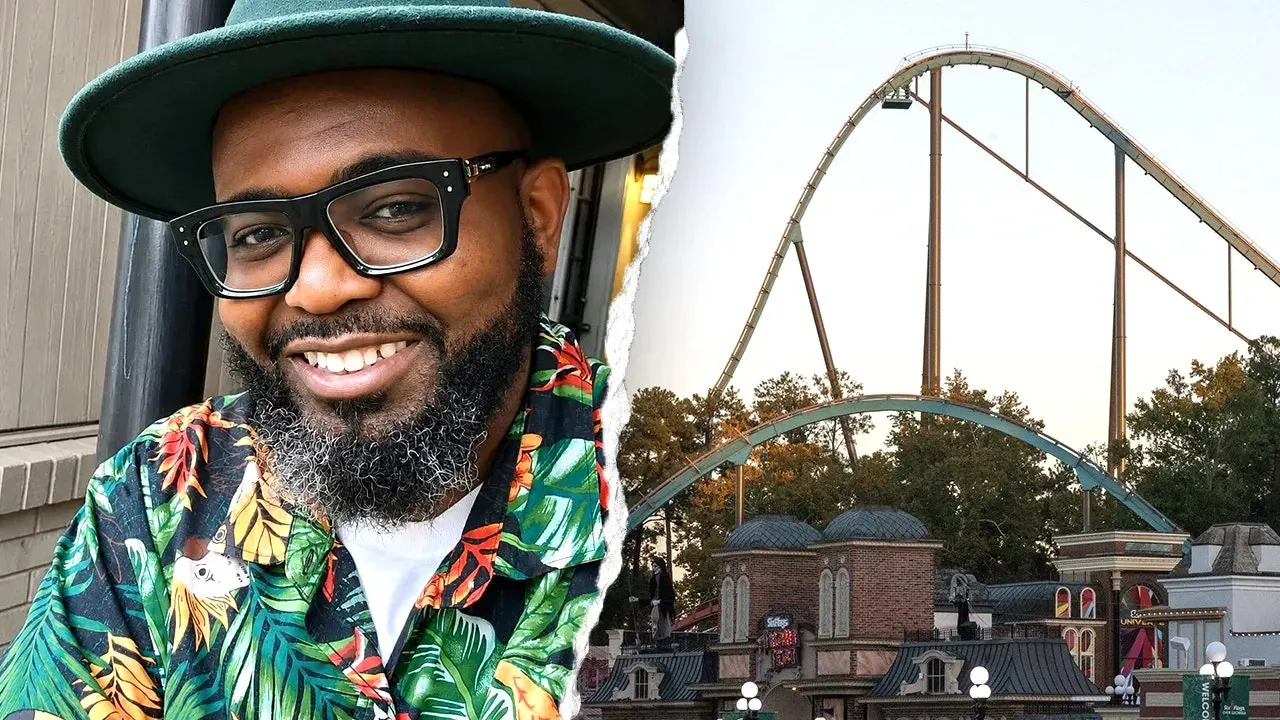
There are stories that stop you cold, not just because of the tragedy they contain, but because of the cruel, almost incomprehensible irony that frames them. This is one such story. A Georgia man, Hassan Kariem, had already stared down death more than once in his 42 years. He had fought a brutal battle with cancer, a fight that he had been winning since 2015, his body finally slipping into a peaceful remission. Just a month ago, he had cheated death again in a truly terrifying way, escaping from a car that had erupted into a “crazy” fire, walking away with his life when the inferno could have easily consumed him. He was a survivor, a man who had every reason to believe he had used up his share of bad luck and was now moving through a world that had, perhaps, finally decided to go easy on him. And then, on a bright Monday afternoon at a place designed for fun and laughter, a place where families go to create happy memories, the unthinkable happened. Kariem fell from the Goliath, a towering 200-foot-tall roller coaster at Six Flags Over Georgia, and his remarkable story of survival ended in a way no one could have predicted. For his family, the shock is not just the suddenness of his death, but the sheer senselessness of it—a cruel cosmic joke, a twist of fate that leaves his younger sister, Andrea Clark, struggling to make sense of a world that would let her brother conquer so much, only to lose him in a matter of seconds on a thrill ride. His life was a testament to resilience; his death, a stark and painful reminder of life’s unpredictability.
Paragraph 2: A Sister’s Grief and the Unfairness of It All
To Andrea Clark, her brother was not a statistic or a headline. He was her world. “He’s an amazing person,” she told the New York Post, her words thick with tears, her voice trembling with the raw, fresh ache of loss. “The coolest part about me was him.” There is a profound weight to that statement, a declaration not just of love, but of identity. Her brother was not just a family member; he was a foundational part of who she was, a source of pride, a hero. In the wake of his passing, Clark is left to navigate a new reality, one where the sun seems dimmer and the world feels profoundly less safe. She described her brother as “my hero,” a man who had demonstrated time and again that he could overcome adversity, who had shouldered burdens that would have broken most people. The cancer, the car fire—these were chapters in his story where he emerged victorious. He was, in her eyes, “healthy” and “able-bodied,” a man with a future ahead of him. And that is what makes his death so utterly devastating for her to comprehend. “He had other issues, but he’s healthy, he was able-bodied. I don’t understand it,” she said. The word “unfair” is too mild to describe the feeling. It’s a profound dissonance—the brain struggles to reconcile the image of her strong, resilient brother with the reality of his sudden, inexplicable fall. She is left in a state of suspended disbelief, her mind replaying the joys of his life against the horror of its ending, trying to find a logic where none exists. In that struggle, she represents every person who has ever lost someone too soon, asking the same agonizing question: why? Why him? Why now? Why after everything he survived? The questions are endless, and the answers are nowhere to be found.
Paragraph 3: The Man Behind the Headline
Behind the tragic headline and the grief-stricken interviews, there was a life lived with purpose and dedication. Hassan Kariem was not just a survivor; he was a provider, a caretaker, a man who built his life around the people he loved. Clark described her brother as someone who worked hard, not for fame or recognition, but to ensure that his family had what they needed. He was a fixer, a doer, the kind of person who “could do it all.” His devotion was most evident in his relationship with his fiancée’s daughter. He had known her since she was just three years old. He didn’t just accept her; he helped raise her, pouring his time and energy into a young life that he chose to be a part of. He was a father figure in the most paternal sense of the word—a man who showed up, who was present, who made sacrifices without complaint. This is the side of the story that often gets lost in the public’s insatiable hunger for sensational details. Yes, there is the accident, the fall, the mystery of how it happened. But before that, there were birthdays, graduations, quiet evenings at home, and the mundane, beautiful routines of everyday life. Kariem was a working professional, serving as an IT manager for Atlanta Public Schools. He was the person who kept systems running, who solved problems, who was likely a familiar and friendly face to his colleagues. In the official statement from the school district, they extended their condolences, acknowledging the loss of “one of their own.” They, too, were victims of this tragedy, mourning a colleague who had been a part of their community. Kariem’s life was a tapestry of relationships and responsibilities, and in an instant, that tapestry was torn. The grief is not just his sister’s; it’s shared by his fiancée, her daughter, his coworkers, and his friends—all of whom are left to piece together a life that was full of love and work, trying to honor a man who was taken from them in the most shocking way imaginable.
Paragraph 4: A Horrifying Scene and a Society’s Cruelty
The details of Kariem’s final moments are as horrific as they are tragic. Witnesses described a scene of sheer terror as he fell from the ride, his body striking the coaster’s structure before landing. One parkgoer, who had been on the ride just moments before, recounted the chilling realization that Kariem appeared in a souvenir photograph taken during the roller coaster’s run. “He was in our pictures,” the witness told local outlet WXIA. “He fell and hit the car three different times.” The Goliath is a formidable machine, a hypercoaster that reaches speeds of 70 mph and features a stomach-churning 170-foot initial drop, followed by a second 175-foot drop and a 540-degree spiral. It is a ride designed to induce screams of delight, but on that day, those screams turned into screams of horror. To make an already unbearable situation even more agonizing, disturbing images and videos of Kariem’s fall began circulating on social media and various online platforms. For Andrea Clark, this was a second violation, a profound act of cruelty that added to her already overwhelming pain. “That’s just evil,” she said, her voice carrying the weight of her fury. “It’s tragic, and I feel like we’ve gone too far as a society.” She is absolutely right. In the digital age, there is a disturbing tendency to consume tragedy as entertainment, to rubberneck at the most graphic details without any regard for the human being at the center of the catastrophe. Clark’s plea for people to stop sharing the footage is not just about her own grief; it’s a desperate cry for basic human decency. It is a reminder that behind every viral video and every shocking image, there is a real person with a family who is hurting. The pain of losing her brother is immeasurable, but the added burden of knowing that strangers are gawking at his final moments is a form of psychological torture. Her words should resonate with all of us, forcing a collective reckoning with our own complicity in a culture that so often prioritizes clicks over compassion.
Paragraph 5: The Aftermath, Safety Questions, and Empty Gestures
In the wake of the tragedy, the response has been a mixture of corporate caution, official investigation, and a collective sense of unease. Six Flags Over Georgia closed the Goliath ride, and as a precautionary measure, the park announced it would temporarily close similar roller coasters at its other properties across the country. This is a standard, if prudent, response—a way to ensure no other lives are lost while authorities begin the painstaking work of determining what exactly went wrong. The ride has been inspected and cleared in the past, but the question remains: how could a 42-year-old man fall from a ride at a major amusement park? The answer is not yet known. Authorities have said they have yet to determine the cause. The Goliath’s restraints are designed to hold riders securely, and such incidents are exceedingly rare. Yet, the very fact that it happened at all raises broader, deeply unsettling questions about the safety protocols at amusement parks nationwide. An attorney familiar with such cases suggested that the fatal accident could raise broader safety questions, impacting how these rides are designed, maintained, and operated. For the industry, this is a nightmare scenario. For the family, the closing of the ride and the opening of an investigation is a hollow gesture. No legal finding or official report can bring Hassan Kariem back. It cannot undo the fact that a beloved brother, a father figure, and a fellow human being went to a theme park for a day of fun and never came home. For Kariem’s colleagues at Atlanta Public Schools, the news was met with shock and sorrow. They acknowledged his contributions and mourned his passing, but their words, too, feel inadequate in the face of such a profound absence. The investigation will run its course, the ride may eventually reopen, but the scar left on the community and on the Kariem family will remain, a painful reminder of a life lost in a place built on joy.
Paragraph 6: A Life Remembered, and a Plea for Grace
As we process this heartbreaking story, we must resist the urge to reduce Hassan Kariem to a tragedy. He was a person of immense strength, a survivor of cancer who embraced life with a renewed vigor. He escaped a burning car, a miracle that surely made him feel invincible. His life was a testament to the human spirit’s ability to endure. He was a brother, a partner, a mentor, and a provider. He helped raise a child, a responsibility he took on with love and dedication. His story is not one of a man who died on a roller coaster; it is the story of a man who lived, a man who fought, and a man who loved deeply. Andrea Clark’s grief is a reminder of the profound connections that bind us. Her plea for people to stop sharing the graphic images is a plea for empathy, a plea for us to see the humanity behind the horror. In a world that often feels overly sensationalized and desensitized to suffering, we are called to be better. We are called to look away, to grieve with the family, to offer our condolences and our respect. The amusement park accident is a statistical anomaly, a freak occurrence, but the loss it has created is real and enduring. As the investigation continues, we must not forget the man at the center of it all. We must remember Hassan Kariem, the cancer survivor, the car-fire escapee, the IT manager, the family man. We must remember him for his smile, his resilience, and the love he shared. And we must hold his sister, Andrea, in our collective hearts, hoping she can find some peace amidst the chaos, and that she will always remember the “coolest part” about her was her amazing brother. In the end, we are left with a profound sense of fragility and the harsh reminder that life can change in an instant. The least we can do is honor that life, and the lives of the people who mourn him, by practicing kindness and restraint in the face of unspeakable tragedy.