



The glittering, sun-drenched waters of the Caribbean are typically synonymous with celebration, family bonding, and the carefree escape of a tropical cruise vacation. Yet, aboard the Carnival Horizon in the late autumn of November 2025, this idyllic dream was shattered by a dark and unspeakable tragedy that occurred within the cramped, sterile confines of cabin 8343. Anna Kepner, an eighteen-year-old cheerleader with a life full of promise, radiant energy, and unwritten futures, was sailing back to Miami from Cozumel, Mexico, alongside her family, enjoying what should have been a cherished chapter of their shared lives. During a lively family dinner on the evening of November 6, Anna complained of a minor stomach ache and the irritating discomfort of her orthodontic braces—a completely normal, relatable adolescent moment that would unknowingly mark her final, innocent walk to safety. Choosing to rest and recuperate, she left the bustling dining area and headed back to the safety of her shared cabin alone around 7:38 p.m., seeking nothing more than a quiet place to lie down. Little did she know that she was walking into a horrific trap, as her sixteen-year-old stepbrother, Timothy Hudson, had quietly slipped into the same room just minutes beforehand, setting the stage for an evening of incomprehensible violence. To truly humanize Anna is to remember her not merely as a tragic victim listed in a cold court transcript, but as a bright, vibrant young woman whose simple decision to seek comfort in her own room led to her ultimate betrayal. In those quiet moments before the horror began, Anna was just a teenager looking for a moment of quiet, completely unaware that the person we are taught to trust—a family member—was waiting in the shadows of their shared living space. The sheer contrast between the festive, pulsing holiday energy of a luxury cruise liner and the terrifying, silent isolation of that small cabin underscores the profound tragedy of a young life abruptly and violently halted in its prime.
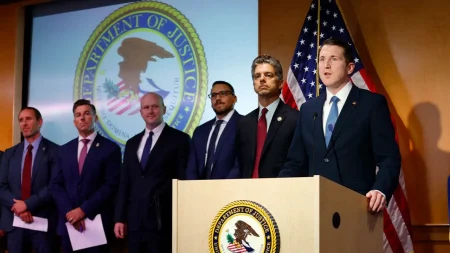
The terrifying timeline established by federal prosecutors paints a picture of a desperate, heroic struggle for survival that occurred behind that locked cabin door. After Anna entered the room, her thirteen-year-old brother briefly popped into the cabin at around 7:51 p.m., catching a fleeting glimpse of her alive and well in what would be the very last independent sighting of the young woman before her life was stolen. Once the younger sibling departed to rejoin the ship’s activities, Anna and Timothy were left completely alone for approximately three hours—a devastating window of time during which the cabin transformed from a place of family sanctuary into a chamber of absolute horrors. Assistant U.S. Attorney Alejandra Lopez laid out a chilling, minute-by-minute account of the assault, describing the mechanical asphyxiation that ended Anna’s life as a “barbaric, intentional, thoughtful act.” Prosecutors argued that this was not a sudden, explosive accident or an accidental mishap akin to an accidental shooting, but a prolonged and agonizing ordeal that required continuous physical effort. Anna spent her final moments bravely fighting for air, utilizing every ounce of her youthful strength to resist, while her attacker persistently squeezed her neck, refusing to let go even as her physical struggles weakened. The prosecutor emphasized that at any point during those agonizing minutes, Timothy could have let go of his grip, allowed his stepsister to draw in a breath, and stopped the madness, but instead, he carried out his grim intention until she was dead. This sheer physical malice required to hold someone’s neck for multiple minutes, watching them fight for oxygen and actively ignoring the universal human instinct to survive, strips away any possibility of a defense built on panic or accident. Instead, it reveals a conscious, deliberate choice to extinguish Anna’s life, leaving her to take her final, desperate breaths in utter terror and isolation while the cruise ship quietly glided through the dark ocean waters.
The devastating aftermath of the crime came to light the following morning, shattering the maritime routine of the ship’s crew and leaving an indelible scar on everyone involved. When a cabin attendant opened the door to cabin 8343 to perform routine housekeeping, they did not find a tidy room ready for disembarkation, but a crime scene of unimaginable cruelty and cold calculation. Anna’s cold body had been crudely wrapped in a blanket and shoved partially underneath one of the cabin beds, hidden from view as if she were an object to be discarded rather than a beloved daughter. In a calculated effort to delay discovery and escape the immediate consequences of his actions, a heavy box of emergency life vests had been deliberately moved to block the view and further conceal her remains. This chilling detail highlights a level of presence of mind and deceit that flatly contradicts any defense of a chaotic, heat-of-the-moment panic. Furthermore, investigators quickly noticed that Anna’s cellphone, an item her grieving family rotely noted she was absolutely “never without,” was conspicuously missing from the room. The phone was not lost or misplaced; rather, it was later discovered violently smashed and discarded in a communal trash bin located toward the rear of the ship. This act of digital destruction served as a physical manifestation of the attacker’s desperate desire to silence Anna permanently, trying to erase her digital footprint and any evidence of the terror she experienced in her final hours before her voice was silenced forever. The discovery of her broken phone in the garbage is a heartbreaking metaphor for the way her life was treated—broken, discarded, and hidden away by someone who should have been guarding her safety.
Behind the immense emotional weight of this case lies an avalanche of cold, hard forensic and digital evidence compiled by the Federal Bureau of Investigation, which completely dismantles any narrative of innocence. Swabs collected during the autopsy’s rape kit revealed the presence of male DNA and sperm in Anna’s vaginal canal, with medical examiners concluding that the evidence was entirely consistent with a brutal sexual assault occurring before her death. When local and federal laboratories ran comparative testing against other potential partners, the results overwhelmingly pointed to her stepbrother, Timothy, as the contributor. The FBI laboratory presented a staggering mathematical statistic to the court, stating that the DNA mixture found on the victim was a mind-boggling 120 sextillion times more likely to have come from Anna and Timothy than from Anna and an unrelated, random stranger. This astronomical probability stands as an unshakeable, silent witness to the physical violation Anna suffered before she was murdered. In addition to the physical biological evidence, the digital trail left by Timothy was equally damning and difficult to refute. Security footage and the ship’s Wi-Fi router logs tracked his movements in real-time across the vessel, revealing that his physical location perfectly mirrored the path of Anna’s missing cellphone just as it was being carried toward the rear of the ship to be destroyed and discarded. The combination of genetic certainty and digital breadcrumbs paints a picture of a crime that was systematically executed, tracked, and covered up with a shocking degree of focus. The hard science of forensics has effectively spoken for Anna in death, providing the clarity that she was unable to voice herself, showing that no amount of destruction could cover the truth of what transpired. The data leaves no room for alternative explanations, pinning the physical reality of the crime directly onto the defendant through a multi-layered investigative structure that captures both biological truth and digital accountability.
During the court proceedings, Assistant U.S. Attorney Alejandra Lopez delivered an impassioned plea for justice, directly addressing the deeply personal and horrifying nature of the violence inflicted upon Anna. “Someone doesn’t accidentally fall into someone’s vagina with their sexual organ,” Lopez argued fiercely to the court, refusing to allow the defense to sanitize the nature of the assault or reduce it to a tragic, teenage misunderstanding. She emphasized that the act of sexual violation, followed by the minutes-long compression of Anna’s throat, required a chain of conscious, active decisions that stood in direct opposition to accidental behavior or a momentary lapse in control. This case represents the most profound violation of physical autonomy imaginable, compounded by the intimate betrayal of a stepbrother who shared her home, her family, and her vacation. To humanize this tragedy is to recognize the unimaginable psychological pain inflicted upon Anna’s surviving family, who must now navigate a double reality: mourning the agonizing loss of a beloved daughter and sister while simultaneously coming to terms with the fact that her accused killer is someone they raised, loved, and welcomed into their inner circle. The emotional wreckage of this household is vast, as they are left to pick up the pieces of their broken lives while trying to understand how such a monstrous level of violence could emerge from within their own domestic sanctuary. The heavy burden of this grief is exacerbated by the legal battles and the constant reminder of how their trust was shattered, leaving them to navigate a lifetime of trauma and unanswered questions.
Despite the overwhelming nature of the evidence and the sheer gravity of the charges, the legal system’s initial response has sparked intense public debate and deep frustration for those seeking justice for Anna. Timothy Hudson, facing a maximum penalty of life in prison if convicted of this heinous act of homicide and sexual assault, was paradoxically released to his uncle’s custody under strict, non-custodial pre-trial conditions. Though he is subjected to GPS monitoring, strict home detention, and a total ban on unsupervised contact with minors and the possession of firearms, the fact remains that a teenage suspect in a brutal cruise-ship murder is currently out on bond. Prosecutors aggressively fought to keep Hudson behind bars until his scheduled September trial, arguing that he poses a significant flight risk and a danger to the community, but a judge ultimately ruled that he could remain free under supervision in the Tampa area. As the U.S. Marshals Office works diligently to finalize his housing arrangements, his freedom serves as a painful contrast to the permanent silence imposed upon Anna Kepner. A young cheerleader who should be mapping out her college years, building friendships, and experiencing the joys of early adulthood is instead gone, leaving behind an empty chair at the family table and a lingering demand for accountability. As the legal gears slowly turn toward the September trial, Anna’s memory stands as a powerful reminder of the human cost of violence, demanding that the system does not lose sight of the vibrant life that was so violently cut short on the open seas. Her loved ones are left to wonder how a system designed to protect the innocent can allow such a massive disparity between a victim’s eternal rest and an accused killer’s temporary liberty.