


Here is a humanized summary of the Fox News article, written in six paragraphs.
—
When Americans file their taxes, most of us are just trying to get it right—double-checking the numbers, hoping for a refund, and grudgingly sending off what we owe. It’s a civic duty that funds everything from roads and schools to public safety and national defense. So when the Justice Department announced a massive nationwide tax fraud crackdown on Wednesday, the message was personal: every dollar siphoned off by fraudsters is a dollar stolen from ordinary citizens. The operation, described as the first-ever National Tax Enforcement Surge, involved 76 defendants and more than $490 million in estimated intended tax losses. It wasn’t just about numbers on a spreadsheet; it was about the real-world impact of people who try to cheat the system that everyone else plays by. The Justice Department made clear that this coordinated effort, bringing together 35 U.S. attorneys’ offices and IRS criminal investigators, was only the beginning of a much larger push to expose schemes designed to evade accountability. For six concentrated weeks, investigators worked across the country to uncover fraud at a scale that feels almost staggering—and yet, as officials admitted, they believe this is only the tip of the iceberg.
The scope of the operation is best understood by breaking down the numbers, but behind each statistic is a story of deliberate deception. According to the Justice Department, the surge produced 23 new charging actions involving more than $350 million in alleged intended tax losses. Meanwhile, another 45 defendants were involved in trials, guilty pleas, and sentencings associated with nearly $140 million in estimated intended losses. That means that in just over a month, federal prosecutors and IRS criminal investigators managed to take action against people who had allegedly cooked up everything from fake refund schemes to elaborate trust structures meant to hide massive income. The diversity of the cases shows how creative tax fraudsters can be—and how determined law enforcement is to catch them. Some of these defendants are just now facing charges, while others have already been convicted or admitted guilt. But the common thread is that all of them were allegedly trying to take money from the American public, often in ways that are so complicated they require deep forensic accounting to unravel. The $490 million figure represents what the government believes these schemes would have cost taxpayers if they had succeeded, and the fact that officials are already calling it a success suggests this will become a recurring strategy, not a one-off event.
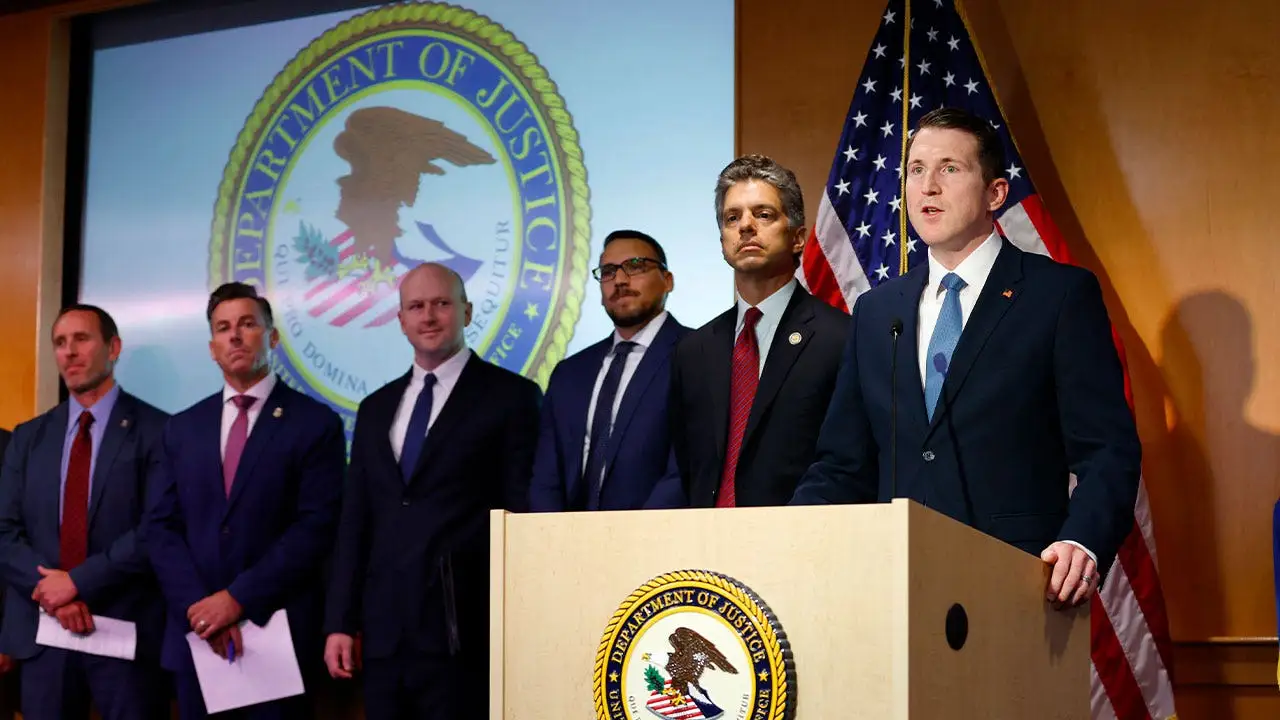
Attorney General Todd Blanche didn’t mince words when he announced the results. “Every dollar stolen through tax fraud is a dollar taken from the American people,” he said, emphasizing that the concentrated surge uncovered only a fraction of the fraud that exists. “The Department of Justice is committed to expanding our investigations and exposing schemes designed to evade accountability, because there is no safe haven for fraudsters.” That message was reinforced by IRS Criminal Investigation chief Jarod Koopman, who described the operation as an entirely new approach to enforcement. Instead of working case by case in isolation, the DOJ and IRS are now strategically surging resources around a broad range of tax crimes, hitting many targets at once. Koopman stressed that although this type of coordinated enforcement is the first of its kind, “it will not be the last.” That forward-looking stance suggests that tax cheats should feel increasingly uneasy—because the government is not just responding to tips and audits anymore; it is actively hunting for patterns of fraud across the country. For ordinary taxpayers, this is a reassuring promise that the system is being protected. For those considering filing a false return or hiding income offshore, it’s a warning that the net is tightening, and the consequences are becoming more severe.
Among the largest and most striking cases in the crackdown was an alleged fraudulent trust scheme based in Texas. Four defendants were charged with promoting tax shelters that, according to prosecutors, concealed more than $1.5 billion in income and caused over $200 million in estimated tax losses. The sheer scale of that number is hard to wrap your head around—$1.5 billion in hidden income is not a family trying to sneak a few extra deductions; it’s a sophisticated operation designed to starve the government of revenue while enriching a small group of people. In another major case, this one in Georgia, three Mexican citizens were indicted in connection with an alleged $74 million tax refund scheme involving more than 16,000 U.S. Treasury checks. Prosecutors say the defendants used Mexican identification documents belonging to other individuals to obtain IRS taxpayer identification numbers and then filed fraudulent returns to claim refunds they were never entitled to. That case highlights an especially cynical form of fraud, one that abuses the IRS system itself and steals money that should go to legitimate filers. These two examples alone account for hundreds of millions of dollars in attempted theft, and they illustrate why the Justice Department felt the need to launch such an aggressive, nationwide effort. Tax fraud is not a victimless crime—it erodes public trust and leaves the rest of us to make up the difference.
Of course, catching fraudsters and actually getting the money back are two very different things, and the Justice Department was honest about that challenge. When asked during the news conference how much money taxpayers could expect to recover, Assistant Attorney General Colin McDonald acknowledged that fraudulent proceeds are sometimes spent before investigators can retrieve them. Fraudsters often live lavishly, buying luxury vehicles and real estate with the money they steal, and by the time they are caught, the cash is gone. To address this, McDonald said the Justice Department is building an asset forfeiture and recovery team specifically tasked with pursuing assets allegedly purchased with fraud proceeds. That means investigators will not just be looking at bank accounts; they will be tracking down sports cars, mansions, boats, and other high-value purchases made with ill-gotten gains. While McDonald did not provide a total recovery figure, noting that some cases are still in their early stages, the creation of this team signals a shift in how the government approaches financial crime. It’s no longer enough to simply put someone in handcuffs—the goal is to claw back as much as possible and return it to the taxpayers who were cheated. This is a complicated, painstaking process, but it’s an essential part of ensuring that crime doesn’t pay.
This latest crackdown comes on the heels of the Justice Department’s establishment of its National Fraud Enforcement Division in April, and it follows a similar surge against pandemic relief fraud, in which Attorney General Blanche unveiled federal charges against 160 defendants. Together, these actions paint a picture of a department that is becoming far more aggressive in its fight against financial crime, especially when it comes to schemes that drain public coffers. But it’s important to remember that, at this stage, the defendants facing criminal charges are presumed innocent unless proven guilty. The Justice Department’s announcement is a statement of allegations, not a final verdict, and every person charged will have their day in court. Still, the sheer number of cases and the coordination involved send a powerful signal: the government is watching, and it is not afraid to pursue even the most complex tax schemes. For the average American, the takeaway is hopeful. The tax system is far from perfect, but there are dedicated investigators and prosecutors working every day to make sure that those who try to cheat their way out of paying their fair share are held accountable. And as this first-ever surge demonstrates, the fight is just getting started.