


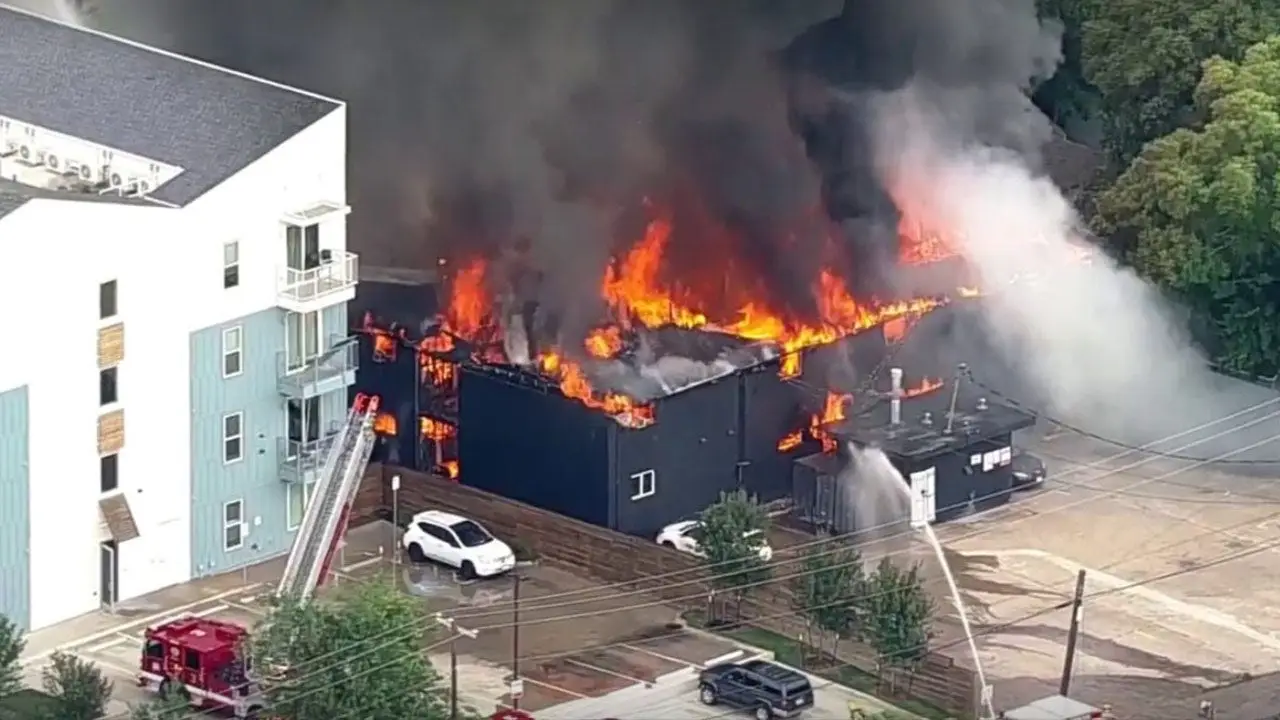
On a seemingly ordinary afternoon in the historic and vibrant Oak Cliff neighborhood of Dallas, Texas, the fragile canopy of daily routine was violently shattered in an instant. Around 1:20 p.m., as local residents went about their midday routines—perhaps preparing lunch, working from home, or enjoying a quiet moment of rest—a catastrophic explosion ripped through a two-story apartment complex, forever altering the lives of those inside and sending shockwaves through the surrounding community. The suddenness of the event was deeply jarring, transforming a peaceful residential block into a chaotic scene of survival and rescue within seconds. Witnesses reported hearing a deafening roar that seemed to shake the very foundations of the earth, immediately followed by the terrifying sight of a massive plume of thick, black smoke billowing into the bright Texas sky. This sudden eruption of fire and smoke was not just an emergency incident; it was a deeply traumatic disruption for a close-knit neighborhood where families lay down roots. In the immediate aftermath of the blast, the collective breath of the city was held as the scale of the destruction became apparent, highlighting how quickly the safety of one’s home can be compromised by unforeseen forces, and leaving a neighborhood grasping for answers amidst the rising smoke.
The story of this disaster is intrinsically tied to the heroism of the Dallas Fire-Rescue personnel, who found themselves thrust into the center of the danger even before the explosion occurred. First responders were already en route to the apartment complex to investigate reports of a potential gas leak—a routine but highly hazardous dispatch—when the devastating blast occurred, turning their precautionary response into an urgent, life-saving mission. As the scale of the emergency escalated, nearly 100 firefighters rushed to the scene, demonstrating the immense logistical effort and personal courage required to confront such a fierce blaze. These brave men and women did not hesitate, stepping directly into an unstable environment dominated by roaring flames, structural instability, and the looming threat of secondary explosions. They navigated through blinding smoke and intense heat, working tirelessly to secure the perimeter, extinguish the fires, and search the compromised two-story structure for anyone who might be trapped inside. The sheer volume of firefighters deployed speaks to the severity of the crisis and the department’s unwavering commitment to the preservation of life, reminding us of the heavy physical and emotional toll carried by those who run toward catastrophe while others flee.
Amidst the wreckage and the unfolding chaos, the human cost of the tragedy quickly began to emerge with reports of at least four people suffering injuries from the blast and subsequent fire. Among the victims, one individual sustained injuries severe enough to require immediate transportation to a local hospital, leaving their loved ones and community members waiting in anxious suspense for news on their condition and recovery. The physical environment surrounding the apartment building bore witness to the immense power of the explosion, painting a devastating picture of shattered glass, scattered debris, and structural ruin. Windows of neighboring buildings were violently blown out, leaving shards of glass glittering on the pavement as a stark reminder of the blast wave’s reach, while a nearby utility truck suffered visible damage, engulfed by the expansion of the flames. For the residents who fled the building, the loss is not merely physical or material; it represents the sudden, violent erasure of their sanctuary, leaving them displaced and grappling with the profound psychological shock of surviving an explosion that turned their safe haven into a battleground of smoke and fire.
A disaster of this magnitude reverberates far beyond the physical boundaries of the affected apartment complex, deeply impacting the collective psyche of the entire Oak Cliff community. Oak Cliff is a neighborhood known for its rich history, cultural diversity, and strong sense of mutual solidarity, qualities that shine brightest in moments of shared hardship. As neighbors stood on street corners watching the black smoke obscure the afternoon sun, they were united by a shared sense of vulnerability and a spontaneous urge to help those displaced by the tragedy. The sight of scattered belongings in the street and the smell of smoke in the air served as a sobering reminder of how interconnected their lives truly are, prompting immediate expressions of concern and offers of shelter and support for those who lost everything in the blink of an eye. This communal reaction humanizes the stark statistics of the event, showing that while the physical structures can be rebuilt, the healing of a community depends on the warmth, empathy, and resilience of its people standing together in the face of sudden adversity.
In times of profound civic crisis, leadership plays a crucial role in channeling a city’s collective grief and concern into structural support, a duty embraced by Dallas Mayor Eric Johnson as he addressed the ongoing tragedy. Utilizing his platform to offer comfort and rally support, Mayor Johnson made an emotional plea to the public, asking everyone to keep the impacted residents and the brave personnel of Dallas Fire-Rescue in their prayers. His words captured the immense difficulty of the circumstances under which the firefighters were operating, emphasizing that their exhausting efforts to battle the flames and search for survivors were carried out at great personal risk. By publicly recognizing the incredible dedication of these first responders, the Mayor reminded the community of the quiet heroism that sustains a city during its darkest hours, fostering a spirit of unity and hope. This call for prayer and solidarity serves as a bridge between the clinical facts of a news report and the deeply spiritual, emotional reality of a community coming together to support its protectors and its wounded.
As the smoke finally clears and the immediate emergency transitions into a long phase of investigation and recovery, the journey of healing for the victims and the Oak Cliff neighborhood is only just beginning. Official investigators, alongside Dallas Fire-Rescue, face the meticulous task of uncovering the precise sequence of events that led to the devastating explosion, with early signs pointing toward the suspected gas leak that first initiated the emergency call. Beyond the forensic details and the search for technical answers, the focus must remain on the human beings whose lives have been permanently altered—the injured recovering in hospitals, the displaced families looking for temporary shelter, and the community members dealing with the lingering trauma of the blast. The path forward will undoubtedly be challenging, requiring systemic reviews of utility safety and robust community support systems to help the displaced rebuild their lives. Yet, the resilience demonstrated by the people of Dallas in the hours following the explosion offers a powerful testament to the human spirit’s ability to endure, rebuild, and find hope amidst the ashes of a sudden afternoon tragedy.