

A Defiant Reckoning in Vienna: The Sentencing of Beran A. and the Global Face of Modern Terror
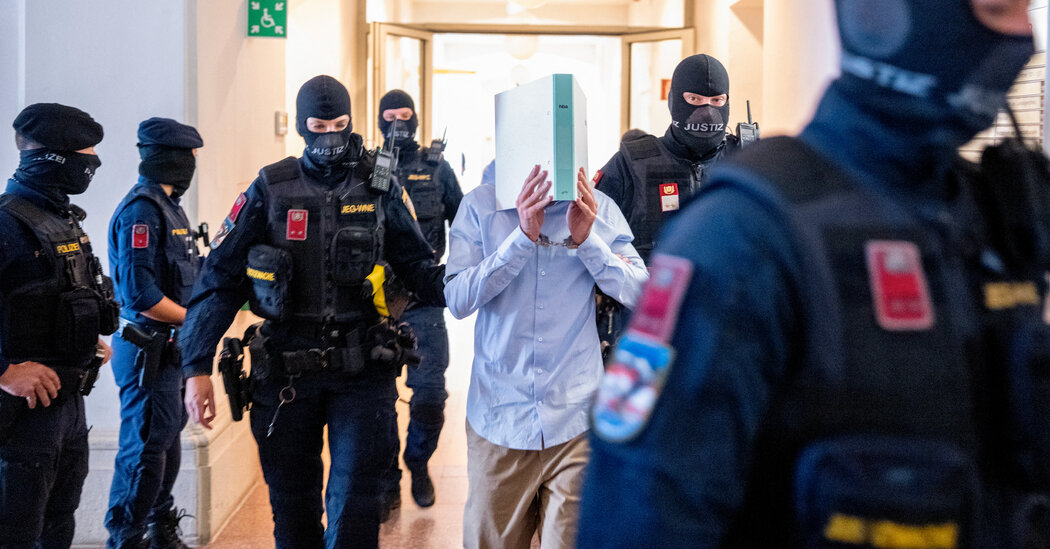
The high-stakes trial of a 21-year-old extremist reached its dramatic conclusion in a heavily fortified Viennese courtroom on Thursday, culminating in a 15-year prison sentence that starkly highlights the persistent threat of youth radicalization in Europe. The defendant, legally identified only as Beran A. under Austria’s strict privacy protocols, stood in the dock to face the ultimate consequences of a foiled masterpiece of terror: a planned suicide attack on a packed Taylor Swift concert in August 2024. As the presiding judge read aloud the lengthy list of twenty distinct terrorism-related convictions, the young man maintained a chillingly combative stance, crossing his arms and fixing a defiant, unblinking stare upon the public gallery in a display of unrepentant ideological commitment. Yet, this localized trial was merely the tip of a much larger, global iceburg; alongside him sat a co-defendant, Arda K., who received a 12-year sentence for his role in a broader, highly sophisticated international conspiracy. Together, their convictions expose a complex web of digital extremism that stretched far beyond Austrian borders, revealing coordinated plans to deploy devastating violence not only against Western pop culture hubs but also across highly secure targets in Turkey, the United Arab Emirates, and Saudi Arabia in the name of the Islamic State.
The Ternitz Raid: Inside the Blueprint of a Foiled Eras Tour Catastrophe
The dramatic downfall of Austria’s domestic terror cell began with an urgent, classified tip-off from the United States Central Intelligence Agency (CIA), which intercepted encrypted communications outlining an imminent mass-casualty event in the heart of Vienna. Acting on this high-priority intelligence breakthrough, Austrian elite counter-terrorism units launched a high-stakes, pre-dawn raid in August 2024 on a residential property in the quiet town of Ternitz, south of the capital. What investigators uncovered inside Beran A.’s residence was a terrifying operational staging ground, complete with functional explosive precursor chemicals, hydrogen peroxide, high-grade bomb-making apparatus, machetes, specialized knives, counterfeit electronic currencies, and heavy piles of instructional Islamic State propaganda. Prosecutors masterfully demonstrated that the primary objective of this stockpile was to detonate an improvised shrapnel-laden explosive device amidst the massive, vulnerable crowds of “Swifties” lingering outside the Ernst Happel Stadium before the Taylor Swift Eras Tour concerts, followed by a relentless secondary physical assault aimed at inflicting maximum carnage on escaping survivors.
Disheartened Harmony: The Eras Tour Cancellations and Global Security Reckonings
The immediate aftermath of the security services’ discoveries sent tectonic shockwaves through the global entertainment industry, prompting the sudden and historically unprecedented cancellation of all three sold-out Vienna concert dates. Over 150,000 devastated Swifties, many of whom had traveled thousands of miles and spent lifetimes of savings to witness the historic Eras Tour, found their celebratory anticipation replaced by a heavy cloud of anxiety and grief. While the Austrian streets briefly transformed into bittersweet sites of communal defiance—with disappointed fans gathering to sing anthems of resilience and trade friendship bracelets under the watchful eyes of heavily armed police patrols—security experts recognized this crisis as a permanent turning point in public safety. The Vienna Taylor Swift concert plot forced a fundamental re-evaluation of stadium security parameters worldwide, highlighting the acute vulnerability of “soft targets” outside traditional security perimeters, where tens of thousands of ticketless fans congregate in dense, unmonitored public spaces.
The Transnational Jihadist Web: Reconstructing the Middle Eastern Conduit
As Austrian forensic analysts combed through the dense digital footprints left by the captured conspirators, they uncovered a vast, multi-tiered international operation that linked the domestic Vienna plot directly to active global terror operations. The digital trail mapped of Beran A.’s secure, end-to-end encrypted messaging channels revealed that the planned cultural slaughter in Vienna was strategically synchronized with planned coordinated attacks in Turkey, the United Arab Emirates, and Saudi Arabia. This extensive data-sharing enabled investigators to solidify the prosecution of the secondary defendant, Arda K., whose 12-year sentence reflects his deep implication in facilitating these Middle Eastern offensive lines. This sprawling cross-continental counter-terrorism investigation also exposed the existence of a third critical co-conspirator, who is currently incarcerated within a high-security prison facility in Saudi Arabia, demonstrating how modern radical networks leverage decentralized digital safe-havens to coordinate global offensives simultaneously across several geopolitical fault lines.
Algorithms and Enigmas: The Quiet Crisis of Digital Youth Radicalization
The trial’s chilling revelations have forced Austria’s intelligence community to engage in a profound public reckoning regarding the rapid speed and profound insidiousness of modern algorithmic radicalization. Unlike the physical recruitment cells of the previous decade, today’s extremist actors—exemplified by the impressionable yet lethal age group of the 21-year-old Beran A. and his peers—are often systematically groomed within the echo chambers of encrypted forums, TikTok algorithms, and gamified extremist discord channels without ever meeting an operational handler. This digital shield creates an incredibly difficult landscape for Austrian security agencies, who find themselves caught in fierce domestic legal debates over metadata surveillance, end-to-end decryption limitations, and the critical constitutional balance between public safety and digital privacy laws. The stark reality remains that without the unilateral intervention of foreign intelligence assets like the CIA, Austrian security apparatuses would have lacked the technical and legal frameworks to detect this impending tragedy, a vulnerability that continues to provoke intense legislative debate within European parliament chambers.
Beyond Defiance: The Complex Psychology of the Final Verdict
Ultimately, as the legal proceedings ground to their historic close on Thursday, the courtroom witnessed a striking paradox that perfectly mirrors the internal contradictions of the modern radicalized mind. Although the defendants spent months exuding a cold, ideological rigidity, culminating in Beran A.’s calculated posture of defiance during the reading of his 15-year sentence, the final minutes of the trial offered a sudden, quiet shift in tone. According to comprehensive, rolling coverage from Austrian journal of record Der Standard, both young men chose to utilize their absolute last words before the court to offer quiet, arguably strategic, apologies for their planned actions. Whether this eleventh-hour contrition represents a authentic awakening to the gravity of their aborted horror or a desperate, cynical attempt to influence future parole considerations remains a point of deep skepticism for the public and the prosecution. Nevertheless, the definitive resolution of this trial stands as a monumental triumph for international security cooperation, asserting a resolute message that the cultural sanctuaries of open society will be defended at all costs against those who seek to silence them in the shadows of extremism.