


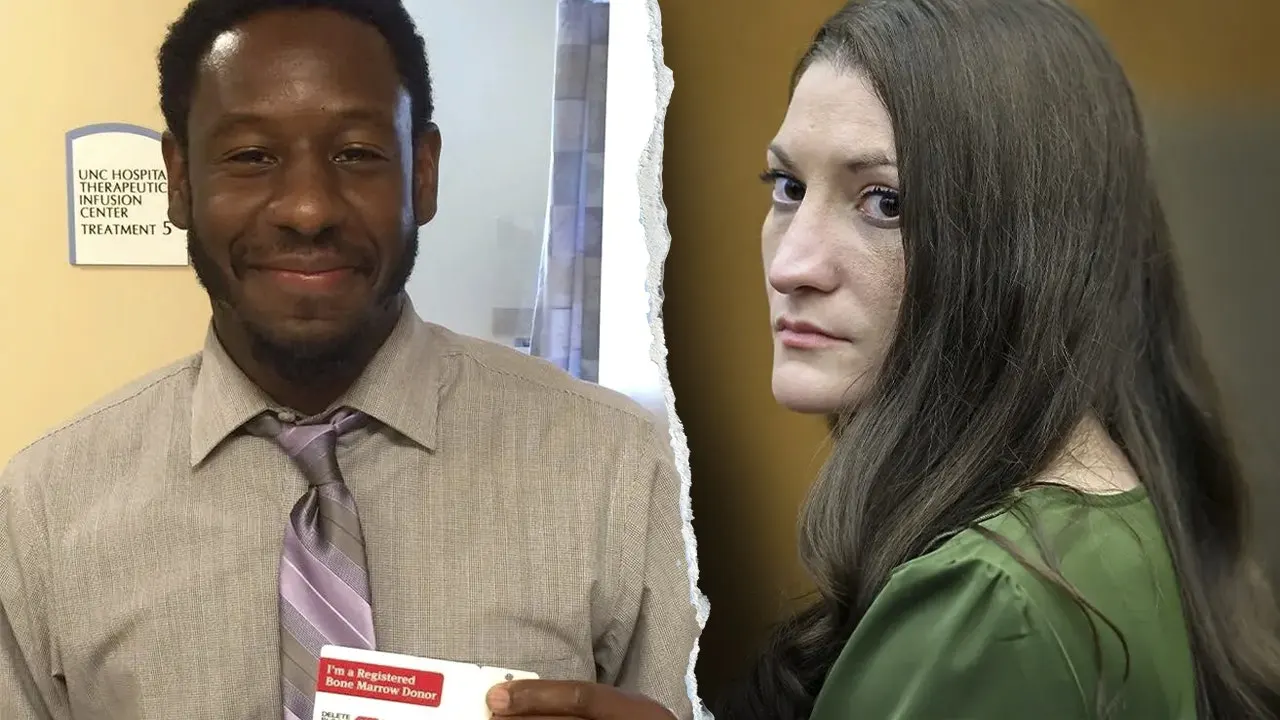
The mistrial in the case of Lindsay Clancy, the Massachusetts mother accused of strangling her three young children, left a community and a country unsettled. But for Michael Desronvil, the lone juror who refused to convict her, the story was never about the courtroom drama or the legal strategy—it was about the quiet tragedy of Cora, Dawson, and Callan, three children whose lives ended far too soon. In his first televised interview, Desronvil sat down with Fox News’ Kayleigh McEnany and opened up, reluctantly, about the weight of his decision. He spoke carefully, deliberately, aware that every word would be dissected. He admitted there were moments during deliberations when the pressure was immense. Yet he remained steadfast in his conviction. The 12-person jury was split eleven to one: eleven jurors believed Clancy was not criminally responsible due to mental disease or defect, but Desronvil voted to convict her of murder. He did not walk away from that position. And now, with the case in legal limbo, he finds himself at the center of a storm he never asked to join. The public wants answers. The defense wants an inquiry. And Desronvil wants something far simpler: for people to remember the children, not the controversy.
Desronvil did not reveal the specific evidence that guided his vote, saying only, “There were moments as we were deliberating.” He explained that he had “a lot of evidence” to back up his claim, but chose not to discuss it further, out of respect for the other jurors and the court system. “I will put that to sleep for now until, you know, they go through the process,” he said. That restraint was characteristic of a man who has spent the weeks since the mistrial defending his character while refusing to turn the proceeding into a public spectacle. He has been accused by other jurors of ignoring the law, of holding out despite his own reasonable doubts. One juror, the foreperson, claimed Desronvil admitted to having reasonable doubt about the prosecution’s case but still refused to find Clancy not guilty by reason of insanity. Desronvil denies that account. He has consistently pushed back on the narrative that he was an obstructionist or that he acted out of bias. Instead, he describes a process that was deeply serious, filled with moral weight, and far more complicated than anyone outside the jury room could understand. He asked the public not to focus on him, but on the victims—children who will never grow up, never go to school, never have birthdays again. That plea, simple and heartbreaking, is the thread that runs through every conversation he has had since the mistrial was declared on September 4th.
For Lindsay Clancy’s defense attorney, Kevin Reddington, Desronvil is not a sympathetic figure. Reddington has publicly called the holdout juror an “obstructionist” and has pushed for a formal inquiry into his conduct during deliberations. The defense filed a motion asking Judge William Sullivan to preserve all juror records from the 12 panelists and six alternates, including questionnaires, courthouse hallway surveillance video from outside the deliberation room, and sign-in sheets for cellphones. The scope of the request is extraordinary: Reddington wants Desronvil’s juror questionnaire, any supplemental filings, probation records, and even his record from the statewide domestic violence registry. He has also asked prosecutors to disclose whether they have had any contact with Desronvil as a defendant, complainant, or subject dating back to January 2021. The defense wants his phone records from 8:30 a.m. to 4:30 p.m. on each day of deliberation. The implication is clear—Reddington suspects something more than simple disagreement. He has framed Desronvil’s holdout as a potential violation of the legal process, an act that may have undermined the integrity of the trial. The judge overseeing the case has not yet ruled on the motion, and the hearing has been postponed. But the legal maneuver has escalated the conflict, turning a tragic case into a bitter battle over the very nature of justice and the role of a single juror.
Desronvil has not been silent in the face of these accusations. He has retained his own attorney, a former Trump lawyer, to fight back as he is, in the words of his counsel, “dragged through the mud.” His lawyer argues that Desronvil is being unfairly targeted simply for doing his civic duty as he understood it. The legal team has pushed back on Reddington’s characterization, insisting that Desronvil’s vote was based on a sincere assessment of the evidence and the law, not on any misconduct or hidden agenda. The fact that his attorney is a former Trump lawyer has added a layer of political intrigue to an already explosive story, but Desronvil’s team maintains this is not about politics—it is about protecting a private citizen from being punished for his verdict. The postponement of the hearing gives both sides time to prepare, but it also prolongs the uncertainty for everyone involved. Desronvil, a man who never asked for fame or notoriety, now finds his name in headlines, his background under scrutiny, and his reputation on the line. He says he understands the public interest, but he remains firm in his belief that the focus should be elsewhere. The children. The mother. The broken system that allowed so many warning signs to go unheeded. Those are the things that matter, he says. Not him.
To understand the depth of this tragedy, it helps to remember the facts that brought everyone to this point. Lindsay Clancy was a mother of three: Cora, five years old; Dawson, three years old; and Callan, just eight months old. In January of last year, she strangled each of them with exercise bands in the family home in Duxbury, Massachusetts. She then attempted to take her own life. The details are almost too terrible to repeat, but they are essential to the case. Prosecutors argued that Clancy acted deliberately, that she understood the wrongfulness of her actions, and that she methodically killed her children one by one. They painted a picture of a woman who knew what she was doing and who chose to do it anyway. Her defense team told a different story. They argued that Clancy was in the grips of postpartum psychosis, a severe and often misunderstood condition that can distort reality and drive a person to acts of unspeakable violence. They presented evidence that she had repeatedly sought help for her mental health struggles, that she had been prescribed medication, that she had reached out to medical professionals—and that, despite all of that, she fell through the cracks. Her attorneys insisted she was not criminally responsible for her actions because her mind was not her own. The jury was tasked with deciding which narrative was true. Eleven jurors believed the defense. Desronvil did not. And because of that split, the jury could not reach a verdict, and the judge was forced to declare a mistrial.
Now, the case moves forward into a murky legal future. The prosecution has indicated it intends to retry Clancy, while the defense has filed a motion to dismiss under double jeopardy grounds, arguing that a retrial would violate her constitutional protections. That motion focuses heavily on Desronvil’s behavior, suggesting that the mistrial was not the result of a genuinely deadlocked jury but rather the product of a single juror’s refusal to follow the law. If the judge agrees, Clancy could walk free—or at least avoid another trial. If not, the case will begin again, with all the pain and publicity that entails. For the families involved, there is no clean ending. The Clancy family has lost three children. Lindsay Clancy remains in custody, her mental state a subject of ongoing evaluation. And Desronvil, the ordinary citizen caught in an extraordinary situation, continues to live with the weight of his decision. He says he knows the public will judge him, and he accepts that. But he asked one thing in a new video after the mistrial drama: focus on Cora, Dawson, and Callan. They are the true victims, he said. They are the ones who cannot speak for themselves. In the noise of legal arguments, political connections, and media scrutiny, his message is a sobering reminder that at the center of this case is a profound human tragedy—one that no verdict, no inquiry, and no interview can ever truly resolve.