

The inspirational journey of Giannis Antetokounmpo is one of the most romanticized fairy tales in modern sports history, a narrative deeply rooted in the gritty, cold reality of Milwaukee, Wisconsin, where a skinny, undocumented teenager from Athens, Greece, transformed himself into a two-time League MVP and brought a long-awaited championship to a city that had spent half a century waiting in the dark. For years, Giannis was the absolute symbol of absolute sports loyalty, a superstar who actively rejected the modern path of super-team construction and ring-chasing to build something enduring, organic, and truly special in the American Midwest. But the NBA is a notoriously impatient and cruel beast, and even the most poetic partnerships eventually succumb to the relentless wear and tear of time, roster decay, and shifting divisional power dynamics. Today, the Milwaukee Bucks find themselves walking a razor-thin tightrope, caught in a terrifying basketball purgatory between trying desperately to squeeze one last championship run out of an aging, defense-compromised roster and acknowledging that a complete, bottom-up rebuild may be the only logical path forward. The whispers about Giannis’s future, which once seemed like idle sports-talk radio fantasy, have slowly hardened into an undeniable, concrete reality orbiting the league. Around the NBA, rival executives, passionate fanbases, and media analysts alike are watching the situation unfold like hawks, waiting for the precise moment this fragile structure finally breaks, forcing the Bucks to make a choice that will forever reshape the franchise’s history and redefine the balance of power across the entire sporting landscape. The clock is ticking loudly in Wisconsin, and every game feels like an exam on the viability of this era.
While the official line out of the Milwaukee front office is that they are merely “listening” to inquiries rather than actively shopping their generational superstar, everyone in the league understands the unspoken, clinical language of professional sports negotiations. You do not simply put a historical titan like Giannis on the trade block unless your hand is forced, but you also cannot afford to let sentimental pride blind you to a deteriorating asset situation. The proud roster that hoisted the Larry O’Brien trophy in 2021 has grown noticeably older, slower, and increasingly vulnerable to the physical toll of deep playoff runs. The blockbuster acquisition of Damian Lillard, which was supposed to secure an offensive dynasty, has instead yielded a fragile, defensively compromised core that has struggled to find its identity amid a chaotic carousel of head coaching changes from Mike Budenholzer to Adrian Griffin and finally to Doc Rivers. Consecutive early-round postseason exits, marred by untimely injuries to Giannis himself, have stripped away the aura of invincibility that once shielded the Fiserv Forum from external pressure. As rival front offices across the country stockpile future draft capital and cultivate promising young prospects, the Bucks find themselves with a barren cupboard, lacking the necessary assets to upgrade their roster around their star. In this high-stakes environment, listening to external offers isn’t a sign of weakness; it is a calculated, realistic strategy to ensure that if a separation does occur, the Bucks do not walk away empty-handed, but rather secure a haul of historic proportions to jumpstart their next era of basketball.
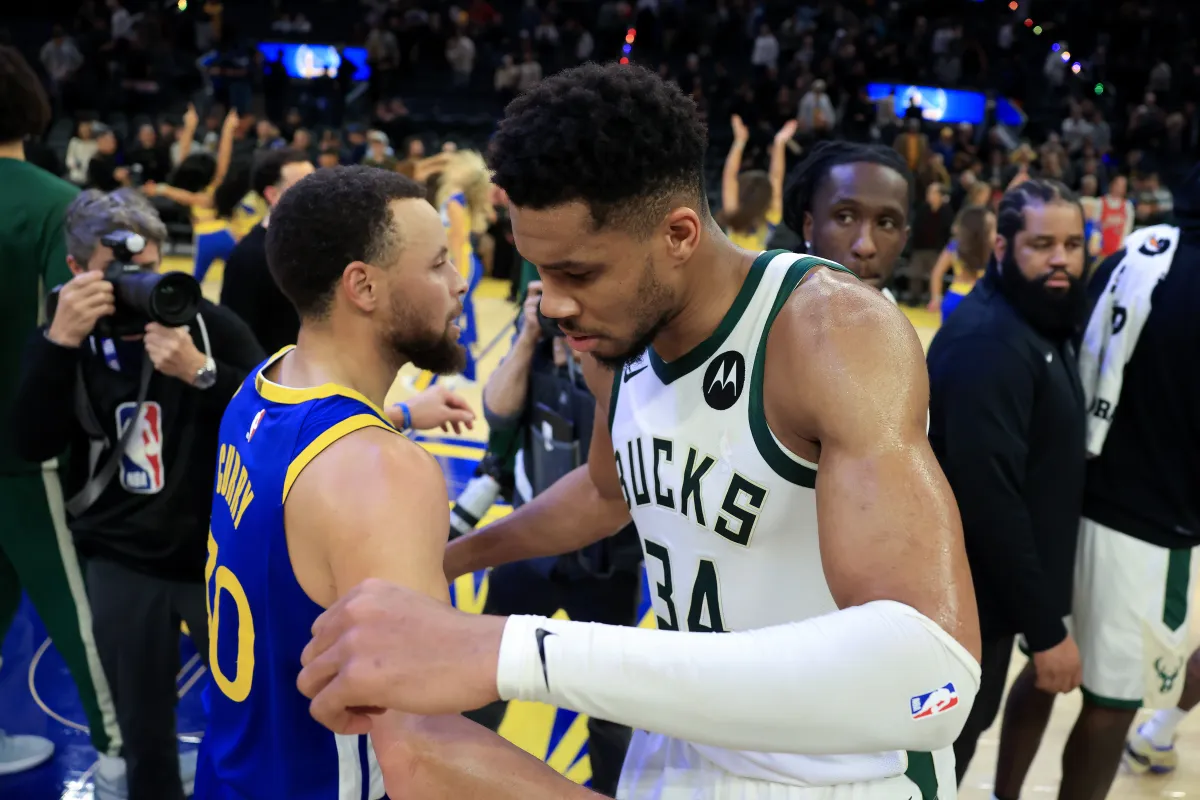
For a long time, the Golden State Warriors were whispered to be the absolute dream destination for Giannis, a glittering West Coast paradise where his thunderous physical dominance could be perfectly paired with the lethal, gravity-stretching shooting of Stephen Curry in what would have been the ultimate modern basketball marriage. However, the harsh reality of the trade market has thrown a cold bucket of water on the Bay Area’s grand ambitions. Renowned NBA insider Anthony Slater recently delivered a sobering reality check on 95.7 The Game’s “Willard & Dibs” podcast, revealing that the Warriors are not first, second, or even third in line when it comes to presenting trade packages that would actually appeal to the Milwaukee front office. The primary obstacle for Golden State is not a lack of interest, but a severe deficit in viable trade currency compared to their aggressive competitors. A potential Warriors offer would almost certainly have to be anchored by young guard Brandin Podziemski, a theoretical acquisition of Jimmy Butler via a multi-team deal to match salaries, and a massive bundle of future first-round draft selections that would leave the organization financially and strategically depleted for the next decade. To make matters worse, Golden State’s luck failed them in the draft lottery; had they managed to land a top-four pick in the highly anticipated 2026 NBA Draft, they might have possessed the golden ticket needed to entice Milwaukee. Instead, they were left holding the No. 11 pick—just one slot behind Milwaukee’s own draft position—an asset that simply does not possess the transformative value required to move the needle in a historic bidding war for a player of Giannis’s incomparable magnitude, leaving Bay Area fans to wonder what might have been.
With the Warriors seemingly pushed to the periphery of the sweepstakes, other hungry franchises have stepped forward with significantly more alluring proposals, led by the perennially aggressive Miami Heat and the rising Minnesota Timberwolves. In South Beach, where executive Pat Riley has built a legendary reputation for hunting big-game superstars, the Heat have reportedly engaged in internal discussions regarding a massive, multi-layered package designed to bring the “Greek Freak” to Biscayne Bay. This proposed blockbuster would be constructed around the dynamic scoring of Tyler Herro, the versatile, high-IQ playmaking of sophomore forward Jaime Jaquez Jr., the raw defensive potential of rookie center Kel’el Ware, the No. 13 overall pick in the 2026 draft, and at least two additional future first-round selections. This package offers Milwaukee an enticing blend of proven young talent, immediate floor-spacing, and future draft optionality to jumpstart their rebuild. Meanwhile, in the chilly climate of the Twin Cities, the Minnesota Timberwolves have been linked to a vastly different, veteran-heavy framework aimed at creating a defensive and offensive juggernaut alongside young superstar Anthony Edwards. Minnesota’s theoretical constructs have floated high-profile names such as the versatile Julius Randle, the defensive wing stopper Jaden McDaniels, and even former Defensive Player of the Year Rudy Gobert in various combinations to match salaries. However, the Timberwolves face their own severe limitations, as their previous blockbuster trades have left them with incredibly thin draft capital, including only a late No. 28 selection in this year’s draft, which dramatically restricts their flexibility to outbid more draft-rich suitors in a direct negotiation.
Not to be outdone by their coastal rivals, the league’s twin glamour franchises, the New York Knicks and the Los Angeles Lakers, have also positioned themselves as major players in the impending Giannis sweepstakes. The Knicks, operating under a transformed front office that has spent years meticulously collecting assets for this exact type of franchise-altering moment, could assemble a truly formidable offer centered around newly acquired big man Karl-Anthony Towns. To sweeten the pot and appease Milwaukee’s defensive sensibilities, New York could theoretically include one of their premier, elite two-way wings like OG Anunoby or Mikal Bridges, alongside a treasure chest of future first-round picks, although prior trades have somewhat capped their ultimate draft flexibility. Across the country, the Los Angeles Lakers are playing a desperate, high-stakes game of their own as they scramble to maximize the final championship window of an aging LeBron James. The Lakers’ rumored war chest for Giannis would be built around the crafty playmaking of Austin Reaves, the physical frontcourt presence of Rui Hachimura, the lethal shooting upside of rookie Dalton Knecht, the No. 25 pick in this year’s draft, and up to three future first-round draft selections accompanied by favorable pick-swap rights. While this offer represents the absolute maximum output the Lakers can physically assemble under current league rules, it remains to be seen whether a rebuilding Milwaukee front office would value these specific young pieces over the draft-heavy, high-ceiling packages being prepared by other hungry contenders around the league who can offer much longer-term stability.
Ultimately, beneath the complex mathematics of trade machines, salary-cap logistics, and draft-pick protections lies a deeply human drama about legacy, loyalty, and the pursuit of greatness. Giannis Antetokounmpo finds himself at a pivotal career crossroads, weighing his profound personal love for the city of Milwaukee and the legions of fans who have embraced him as an adopted son against his insatiable competitive desire to win more championship rings before his physical prime begins to fade. It is a quiet tragedy that every great NBA superstar eventually faces: the painful realization that loyalty to a single franchise can sometimes come at the direct expense of a player’s ultimate athletic ceiling. Whether Giannis chooses to stay and fight the dying of the light in Wisconsin, attempting to spark one more miraculous championship run with the Bucks, or ultimately decides to request a change of scenery to elevate his game to even loftier heights under different skies, his next decision will send seismic shockwaves through the sport. The entire basketball world now stands on the precipice of a monumental shift, waiting to see if this beloved giant will choose the comfort of a lifelong home or the cold, pressure-filled pursuit of history in a brand new jersey.