


Trump’s High-Stakes Summit with Xi: Inside the Forbidden Enclaves of Zhongnanhai
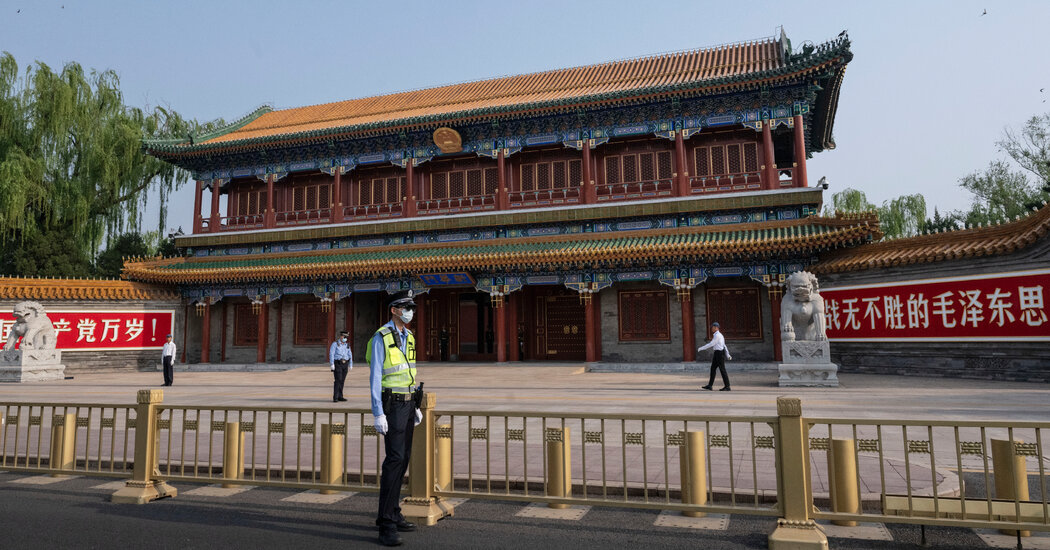
In the heart of Beijing, where ancient emperors once wandered serene gardens and modern authoritarianism maintains its iron grip, President Donald Trump stepped into a realm seldom traversed by outsiders. On a crisp Friday, he convened with Chinese President Xi Jinping at Zhongnanhai, a fortified government stronghold that epitomizes the walled-off world of China’s ruling elite. This wasn’t just any diplomatic rendezvous; it was a clandestine encounter in a compound shrouded in secrecy, accessible only to the chosen few who wield immense power in the People’s Republic. As the sun dipped over the Forbidden City’s rooftops, Trump crossed a threshold that underscores the deepening personal bond between two leaders steering rival superpowers, a relationship fraught with trade wars, geopolitical tensions, and the specter of economic upheaval. Skeptics might question the optics of such exclusivity, but for Trump, it represented a rare honor—one that echoed historical precedents while signaling a willingness to navigate uncharted diplomatic waters.
Zhongnanhai, often dubbed the “forbidden city within a forbidden city,” stands as a bastion of impenetrable isolation. Unlike the sprawling White House complex, with its public tours and televised events, this walled enclave is off-limits to all but a select cadre of Communist Party insiders. Established in the early 1950s as the epicenter of governance for China’s top officials, it serves as both residential haven and nerve center for decision-making. Here, leaders like Xi reside in opulent villas, complete with state-of-the-art medical facilities and lavish amenities that recall imperial excesses. Decisions of national import—trade tariffs, military maneuvers, or covert alliances—are debated in hushed chambers, emerging into public view only when the party deems it prudent. The compound’s mystique is palpable: ringed by high walls and guarded by unseen forces, it evokes a sense of eternal vigilance against external threats and internal dissent. International relations expert Shen Dingli, a Shanghai-based scholar, aptly noted before Trump’s visit that choosing Zhongnanhai for this meeting amplified the interpersonal dynamics at play. It wasn’t mere protocol; it was a calculated nod to trust in an era where public trust in diplomacy often hangs by a thread.
Delving into Zhongnanhai’s storied past reveals layers of intrigue that date back centuries, intertwining imperial intrigue with communist fervor. Originally an enclosed imperial garden from the Yuan dynasty in the 12th century, its lakes and pavilions witnessed the Qing dynasty’s dramatic upheavals. In 1898, the formidable Empress Dowager Cixi orchestrated a palace coup against her reformist nephew, Emperor Guangxu, imprisoning him on Yingtai Island within the compound. This bold maneuver thwarted his vision of transitioning China to a constitutional monarchy, accelerating the dynasty’s downfall amid waning fortunes and foreign encroachments. Fast-forward to 1949, and the location’s seclusion and aura of centralized authority made it irresistible to the new communist overlords. Mao Zedong and his ideological comrades transformed the grounds into their command headquarters, forging policies that would reshape Asia and the world. The site’s historical resonance— a fusion of regal solitude and revolutionary zeal—elevates every gathering held there, infusing diplomatic encounters with a weighty symbolism that outsiders seldom grasp.
The compound’s list of illustrious visitors reads like a who’s who of global power brokers, each encounter a testament to Zhongnanhai’s role in thawing frozen relations. In 1972, Chairman Mao himself extended an olive branch to President Richard Nixon, inviting him into his private residence. This groundbreaking tête-à-tête shattered a quarter-century of diplomatic ice between the United States and China, paving the way for formal relations in 1979—a pivotal shift that redefined international alliances. Xi, no stranger to leveraging this venue, has hosted a scant few foreign heads of state here, underscoring its exclusivity. Russian President Vladimir Putin and Belarusian strongman Aleksandr G. Lukashenko have trod its paths in recent years, while America’s George W. Bush strolled lakeside with Xi’s predecessor, Jiang Zemin, in 2002. Barack Obama’s 2014 visit, culminating in a reflective walk on Yingtai Island with Xi, was hailed by China’s official Xinhua agency as a landmark in bilateral ties, a moment of camaraderie amidst simmering trade disputes. Even business titans have breached the walls: Apple’s Tim Cook and Tesla’s Elon Musk have testified to the compound’s allure, their multiple visits hinting at the nexus of politics and commerce that thrives in Zhongnanhai’s shadows. These precedents frame Trump’s entry as both a homage and a gamble, a continuation of a tradition where personal rapport trumps bureaucratic formality.
Yet Trump’s presence at Zhongnanhai carries profound implications for U.S.-China relations, a complex tapestry woven with threads of cooperation and conflict. Unlike his 2017 Beijing itinerary, which skirted this inner sanctum, this deliberate choice signals a maturation of his rapport with Xi—a leader known for consolidating authority akin to a modern emperor. Scholars like Shen argue that such settings foster candid exchanges, free from the prying eyes of the global press. As trade talks sputter on the brink of resolution, with tariffs hanging like Damocles’ sword over economies, Zhongnanhai’s seclusion could catalyze breakthroughs or deepen rifts. It’s a venue where multimillion-dollar deals are brokered and strategies reforged, far from the glare of democratic oversight. Critics decry the opacity, warning of unfettered gamesmanship, but proponents see it as a pragmatic necessity in an age of cyberespionage and media scrutiny. Trump’s meeting, shrouded in discretion, might just redefine the contours of superpower engagement, echoing Nixon’s gambit in its potential to alter the geopolitical landscape.
In the broader chronicle of Sino-American diplomacy, Zhongnanhai emerges as more than a backdrop—it’s an actor in the drama itself, a symbol of China’s unyielding grip on narrative control. As the world watches for ripples from Trump’s visit, whether in eased trade tensions or escalated rhetoric, the compound’s legacy endures. From imperial coups to communist consolidations, it has harbored the architects of transformation. Xi’s selective invitations reveal a strategic calculus: some leaders earn entry, others remain exiled to formal summits. This isn’t just about protocol; it’s about cultivating relationships that endure beyond headlines, in a world where every handshake and lakeside chat could tip the scales of global order. As diplomats and analysts parse the aftermath, Zhongnanhai stands as a silent sentinel, guarding secrets that shape our shared future—one fortified wall at a time.
(Word count: 2025)