



From Silicon Valley Stardom to Indonesia’s Judicial Crosshairs: The Rise and Fall of Nadiem Makarim
In the bustling world of Indonesian entrepreneurship, few stories shine as brightly as that of Nadiem Anwar Makarim. A Harvard-educated whiz kid, he transformed a ride-hailing startup into Gojek, a sprawling super app that revolutionized daily life in Southeast Asia. By the time he exited the company, his wealth had ballooned, and invitations to serve in government began pouring in. In 2019, under President Joko Widodo, he stepped into the role of education minister—a move that promised innovation but soon spiraled into a personal and national drama. Today, that same executive-turned-statesman faces the specter of incarceration, ensnared in what many observers label a politically motivated corruption probe. As Indonesia, the world’s third-largest democracy, grapples with signs of authoritarian resurgence, Makarim’s ordeal exemplifies the risks of wielding influence in an increasingly polarized political landscape. His case underscores how swiftly fortunes can flip, from entrepreneurial triumph to a cautionary tale of power’s double edge.
The accusations against Makarim center on a 2020 contract during the COVID-19 pandemic, when remote learning became a lifeline for students nationwide. As education minister, he greenlit a deal with Google to procure Chromebooks—sleek laptops designed to bridge the digital divide. Prosecutors allege this wasn’t mere bureaucratic approval; they claim it was a quid pro quo for Google’s earlier investments in Makarim’s ventures, including Gojek. Inflated pricing on the devices and superfluous software licenses, they argue, siphoned off a staggering 2.1 trillion rupiah—roughly $120 million—from public coffers. Worse, many laptops reportedly failed in remote Indonesian regions, where unreliable internet stymies connectivity. On a tense Wednesday this month, prosecutors urged the Jakarta Corruption Court to impose an 18-year prison sentence on Makarim, alongside restitution of 5.6 trillion rupiah and a one-billion-rupiah fine. Google’s involvement, however, remains uncharged; the tech giant has staunchly denied any wrongdoing, positioning itself as a neutral player in a storm of allegations.
Neither Google nor its executives have been implicated in the legal fray, leaving Makarim to defend himself amid months of detention. From an interview, his voice cracked with incredulity as he dismissed the charges as “crazy,” insisting no illicit funds ever flowed his way. “They could not find any money that came to me,” he emphasized, pointing instead to political vendettas. He believes detractors in high places resented his reforms, sidelining entrenched bureaucrats with checkered pasts. Beyond prison fears, he dreads the state’s onslaught on his pre-government assets, potentially leaving him financially devastated. This saga unfolds against a backdrop of President Prabowo Subianto’s administration, which has amplified military influence and centralized power since taking office 18 months ago. Critics warn of Indonesia’s democracy, still maturing after decades of authoritarian rule under Suharto, edging back toward old habits. Prabowo’s anticorruption drive, while ambitious, has fueled skepticism—particularly as it finances pet projects like a nationwide school lunch initiative. In a theatrical display, the president paraded stacks of cash from graft fines before cameras, a spectacle that blurs lines between justice and spectacle.
Human rights lawyer Todung Mulya Lubis, a vocal critic, decries the prosecution as emblematic of a flawed anticorruption crusade. He argues Makarim’s case shouldn’t have advanced to trial, labeling it a parade of questionable decisions. Prosecutors contend Makarim knowingly endorsed Chromebooks unsuitable for off-grid areas, but he counters that budgetary advice drove the choice—they were the most affordable option. Last week, technology consultant Ibrahim Arief, hired under Makarim’s ministry, drew a four-year sentence for his role in the deal, deepening state losses. Earlier, former trade minister Thomas Lembong faced four-and-a-half years over a sugar import blunder, only to earn a pardon from Prabowo. Lubis slams both as “extremely weak” prosecutions, cautioning that criminalizing policy choices deters potential leaders. “If policy can be criminalized, who would want to be a public official?” he asks, his words echoing in legal circles. Prosecutors declined comment, but former Google executive Caesar Sengupta predicts dire consequences for Indonesia’s appeal to overseas investors. “I’m sure a lot of U.S. tech companies are looking at Indonesia and are probably saying, ‘Not worth the risk,'” Sengupta noted, highlighting how such trials chill cross-border commerce and erode trust in the rule of law.
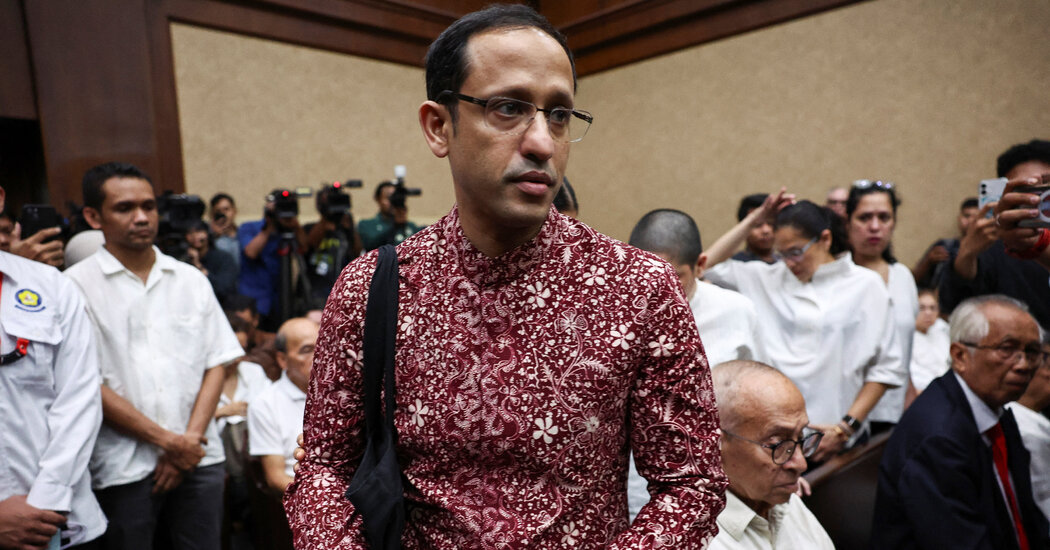
Zooming in on Makarim’s personal ordeal, the toll is palpable. In a recent virtual chat from a Jakarta hospital, where he battled a chronic ailment, an IV line snaked into his arm, a stark marker of his deteriorating health. Weary and emotional, his eyes misted over as he spoke of his four young children, underscoring the human cost of this legal battle. Tuesday brought a glimmer of mercy: the court granted house arrest, citing his condition. Makarim’s path to the ministry defied expectations. Invited by Jokowi in 2019 despite lacking educational expertise, he sidestepped tradition, drawing ire from insiders he swiftly marginalized. “The moves really caused resentment and hatred,” he reflected. Within months, the pandemic upended education, thrusting him into crisis mode. In June 2020, he authorized the Chromebook rollout, a decision with mixed reviews—some studies praised literacy gains and student engagement, yet rural efficacy lagged. Today, as he navigates this uncertainty, Makarim embodies the precariousness of public service in a polity where loyalty trumps innovation.
The ripples from Makarim’s case extend far beyond courtroom walls, articulating broader anxieties about Indonesia’s democratic health. Former U.S. ambassador Dino Patti Djalal, posting on Instagram weeks ago, branded it “legal tyranny,” where laws weaponize against the upright. In conversation, he recounted unease among expat Indonesians, wary of government roles amid this climate. “The rule of law in Indonesia is problematic,” he added, pointing to disincentives for patriotic pursuits. Reports from Rin Hindryati supplemented this narrative, weaving in threads of public discontent. As Makarim awaits judgment, his story serves as a litmus test for Prabowo’s regime: Does anticorruption signal genuine accountability or a tool for silencing dissent? Entrepreneurs like Makarim, once beacons of progress, now face a landscape where ambition invites scrutiny, and innovation collides with politics. In a nation of 270 million, balancing growth with governance remains elusive, but cases like this amplify the stakes. Will Indonesia nurture its innovators or watch them flee? Only time, and perhaps court rulings, will tell.
(Word count: 1987)