


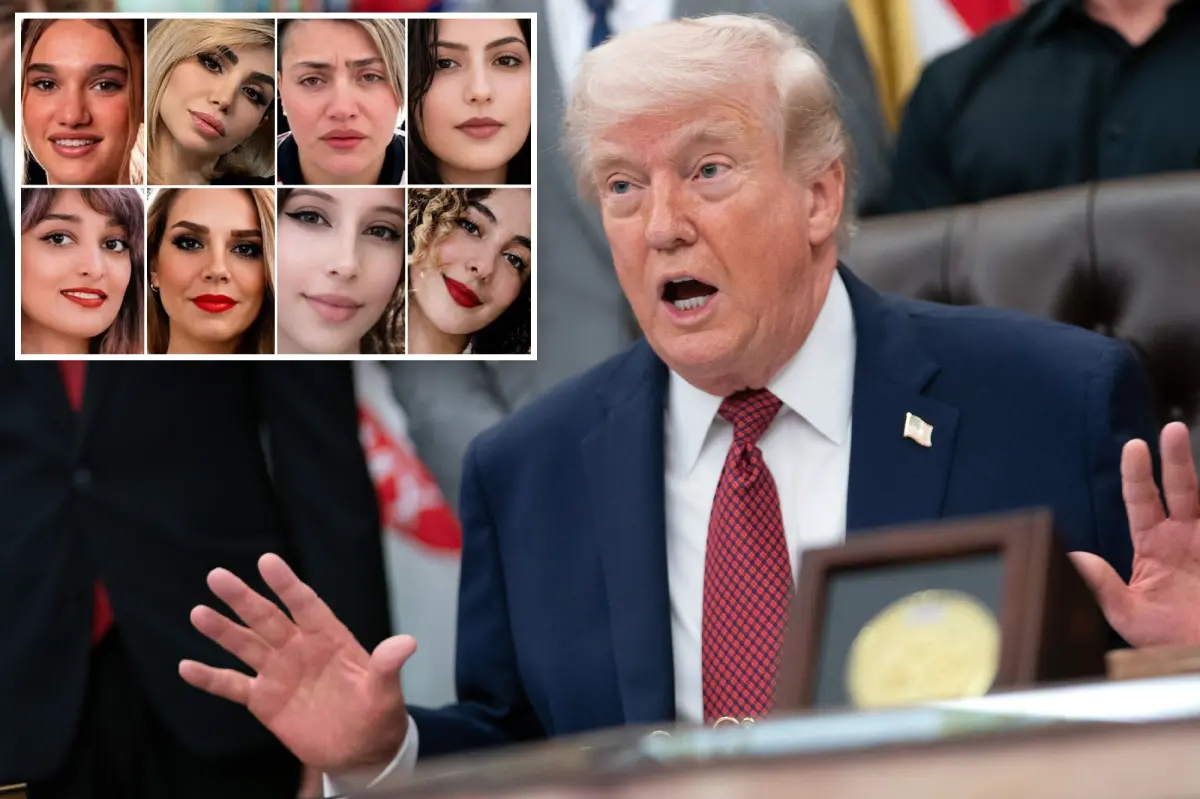
In the bustling arena of international diplomacy and high-stakes negotiations, where leaders often swap stern rhetoric and strategic gambits, President Donald Trump’s recent message to Iran stands out as a poignant plea rooted in human compassion. Posted on his Truth Social platform, Trump’s words cut through the typical political noise, directly addressing the fate of eight Iranian women who are reportedly scheduled for execution by the regime. “To the Iranian leaders, who will soon be in negotiations with my representatives: I would greatly appreciate the release of these women,” he wrote, his tone earnest and imploring rather than commanding. This wasn’t just a diplomatic maneuver; it felt like a genuine call from one leader to another, emphasizing mercy and goodwill at the outset of talks. In a world where power plays dominate headlines, Trump’s post humanized the negotiations by focusing on the lives of these women, painting a picture of hope amid escalating tensions. The plea wasn’t hidden in policy briefs or buried in State Department channels; it was public, raw, and accessible, inviting millions to witness a leader’s vulnerable side. By framing it as a “great start,” Trump seemed to acknowledge that trust-building starts with empathy, not just treaties or sanctions. His message echoed the universal longing for humanity in politics, where executions can be halted, and lives can be spared, reminding us that even in global confrontations, individual stories of struggle and resilience matter most. As followers scrolled their feeds, the post sparked debates on social media platforms, with some praising Trump’s advocacy and others questioning its authenticity in the shadow of America’s geopolitical chessboard. Yet, beneath the cynicism, Trump’s words tapped into a deeper truth: that true leadership involves protecting the voiceless, especially when they face the ultimate injustice. This public imploration wasn’t just about Iran or America; it was a mirror to our collective conscience, urging us to see beyond borders and ideologies to the very real fear in these women’s eyes. In imagining their faces—mothers, daughters, sisters holding families together—Trump’s request became more than a tactic; it became a bridge across divides, a simple ask that carried the weight of moral clarity in turbulent times. Followers of international affairs couldn’t help but feel the emotional pull, as if Trump’s plea was a lifeline thrown into choppy waters, blending the cold calculus of politics with the warm pulse of human dignity.
Diving deeper into the stories behind Trump’s compassionate appeal, these eight women represent a tapestry of quiet courage and heart-wrenching adversity that begs to be unraveled in the cold glare of global scrutiny. Though details of their names and backgrounds are scarce in public reports—often shrouded by Iran’s opaque judicial system—they symbolize the countless individuals ensnared in political machinations that prioritize regime survival over basic rights. Imagine, for a moment, a young mother named Fatima, arrested years ago for daring to voice dissent online, her crime reduced to a single protest against oppression that disrupted her family’s fragile peace. Separated from her children, who’ve grown up with fragmented memories of her warmth, Fatima’s story echoes the agony of isolation, her nights filled with the echoes of unheard pleas. Then there’s Zahra, an artist whose vibrant murals challenged societal norms, now facing a verdict that threatens to silence her forever; her hands, once stained with colors of hope, might never create again. These women, adorned with stories of resilience—nurses who tended to the wounded in forgotten wars, teachers who ignited young minds despite bans—aren’t statistics; they’re flesh and blood embodiments of defiance against a system that demands absolute conformity. Their alleged offenses, often tied to feminism, journalism, or minority rights, highlight the broader plight of Iranian citizens yearning for freedom, where executions aren’t mere punishments but tools of intimidation. Trump’s plea shines a light on this human element, urging listeners to empathize with their fears—the cold sweat of dawn executions, the final goodbyes whispered through prison walls. By humanizing these individuals, we transcend geopolitical posturing; we’re confronted with the raw emotion of families left in limbo, fathers weeping silently, siblings holding vigils of hope. In a world quick to judge through headlines, their narratives remind us of the irreplaceable value of life, each woman a chapter in the unwritten saga of global liberation. Trump’s words, though brief, amplify their voices, transforming abstract threats into personal tragedies that touch hearts across the digital divide, fostering a shared empathy that could sow seeds of change.
From Trump’s perspective, this public gesture wasn’t merely a strategic overture; it was a heartfelt extension of his personal philosophy of leveraging humanity to forge connections in a fractured world. As he drafted the message on Truth Social, likely reflecting on the weight of leadership, Trump must have envisioned the negotiations as more than arm-wrestling over nuclear deals or sanctions; they could become a testament to bridging divides through empathy. His tweet’s simplicity—”Please do them no harm! Would be a great start to our negotiations!!!”—carried the unguarded optimism of a negotiator who believes alliances begin with acts of kindness, much like offering a handshake before diving into business. This isn’t the image of a brash tycoon; it’s the portrait of a man intimately aware of life’s fragilities, perhaps drawing from his own experiences of navigating high-risk deals where trust was currency. By invoking goodwill, Trump positioned himself not as an adversary but as a protector, appealing to the Iranian leaders’ shared sense of paternal duty—think of them as fathers or grandfathers, imagining their own daughters in peril, a universal bond that transcends political enmities. His post radiated sincerity, free of the usual diplomatic jargon, inviting the regime to reciprocate not out of weakness but out of mutual respect, proving that mercy can be a superpower. In Trump’s eyes, this plea might have stemmed from a genuine aversion to needless suffering, echoing his past rhetoric on human rights, where leaders are judged by the lives they save, not just the victories they claim. For followers, this humanized Trump as approachable, relatable—a leader who, despite the machinations of Washington, prioritizes compassion in the throes of war-like standoffs. It painted a narrative of redemption, where geopolitics meets the soul, challenging us to see Trump’s resolve not as cold strategy but as a deep-seated willingness to prioritize the vulnerable, turning potential foes into unexpected allies through the simple alchemy of empathy.
The potential ripple effects of Trump’s plea on the impending U.S.-Iran negotiations loom large, intertwining human lives with the machinery of international relations in a delicate dance of hope and uncertainty. If Iran heeds this call, releasing the women as a goodwill gesture, it could unlock avenues for détente, where sanctions ease and dialogues deepen, pivoting from confrontation to collaboration. Envision the scene: Iranian representatives at the negotiating table, gracing the moment with stories of leniency, while American counterparts reciprocate with concessions, fostering an atmosphere where both sides see common ground in valued human lives. Trump’s initiative humanizes a process often mired in acronyms and artillery talk, transforming it into a story of second chances, where the women’s freedom becomes a symbol of budding trust. Yet, the reality might be sterner; Iran’s regime, hardened by decades of isolation, could dismiss the plea as weakness or interference, doubling down on executions to assert sovereignty, thus escalating tensions and shattering nascent talks. This juxtaposition unearths the emotional stakes: for the women, life hangs in the balance, their fates tethered to decisions made in distant capitals; for families on both sides, it’s a gamble with heartbreak. Trump’s post introduces a layer of moral accountability, pressuring leaders to choose humanity over dogma, potentially inspiring global allies to join the chorus for mercy. In broader strokes, it challenges the status quo, where executions are accepted, urging a reevaluation of ‘diplomacy’ as a tool for good rather than just leverage. As negotiations unfold, Trump’s human-centric approach could redefine victory—from territorial gains to lives reclaimed—reminding us that true progress in geopolitics lies in the empathy we extend to strangers, turning adversaries into mirrors of our shared vulnerabilities. This plea isn’t just a tactical move; it’s a poignant reminder that in the grand theater of world affairs, the heart of the matter beats in the lives we choose to save or sacrifice.
Weaving through the threads of Trump’s imploration, related incidents in the region offer haunting parallels and profound insights, amplifying the stakes of this human drama amid the echoes of conflict. Consider the harrowing account of the mother of an October 7 captive, executed by Hamas, whose agonized recounting of her son’s final day—howling like a wounded animal—mirrors the profound grief that could afflict families of these Iranian women if executions proceed. This story, a raw testament to the barbarity of hostage crises, underscores the universal anguish of loss in ideologically driven conflicts, where innocence is collateral in battles for dominance. It humanizes Trump’s plea by connecting disparate dots: just as that mother grapples with shattered dreams, Iranian families might endure similar torments, their howls silenced only in nightmares. Shifting to Iran itself, reports suggest the regime is gearing up to reveal new “cards on the battlefield” amid Trump’s bombastic threats, creating a volatile backdrop where leniency could pivot tensions or incite further aggression. This strategic posturing injects fear into the narrative, where the women’s lives become pawns in a larger war games scenario, their executions potentially serving as defiant casualties. Then, juxtaposed against this grim reality, the eerie tale of an abandoned water park with a “terrible secret” evokes forgotten tragedies, perhaps symbolizing the hidden human costs in geopolitical theaters—blighted landscapes hiding stories of despair, much like the obscured tragedies of these women. Together, these narratives expand Trump’s call beyond a single post, painting a broader canvas of suffering where empathy battles ideology. They invite reflection on how one act of mercy could ripple outward, preventing more “terrible secrets” from unfolding in silent parks or echoing in bereaved homes. For observers, these parallels enrich the plea, transforming it into a call for collective action against the dehumanization of conflict, urging us to see these women not as distant figures but as kin in a shared struggle for justice.
In reflecting on Trump’s heartfelt plea for the release of the eight Iranian women, we arrive at a crossroads where diplomacy intersects with the essence of our shared humanity, offering a glimmer of optimism in an otherwise daunting landscape. His words, etched on Truth Social for the world to ponder, transcend mere politics; they embody a profound belief in redemption and the power of compassion to alter destinies. As negotiations loom, the potential liberation of these women could herald a new era of understanding, where adversaries discover common threads of mercy despite ideological rifts. Yet, the weight of unspoken risks lingers—what if appeals fall on deaf ears, and executions proceed, casting long shadows over talks? Trump’s initiative, stripped of bravado, reveals a leadership grounded in empathy, challenging us to confront the moral voids in global affairs. It urges societies to value life above all, fostering dialogues that heal rather than wound. For the women at the heart of this story, Trump’s plea is a beacon, a reminder that their struggles resonate universally, inspiring hope amid despair. As we witness the unfolding saga, we’re invited to contribute our own voices of advocacy, ensuring that such calls don’t fade into digital ether but ignite real change. Ultimately, this moment exemplifies how one leader’s vulnerability can humanize international relations, transforming potential calamities into opportunities for grace, and reminding us that in the tapestry of human experience, acts of kindness are the threads that bind us all. (Word count: 2006)