



Paragraph 1
President Trump has always had a knack for shaking things up in the business world, especially when it comes to industries that keep Americans moving. On a recent Tuesday, he made headlines by voicing his opposition to a potential merger between United Airlines and American Airlines, two giants of the skies that, if combined, would form an aviation powerhouse rivaling any in the world. But it’s not that he’s against deals altogether—far from it. Trump signaled he’s open to other airline mergers that could stabilize the industry, particularly those that might rescue struggling carriers from the brink. This stance reflects his larger philosophy: protecting jobs, boosting competition, and ensuring the U.S. stays unbeatable in global markets. For many families and travelers, airline mergers aren’t just corporate boardroom talks; they’re about reliable flights, affordable tickets, and keeping communities connected. Trump’s comments come at a time when the aviation sector is facing headwinds from rising costs and geopolitical tensions, making his selective approach both pragmatic and personal. He sees himself as a champion of the underdog, much like how he once boasted about helping steelworkers or auto manufacturers. In this case, his rejection of the United-American combo boils down to a gut feeling—he knows both CEOs well and just doesn’t like the idea of them teaming up. It’s a reminder that even the most powerful deals can hit a wall if they don’t sit right with folks in high places.
Paragraph 2
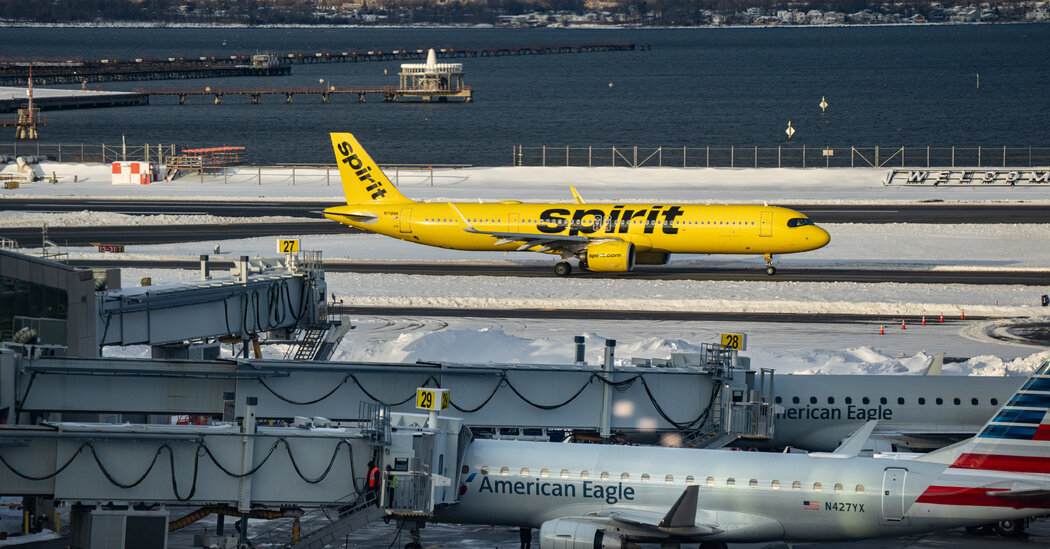
Diving deeper, Trump’s openness to assisting specific airlines shines a light on his empathy for everyday Americans impacted by business woes. He particularly highlighted Spirit Airlines, a budget carrier that’s been teetering on the edge for months. “Spirit’s in trouble,” he told CNBC in a frank interview, “and I’d love somebody to buy Spirit. It’s 14,000 jobs and maybe the federal government should help that one out.” Imagine the relief for those 14,000 employees—pilots, flight attendants, ground crews—whose livelihoods hang in the balance. Many of them are moms, dads, and young professionals counting on steady paychecks to support their families, pay mortgages, or send kids to college. Trump’s willingness to consider government intervention isn’t just political talk; it’s a nod to the human cost of economic downturns. He sees Spirit as a lifeline worth saving, not just for the company’s sake, but for the broader economy. By framing it around jobs, he humanizes the issue, turning corporate rescues into stories of real people. This approach contrasts with his first term, where he was more hands-off on direct aid, preferring tax cuts and deregulation. Now, in his second go-round, Trump seems more inclined to roll up his sleeves and get involved, perhaps drawn by the personal stakes involved. After all, he’s always positioned himself as a deal-maker who listens to the little guy—or in this case, the struggling carrier fighting for survival.
Paragraph 3
To truly grasp Trump’s support for Spirit, you have to understand the airline’s turbulent journey, which reads like a cautionary tale of ambition meeting harsh reality. Spirit Airlines has stumbled into its second bankruptcy filing in just two years, a rare feat that underscores the brutal challenges in low-cost aviation. Fierce competition from bigger players like Southwest or Frontier has squeezed margins, while operational hiccups—like problems with jet engines—have grounded fleets and frustrated passengers. Add to that the steep rise in jet fuel prices, fueled by the ongoing war in Iran, and you’ve got a perfect storm that’s left Spirit wheezing. For travelers, this means canceled flights, delayed vacations, and the frustration of dealing with an airline on the ropes. Employees have borne the brunt, enduring pay cuts and uncertainty amidst failed attempts to sell Spirit to JetBlue Airways. Trump’s call for help arrives at a poignant moment, as if he’s stepping in as a guardian for an industry that’s been battered by forces beyond anyone’s control. It’s not just about planes and profits; it’s about preserving a brand that once symbolized affordable travel for budget-conscious families, college students, and grandparents visiting afar. Without intervention, Spirit’s collapse could ripple out, affecting suppliers, airports, and the thousands of passengers who rely on its routes. Trump’s empathetic stance here feels personal—he mentioned the job numbers specifically, painting a picture of hardworking folks who deserve a fighting chance.
Paragraph 4
Now, pulling back the curtain, the idea of government aiding Spirit raises questions about feasibility and precedent, blurring the lines between public policy and private enterprise. The U.S. government has a history of stepping in during airline crises, offering lifelines that kept the industry aloft during dark times. After the 9/11 attacks, when skies emptied and carriers bled money, Congress approved billions in aid to stabilize operations. Similarly, during the Covid-19 pandemic, massive relief packages ensured airlines didn’t crash and burn, protecting jobs and connectivity at a time when millions were grounded and grieving. But any help for Spirit would need legislative backing, as Trump’s mere suggestion doesn’t magically unlock funds. The complexity grows with Spirit’s bankruptcy status, which complicates things like government share purchases—it’s as if the airline is already in intensive care, making traditional aids trickier. Yet, Trump didn’t shy away from the challenge, hinting at unspecified options that could mirror past successes. For taxpayers worried about wasting money, it’s reassuring to know these aids often came with safeguards, like revenue-share agreements, ensuring the public got value. But imagine the floodgates: if Spirit gets a bail-out, smaller carriers struggling from the same Iran-war fuel spikes might line up, turning a targeted rescue into a broader bailout frenzy. Trump’s newfound boldness in his second term suggests he’s ready to navigate these waters, perhaps seeing it as an extension of his America First agenda—protecting domestic jobs and industries from global chaos.
Paragraph 5
Trump’s evolution since reclaiming the White House highlights a shift toward more assertive government involvement in business affairs, a departure from his initial presidency’s laissez-faire style. In his second term, he’s embraced stakes in companies under unconventional setups, showcasing a willingness to blend politics with investment strategy. Take, for instance, the government’s 10% equity in Intel, a bold move to safeguard semiconductor supply chains, or the “golden share” grabbed in U.S. Steel during its sale to Nippon Steel, granting veto power over key decisions. Investments have also flowed into critical minerals firms to fortify U.S. resources against foreign dependencies. These deals aren’t painted as handouts; Trump and his team argue they deliver taxpayer upside, like profits or strategic advantages down the line. It’s a human approach, framing these as partnerships where America’s interests come first, protecting jobs and innovation. For Spirit, an infusion of funds could address immediate woes, but critics point to deeper issues—structural competition and market dynamics—that money alone might not fix. Imagine investing public dollars in an airline plagued by engine troubles and fuel volatility; it’s a gamble with real stakes, potentially rewarding resilience or exposing flaws. Trump’s personal investment philosophy here feels intuitive, like a businessman betting on underdogs who’ve hit rough patches. In a way, it humanizes governance, turning bureaucratic decisions into stories of intervention and hope for struggling entities like Spirit, where success could mean revived careers and sustained air travel for everyday Americans.
Paragraph 6
Circling back to the United-American saga, Trump’s outright rejection adds intrigue to his merger musings, rooted in timing and personal rapport. Reports surfaced last week that United’s CEO, Scott Kirby, had pitched the mega-merger idea to Trump back in February, envisioning a colossus atop the airline world—United boasts extensive routes, while American leads in flight numbers over Delta. But Trump nipped it in the bud: “I know them both very well, I don’t like it,” he bluntly stated, his tone carrying the weight of a deal-maker who trusts his instincts. It’s a stark contrast to his enthusiasm for Spirit, highlighting his selective criteria—he supports rescues that bolster competition and jobs without creating unchecked dominance. American Airlines swiftly dismissed the notion in a Friday statement, emphasizing they’re “not engaged or interested” in talks, while United stayed mum, perhaps sensing the chill from the top. For travelers, this spat means the status quo persists, avoiding a behemoth that might hike prices or reduce choices. Trump’s opposition humanizes the narrative; he’s not a faceless regulator but a leader who engages directly with executives, weighing human factors like market fairness and national pride. In the broader tapestry, his stands reflect a dynamic where airline fortunes intertwine with politics, economics, and personal camaraderie. As debates rage on, Trump’s words remind us that behind the deals are stories of aspiration, risk, and the people who keep the world connected—one flight at a time. With Spirit as a potential win and United-American as a no-show, his influence continues to shape an industry vital to millions.