


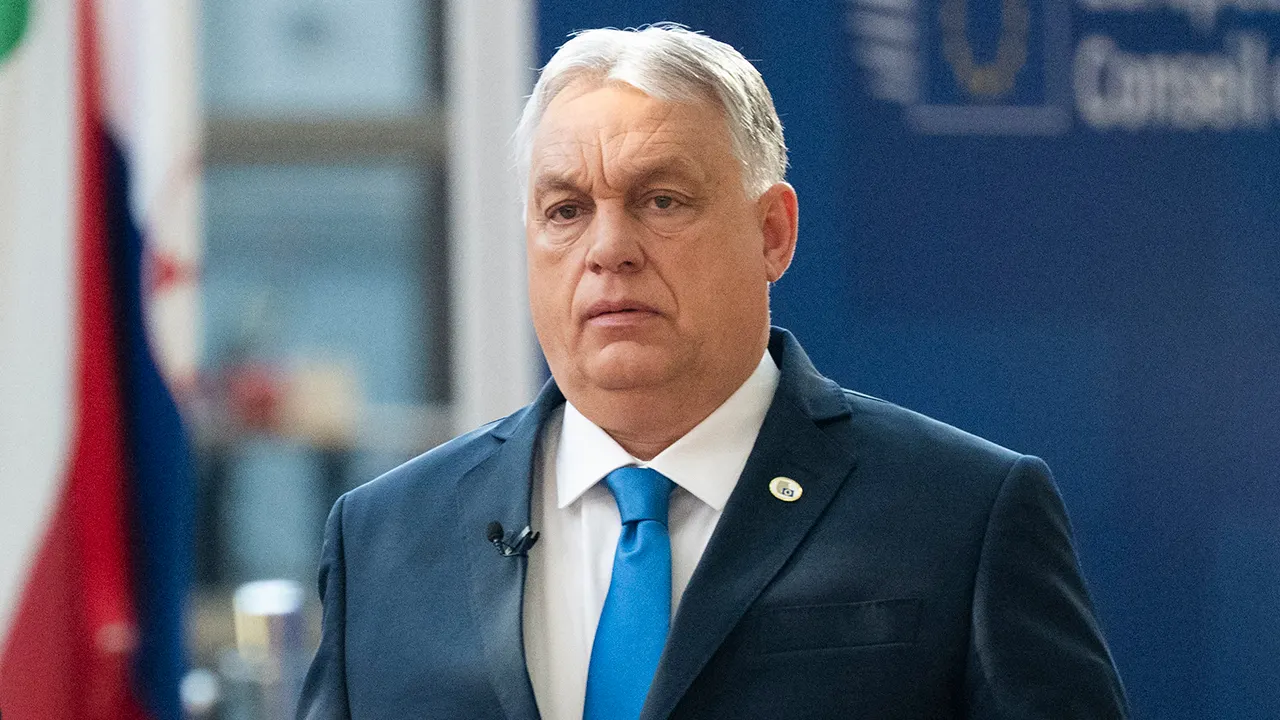
In the quiet aftermath of Hungary’s parliamentary election on Sunday, a dramatic shift unfolded across the nation. Hungarian Prime Minister Viktor Orbán, the iron-fisted leader who’d held power for over a decade, stepped away from the podium with a heavy heart, conceding defeat in a voice tinged with unavoidable pain. He acknowledged Péter Magyar, the energetic opposition leader, as the winner, describing the outcome as “clear.” Magyar quickly took to social media, sharing that Orbán himself had called to congratulate him and admit the loss. It was a moment that felt surreal for many, capping off weeks of intense campaigning where incumbent after incumbent in politics seemed invincible. But here, in Europe’s heartland, the tables had turned decisively, signaling the end of an era and the dawn of something unknown. Orbán, with his unyielding style, had become a symbol of stability for some and division for others, his grip loosening under the weight of public discontent. As partial votes rolled in, the air hummed with anticipation, families gathering around screens, perhaps dreaming of change that had eluded them for so long. This wasn’t just about policy or parties; it was about a nation’s soul, questioning how far it had drifted from its roots. In Orbán’s fiery farewell, one could almost sense the bittersweet taste of reflection, a leader who had won wars against EU bureaucrats and migration tides, now facing the raw verdict of his people.
With roughly 53% of the votes counted by early evening, projections painted a vivid picture of a landslide that could reshape Hungary’s parliament entirely. Magyar’s Tisza party wasn’t just leading—it was surging toward a supermajority, potentially securing up to two-thirds of the seats. Such a win would grant the opposition unprecedented power to overhaul laws, appoint judges, and push through reforms without the usual gridlock. In the bustling towns and cramped apartments of Budapest and beyond, Hungarians had turned out in record numbers, their ballots casting votes that screamed for renewal. This turnout mirrored the electrified mood of the campaign, where debates raged over the future direction of the country. Magyar, once a lesser-known figure in politics, had ignited a spark among the disillusioned, rallying them under promises of transparency and a fresh start. The numbers told a story of hope, where even the most optimistic polls hadn’t fully captured the tsunami of support. For Orbán’s supporters, many in rural enclaves and among the older generations, this was a bitter pill to swallow; they’d backed him for his bold stands, seeing him as a bulwark against chaos. Yet, as the digits climbed on election boards nationwide, it became clear: the chapter of Orbán’s dominance, etched in victory after victory, was drawing to a close. In cafes and homes, people pondered aloud—what now? The young professionals in Vienna-influenced Bratislava watched with envy, wondering if this shift could ripple outward.
Viktor Orbán’s journey to power wasn’t born overnight; it was forged in the fires of post-communist Hungary, where he rose to prominence in 1998 and reclaimed the prime ministry in 2010, etching his name into the annals as one of Europe’s longest-serving leaders at 16 years. His tenure was marked by a blend of nationalist fervor and pragmatic governance, blending social conservatism with economic fixes that appealed to his base. Economically, Hungary under Orbán saw relative growth compared to other EU nations, with GDP climbing steadily despite global headwinds like the pandemic and energy crises. However, challenges loomed: inflation stubbornly high, eroding purchasing power for everyday families, and a business climate clouded by pessimism. Yet, for his loyalists, especially in the countryside and among pensioners, Orbán represented security amid uncertainty—a man who challenged the Berlin-Brussels axis and prioritized Hungarian interests. He navigated complex relationships with global players, from his firm alignment with Israel to his pointed critiques of EU immigration policies, which drew hefty fines but bolstered his domestic clout. Ahead of this election, Orbán’s face beamed with confidence; he dubbed the campaign a “great national moment,” assuring reporters he was “here to win.” It was a posture of defiance, echoing his past triumphs, but beneath it, one wonders if the cracks were showing in the empire he built.
The shadow of American politics loomed large over Hungary’s electoral battleground, with Orbán as a steadfast ally of President Donald Trump. In the final sprint of the campaign, Trump himself weighed in via Truth Social, rallying behind his European counterpart with full-throated endorsement. He pledged, “My Administration stands ready to use the full economic might of the United States to strengthen Hungary’s Economy… if Prime Minister Viktor Orbán and the Hungarian People ever need it,” adding excitement for Orbán’s leadership. This wasn’t mere rhetoric; days earlier, Trump’s administration had inked a civil nuclear cooperation deal with Hungary, a move underscoring deep ties. Trump lauded Orbán as part of the select circle of allies, much like his admiration for figures in his cabinet, seeing in the Hungarian leader a kindred spirit in fighting globalist agendas. For Orbán, this transatlantic backing was a shield against EU pressures, bolstering his image as a bridge between East and West. In Budapest’s corridors, whispers circulated about how Trump’s influence had emboldened Hungary’s foreign policy, from its stance on Ukraine to migration controls. Yet, as the vote tallied, one couldn’t help but reflect on the irony: Trump’s support, a beacon for Orbán, might not have been enough to stave off the tide. Polls had Magyar ahead, signaling a schism perhaps wider than policy alone—perhaps the people yearned for change beyond external validations.
Orbán’s standoff with the European Union had become the stuff of headlines, drawing scrutiny over his hardline views on migration, his ambiguous stance toward Russia’s invasion of Ukraine, and governance practices that chastened critics. The EU, with its penchant for rule of law pleas, imposed financial penalties, accusing Hungary of backsliding on democratic norms and judicial independence. Orbán countered by framing these as attacks on national sovereignty, rallying his base with narratives of resistance against “Brussels elites.” Support for Ukraine wavered in Budapest, a move that irked allies but resonated with those wary of escalation. Domestically, his record was a mixed bag: rapid economic strides tempered by elevated inflation that pinched wallets and negative business sentiment that damped investor enthusiasm. Despite this, many rural voters and older citizens stuck by him, cherishing his pro-family policies and anti-migrant rhetoric. This election represented his toughest fight since 2010, polls tilting heavily toward Magyar amid whispers of corruption scandals and public fatigue. For the international community, Orbán embodied the populist wave that reshaped Europe, but now, with defeat staring him down, questions arose about what Hungary’s pivot might mean for the continent—would it mend EU ties or deepen rifts?
Péter Magyar emerged as the electoral catalyst, positioning the race not as a mere party swap but as a profound referendum on Hungary’s path in the world. He warned that under Orbán, the country had veered from its Western moorings, urging voters to reclaim direction in the alliance sphere. “I think this really will be a referendum on our country’s place in the world,” Magyar articulated, capturing the zeitgeist of a populace hungry for reintegration with the democratic West. His Tisza party, a newcomer coalescing diverse opposition factions, promised reforms that felt aspirational—tampering corruption, bolstering judicial integrity, and fostering a more inclusive society. As projections favored Magyar with that potential supermajority, the implications buzzed with possibility: reshaping foreign policy, tackling economic woes, and healing societal divides. For many Hungarians, especially the youth and urban dwellers who felt marginalized, this victory signaled empowerment. Orbán’s call to Magyar was more than a formality; it was an acknowledgment of a changing guard in a nation at a crossroads. Reflecting on the campaign’s intensity—record voter turnout amid debates echoing global themes—one senses the story of Hungary as a microcosm of broader shifts, where personal stories intertwine with political currents. As the sun set on election day, hopes flickered for a Hungary redefined, its future narratives penned not by one man, but by its collective will.