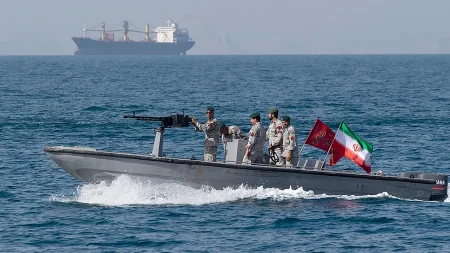



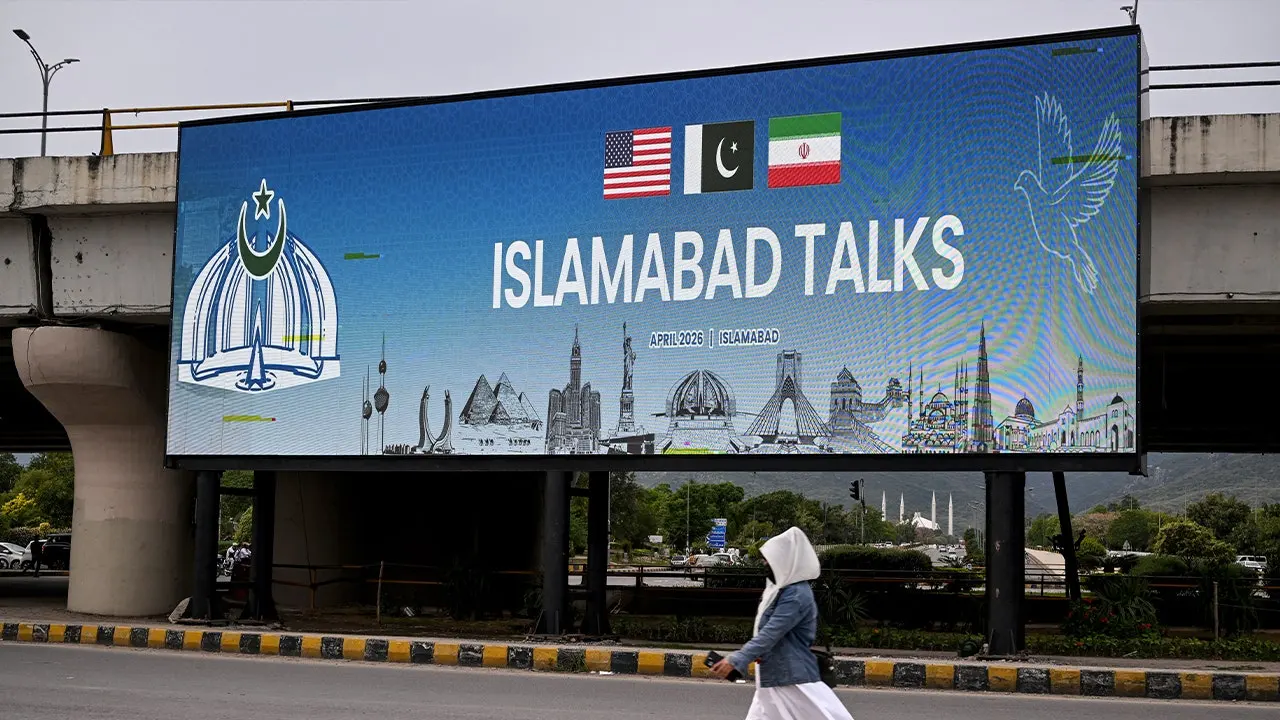
As the sun dipped over the Arabian Sea on that tense Monday, sailors on American warships shifted into high gear, their radar screens flickering with the coordinates of Iranian vessels. The United States had just announced a full naval blockade targeting Iran’s maritime traffic, a bold move that felt like the turning of a page in a decades-old grudge match. Just hours earlier, high-level talks in Islamabad, Pakistan, had fizzled out—not with shouting or slammed doors, but with a quiet realization that no common ground could be found. President Donald Trump’s voice, crackling through the airwaves, declared this blockade a necessary shield, ensuring Iran couldn’t move goods or ideas freely across the waves. It was a stark escalation, coming right after diplomats from both sides had sat across from each other, trying to bridge the chasm. Friends and foes alike in the international community were holding their breath, wondering if this was the spark that could ignite a wider conflagration or merely a calculated pause in the relentless dance of geopolitics.
In the cool halls of Islamabad, where meetings had unfolded over 16 grueling hours, there was a palpable sense of near-misses. Lt. Gen. (ret.) Mohammed Saeed, a weathered veteran who’d commanded Pakistan’s army until 2023, shared his insights with a Fox News interviewer, painting a picture of the talks that outsiders might not grasp. “They were inches away,” he reflected, his voice steady yet tinged with regret, based on whispers and briefings from the rooms where deals are hammered. Saeed, who had been at the heart of crisis management in Pakistan, described the atmosphere as unexpectedly warm—diplomats exchanging smiles, acknowledging each other’s plights like old adversaries who secretly respect one another’s grit. The Americans, led by Vice President JD Vance, had flown in, ready to push for something unyielding. But Iranian officials, girded by their own hardships, held firm. It wasn’t cold hostility; it was the human weight of national pride clashing with pragmatic needs. That direct engagement, Saeed argued, was historic— the first such high-level chat in nearly five decades—and it carried untapped promise. People on the ground, from sailors watching the blockade to families in Tehran, must have sensed that the door hadn’t fully swung shut.
At the White House podium, Trump stood with the confidence of a man who’s seen empires rise and fall, defending the blockade as a non-violent yet forceful hand. “Right now, there’s no fighting,” he assured, his tone reassuring yet firm, like a father setting boundaries for a rowdy house. He spoke of Iran’s military as a shadow of its former self—the navy dismantled, air force grounded, even their radar systems silenced. It wasn’t just bravado; it was a narrative of supremacy, backed by the kind of intelligence that only comes from years of vigilance. JD Vance, fresh from the Islamabad table, addressed the press with a level gaze, outlining the ironclad demands: a vow from Iran to stop uranium enrichment entirely and drain their stockpiles of the dangerous stuff. This wasn’t about negotiation; it was about guarantees against shadows that had haunted global security. Vance’s words carried the weight of responsibility, echoing the fears of everyday Americans who worry about rogue regimes chasing nuclear dreams. In that moment, the talks’ collapse stung like a missed opportunity, leaving leaders grappling with the human cost of stubborn positions.
Iran’s diplomats, meanwhile, countered with their own steadfast plea, insisting that any path forward had to include the thawing of billions in frozen assets—funds that could rebuild livelihoods crushed by sanctions. It was a raw request, born from the cries of ordinary Iranians struggling with inflation and isolation. The blockade, in their eyes, wasn’t just a strategic gambit; it was a stranglehold on their sovereignty, cutting off the lifelines that kept families afloat. Back in the interview with Saeed, he posited that the move might not be the endgame but a clever twist—a way to ratchet up the pressure, forcing Tehran to rethink its stance. “This could be a maneuver,” he mused, drawing from years of watching alliances fracture and mend. It humanized the chessboard; behind the flags and fleets were real people—mothers pleading for economic relief, soldiers wondering if they’d face combat. The world watched as shipping lanes tightened, a global economy on edge, fearing spillovers that could ripple through oil prices and daily lives, from gas pumps in the Midwest to bustling ports in Asia.
Pakistan, caught in the crossfire, emerged as an unlikely bridge-builder, its diplomats stepping in with the quiet skill of a seasoned mediator. The army chief, Asim Munir, loomed large in this drama—a man whose life story read like a spy novel, having climbed from military intelligence ranks to lead the Inter-Services Intelligence (ISI) agency. Saeed spoke of Munir with admiration, revealing how he’d spent years forging personal bonds with Iranian counterparts, including the late Qassem Soleimani, who had epitomized Tehran’s revolutionary guard. Visits to Iran, hushed meetings with political elites—it wasn’t just protocol; these were human connections, built on trust amid turmoil. Trump had even taken notice, dubbing Munir his “favorite field marshal,” a public nod that elevated Pakistan’s role on the world stage. Despite questions about Pakistan’s stance on Israel—a thorn in diplomatic bushes—Saeed brushed aside neutrality concerns, pointing out that the mediation centered solely on America and Iran. In Islamabad’s corridors, Munir’s persistent outreach shone as a beacon, relentless in nudging sides toward compromise, reminding everyone that wars often start small but end with shared humanity.
Yet the blockade cast long shadows, stirring anxieties in boardrooms and kitchens alike. Saeed voiced worries about the economic fallout, envisioning disruptions that could scar industries dependent on Gulf energy, including Pakistan’s own fragile economy. Families in Karachi might feel the pinch at the market, while workers in Iranian ports faced layoffs that hit harder than headlines convey. It was a reminder that these geopolitical dramas aren’t played on abstract maps but in the lives of millions—farmers in isolated villages, entrepreneurs chasing dreams, children eyeing uncertain futures. Diplomacy, Saeed insisted, wasn’t dead. With shifts in approaches, talks could reignite, perhaps back in Pakistan’s green diplomatic quarters or elsewhere, if leaders shed rigid postures. “There’s still space to resume,” he urged, his words a rallying cry for hope amid the storm. In the end, this blockade and the collapsed talks underscored the fragility of peace, where one misstep could unravel threads holding nations together, yet one courageous overture might weave them anew. As ships patrolled the waters and negotiators mulled their next moves, the world held its breath, praying for wisdom over wind.