

Paragraph 1: Imagine walking through the streets of Tehran on a cool April evening, where the air hangs heavy with unspoken grief and a palpable sense of unease. It’s been over 40 days since Ayatollah Ali Khamenei, the supreme leader who towered over Iran’s political landscape for decades, was struck down in a targeted attack on February 28. Yet, astonishingly, his body remains unburied, defying the Islamic Republic’s own traditions that demand burials within 24 hours. Dr. Ramesh Sepehrrad, a sharp-minded Iranian strategist leading the Organization of Iranian American Communities, spots this delay as a glaring red flag of deep turmoil within the regime. “Forty-four days have passed, and the regime does not have the confidence to publicly bury Mojtaba’s dead father,” he tells a reporter, his voice steady but laced with urgency. The fortieth-day mourning ceremonies kicked off on April 9, drawing crowds of devout followers draped in black, their faces etched with mourning, prayers echoing through crowded mosques. But beneath the ritualistic chants, whispers of fear circulate—why isn’t the supreme leader laid to rest? This hesitation, Sepehrrad argues, reveals a leadership paralyzed by internal rifts and terror of what might surface if they rush the process. He’s right; in a theocratic system where religious purity is intertwined with power, such a breach of protocol screams instability. Picture the clergy and security officials huddled in secret, debating behind closed doors while the public grows restless. The regime’s usual iron grip on narrative crumbles here, exposing cracks so deep that even the sacred rites of death can’t be conducted without risk.
Paragraph 2: To grasp the human drama at play, rewind to that fateful night in late February, when precision strikes shook a compound in central Tehran, targeting Khamenei, the 85-year-old architect of Iran’s theocracy. The attack left him with a disfigured face and severe leg injuries from which he never recovered—his son, Mojtaba, now 56 and poised to inherit the mantle, was nearby and fared little better, suffering similar wounds that left him battling for mobility. Reliable sources close to his inner circle describe a grim recovery: Mojtaba, typically a robust figure in shadow councils, confined to a bed as doctors tended to his facial scars and leg trauma. It’s a stark, personal toll—imagine the pain of a man once meant to be his father’s ever-present aide, now grappling with physical agony that mirrors the nation’s convulsions. Yet, astonishingly, Mojtaba presses on, his mind unclouded by injury, participating in crucial virtual meetings with senior officials via audio. These sessions tackle everything from ongoing wars to delicate talks with Washington, showing he’s no pushover despite the wounds. His sources, speaking anonymously for safety, paint him as mentally acute, coordinating decisions even as he heals, a testament to a son’s devotion amid familial and political devastation. This isn’t just policy; it’s a raw story of resilience in the face of betrayal, where physical scars hide deeper systemic wounds. The Khamenei dynasty’s heir, once groomed in secrecy, embodies the regime’s fragility, his recovery symbolizing how personal suffering fuels power struggles.
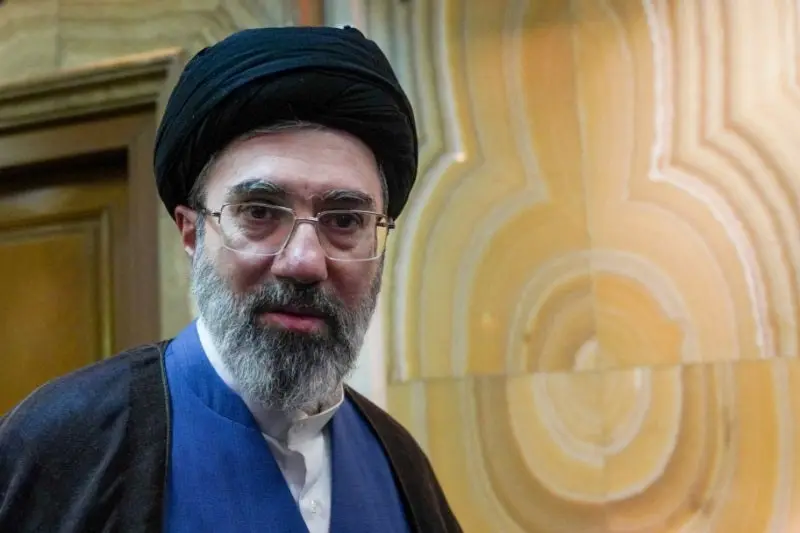
Paragraph 3: Mojtaba Khamenei’s ascent unfolds like a drama from the corridors of power, far from the public eye yet indelibly shaping Iran’s fate. For over a decade, he served as his father’s right-hand confidant, a bridge to the elite Revolutionary Guard Corps (IRGC), whispering strategies in boardrooms. Now, bruised and bandaged, he’s stepping into the spotlight—less a fiery ideologue and more a pragmatic operator focused on sheer survival. Analysts like Sepehrrad note his influence in negotiations, setting broad boundaries even if he’s not the visible face. Picture him, recovered enough to engage virtually, steering talks that could avert wider conflict, his voice a steady anchor for jittery lieutenants. This role shifted swiftly after his father’s demise, with reports confirming his active involvement in major decisions, from military strategies to diplomatic gambits. He’s portrayed not as a dictator but a coordinator in a web of factions, blending charm with cunning to navigate the treacherous tides of succession. Behind this, there’s a human element: Mojtaba, once a studious youth navigating religious schools, has evolved into a survivor, leveraging his operational instincts to calm seas rocked by assassination and uncertainty. His path reflects a son’s grief channeled into duty, where every decision echoes the cries of a nation on edge.
Paragraph 4: Delving deeper, the Iranian regime emerges not as a monolithic entity but as a fractious “mafia” of competing interests, bound by survival rather than trust. Sepehrrad describes it vividly: one faction negotiates ceasefires, another doles out threats, a third enforces ideological purity through arrests and executions, and yet another monitors dissent with digital iron fists. There’s no unified voice, just a division of labor held together by Mojtaba, who Sepehrrad calls a “security-backed coordinator” atop the heap. He leans heavily on heavyweights like Parliament Speaker Mohammad Bagher Ghalibaf, IRGC commander Ahmad Vahidi, and Judiciary chief Mohseni-Ejei, each a power broker in this brittle coalition of “security men.” This setup feels personal, like a family feud amplified to national scale—guards and enforcers vying for control while the supreme leader’s memory looms. Mojtaba, lacking raw ideological luster or charismatic pull, governs through institutions that wield force, a far cry from his father’s aura of religious authority. It’s a system where harmony is a myth, replaced by cold calculations; diplomats might soften edges abroad, but at home, repression tightens like a noose. Imagine the quiet dinners where these men strategize, each eyeing the other for treachery, their loyalties forged in violence and necessity. This mafia-like structure, Sepehrrad warns, isn’t for show—it’s how the regime clings to power amid whispers of betrayal and fracture.
Paragraph 5: Amid this backdrop, Iran’s diplomatic dance with the United States unfolds as a high-stakes performance, mediated briefly by Pakistan in Islamabad, where a two-week ceasefire promised dialogue but yielded little fruit. The summit, a marathon of strained discussions, aimed to ease simmering tensions along the Persian Gulf and beyond. Yet, as Fox News reports, Iran swiftly declared no further talks planned, citing their Supreme National Security Council, with silence from the new supreme leader. This diplomatic waltz reveals the regime’s dual strategy: tactical give-and-take in negotiations to buy time and dodge escalation, while internally dialing up the iron-fisted control. Sepehrrad paints it as “flexibility in talks” paired with “harsher repression at home,” where moderates pushing deals risk elimination in purges. Picture the negotiators in stuffy rooms, sipping tea as they haggle over red lines, their every comment parsed by security eyes watching for dissent. Surprisingly, Mojtaba’s input shapes even these interactions, his operational focus ensuring the regime’s survival over peaceful resolutions. Sources reveal his behind-the-scenes nudges, balancing threats with overtures, humanizing the process as a father’s son navigates grief to safeguard a legacy. Yet, the stalled talks reflect deeper distrust—Western observers, still clinging to old models of Iranian polity, misread a fractured state where force trumps ideology. It’s a narrative of missed opportunities, where human aspirations for peace clash against the machinery of authoritarian instincts.
Paragraph 6: Looking ahead, the horizon darkens with warnings of intensified crackdowns, as the regime’s terror of internal unrest overshadows external diplomacy. Sepehrrad predicts a surge in arrests, executions, online censorship, and intimidation, tools wielded to quell any spark of rebellion while buying precious breathing room internationally. This isn’t mere speculation; it’s rooted in the regime’sDNA, where fear breeds cruelty, and every demonstration risks becoming a firestorm. Imagine ordinary Iranians—mothers, students, workers—navigating a landscape where voicing dissent could mean disappearances, their daily lives hemmed in by surveillance and propaganda. Mojtaba’s emergence as a security-coordinated leader signals a pivot toward oppression, not reform, with forces like the IRGC poised to snuff out threats at home. Diplomatically, the cycle of deception might continue, as Sepehrrad labels past ceasefire pushes, potentially stalling real progress while hardliners gain ground. Yet, amidst this, there’s a glimmer of humanity: Iranians yearning for stability, whispering hopes despite the risks, their stories of resilience mirroring Mojtaba’s journey from heir apparent to beleaguered coordinator. The delayed burial of Khamenei, over 40 days in limbo, encapsulates this crisis—a symbol of a regime grappling with its mortality, where power preservation demands sacrifices both seen and unseen. In the end, the Islamic Republic stands at a crossroads, its fate hanging by threads of loyalty, force, and the relentless pulse of unrest that could finally unravel the tapestry of control.