


Arthur Liu’s American Dream on Ice
Arthur Liu’s life story reads like a heartfelt immigration saga, peppered with the icy thrill of figure skating under the Star-Spangled Banner. Born in China, Arthur fled to the United States during the tumultuous 1990s, seeking a fresh start away from the hardships that defined his youth. The transition wasn’t easy; he grappled with the challenges of adapting to a new culture, language barriers, and the isolation of building a life from scratch. It was during this period that he stumbled upon figure skating, initially as a spectator at a local rink in the cold American winters. The grace, precision, and sheer athleticism of the skaters captivated him, transforming what was meant to be a casual outing into an obsession. As he watched athletes glide effortlessly across the ice, Arthur found solace in the sport—a beautiful escape that mirrored his own journey of perseverance and reinvention. Little did he know, this newfound passion would intertwine with his deepest family aspirations, especially for his young daughter, Alysa. Arthur dreamed big, envisioning her not just as a skater, but as a golden triumph at the Winter Olympics, a beacon of achievement in their new homeland. He poured his heart into supporting her, believing that her talent could embody the American dream he chased so fervently. Yet, behind the ambition lay a father’s unwavering love, one that saw beyond medals to the purity of joy on the ice, a joy he himself discovered amid the echoes of his past.
Alysa Liu emerged as a true prodigy, her story unfolding like a fairy tale of talent versus expectation. From the tender age of 13, she defied the world’s norms, winning the senior national title for U.S. women’s figure skating—a feat that left coaches, spectators, and even seasoned competitors in awe. It wasn’t merely a victory; it was a declaration of her extraordinary abilities, blending technical prowess with an innate artistry that made every jump and spin seem effortless. To silence skeptics who dismissed it as beginner’s luck, Alysa defended her title the following year, at just 14, cementing her status as a force to be reckoned with. Arthur, watching from the sidelines with a mix of pride and quiet elation, spared no effort to nurture this gift. He enrolled her in top-tier training programs, hired elite coaches, and ensured she had access to the finest facilities. Skates custom-fitted, ice time booked even in the dead of night, nutrition plans tailored—Alysa’s routine became a testament to his dedication. But beneath the polished surface of her performances, Arthur sensed the weight of his projections. He pushed for greatness not out of vanity, but from a place of love, wanting Alysa to experience the magic of skating that had healed his own wounds. Her wins were brushes of brilliance, painting pictures of a future where Olympic gold wasn’t just a goal, but an inevitable destiny. Yet, as any parent knows, nurturing talent means balancing dreams with the reality of a child’s burgeoning personality, and Arthur began to wonder if the sparkle in her eyes matched the fire in his own relentless encouragement.
The turning point struck like a harsh winter gale, shattering illusions and forcing a reckoning with reality. At the 2022 Winter Olympics, Alysa, now 16, entered her first international showcase brimming with potential. Bright spotlights, roaring crowds, and the world’s eyes on her small frame—it should have been her moment. But disappointment followed swiftly; she finished sixth in the women’s individual competition, a respectable but not victorious placement that nonetheless left her grappling with disillusionment. The pressure, once a motivating spark, had morphed into an unyielding burden. Alysa felt burned out, her passion for the sport evaporating like mist over the ice. No longer did the arena excite her; instead, it invoked dread and exhaustion. At such a young age, she made the courageous decision to retire from competitive skating, stepping away from the blades that had defined her adolescence. Arthur, who had invested so much emotional and physical energy into her journey, watched helplessly as his daughter walked away, her steps heavy with the weight of unmet expectations. It pained him deeply—this was not the glorious Olympic triumph he had envisioned. Tears mingled with the chill in the air as he reflected on the toll of relentless training and high-stakes ambitions. Yet, in quiet moments, he acknowledged the humanity in her choice; Alysa was more than a skater; she was a teenager yearning for normalcy, freedom from the spotlight’s glare. Arthur’s heart ached, but he respected her autonomy, understanding that true support meant letting go when dreams soured.
Acceptance washed over Arthur like a thawing river, reshaping his role from relentless driver to steadfast companion in Alysa’s evolving path. Years passed, and the sting of retirement lingered, but Arthur buried himself in fatherly patience, allowing Alysa the space to heal and rediscover herself. One day, almost miraculously, she expressed a renewed interest in skating—not the grueling grind of competition, but the pure, unadulterated joy of gliding across the ice. Arthur, humbled by life’s twists, handed over the reins of her career with a mixture of apprehension and trust. Gone were the days of micromanaging every training session or pressuring for perfection; instead, he became her quiet cheerleader, offering guidance only when sought. This shift symbolized growth for both—Arthur learning to step back, Alysa embracing control of her destiny. It wasn’t easy; echoes of the past haunted their conversations, but through open-hearted dialogues, they rebuilt their bond. Alysa’s return wasn’t forced; it blossomed from within, a testament to resilience. Arthur found solace in this trust, realizing that his dream of Olympic gold wasn’t about winning for him, but empowering her to chase it on her terms. The ice, once a battleground, transformed into a canvas for mutual healing, where father and daughter navigated the delicate dance of ambition and authenticity.
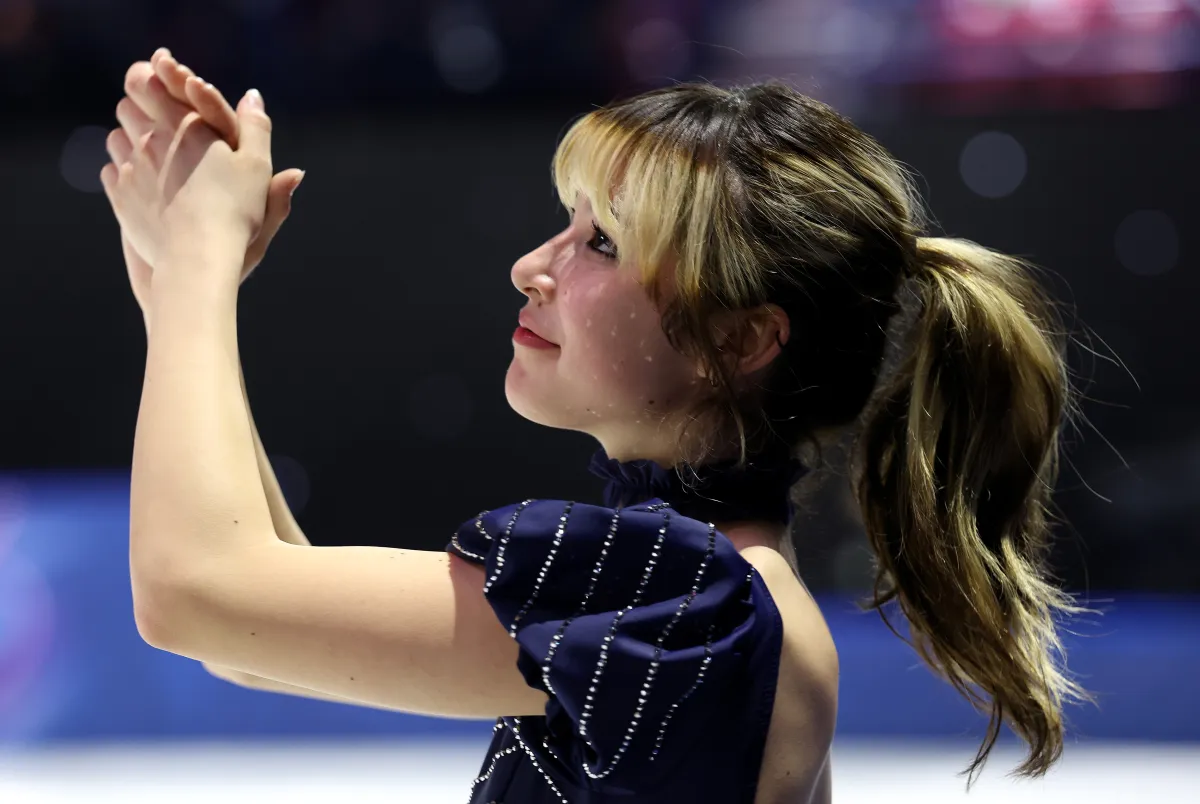
Alysa’s comeback ascent felt like a phoenix rising from the frozen ashes, a narrative of redemption that captivated the world. Bolstered by her regained love for skating, she trained with newfound fervor, honing skills that blended technical mastery with emotional depth. In 2025, her efforts culminated in triumph: winning the women’s world championship, a vindication that silenced doubts and reignited global admiration. Yet, the crescendo awaited at the 2026 Milan Winter Olympics, where Alysa soared to unprecedented heights, securing two gold medals. Each performance was a masterpiece—quadruple jumps executed with poetic precision, spins that defied gravity and stirred the soul. Arthur, seated among family in the stands, witnessed it all with a heart full of quiet pride. No longer dictating from the periphery, he supported her established boundaries, attending events as a loving spectator rather than an anxious overseer. The victory, sweeter in its autonomy, underscored their strengthened partnership. Alysa’s flair extended beyond the rink; she embodied grace under pressure, transforming stumbles into strengths. Arthur, reflecting on the journey, appreciated how this success transcended personal glory—it was a family’s testament to perseverance. The gold medals glittered not just as awards, but as symbols of hard-won freedom, where Alysa’s passion aligned harmoniously with her father’s enduring faith.
The Ripple Effects of a Father’s Investment and a Daughter’s Star Power
Beyond the hockey stick and the ice, Arthur Liu’s financial commitment painted a vivid picture of parental sacrifice, an untold chapter in Alysa’s fairy-tale resurgence. In an intimate CBS 60 Minutes interview conducted a month before the Milan Games, Arthur opened up about the staggering costs of nurturing his daughter’s talent. He confessed to investing upwards of $500,000 to $1 million over the years—sums that included elite coaching fees, custom equipment, travel to international training camps, nutritionists, physiotherapists, and even private skating facilities. “I spared no money, no time,” he shared with raw honesty, his voice tinged with emotion. “I just saw talent.” These expenditures weren’t frivolous; they were investments in potential, covering expenses that spanned Alysa’s formative years when scholarships and sponsorships were scarce. Arthur, whose own background of escape and rebuilding instilled a fierce work ethic, viewed these dollars as seeds sown for her future. Though a hefty price, the payoff resonated deeply—he saw his daughter not just as an athlete, but as the star of the Winter Olympics, her presence radiating charisma and inspiring young skaters worldwide.
The cultural phenomenon of Alysa’s rise extended into the digital age, where social media amplified her stardom and solidified her place in pop culture. Entering the Games with a humble following of just over 200,000 on Instagram, Alysa skyrocketed to over 3 million followers post-Olympics, eclipsing any previous figure skater’s reach on the platform. Her feed became a window into the sport’s allure—behind-the-scenes training montages, heartfelt reflections on resilience, and cheeky glimpses of life off the ice. This online explosion humanized her journey, turning followers into fans who rooted for more than skates; they celebrated her story of overcoming burnout. Arthur, ever the proud father, watched from afar as Alysa navigated this new fame, posting supportive comments and sharing family photos that highlighted their bond. The follower surge represented a shift in sports media, where personal narratives trumped podium placements, and Alysa’s authenticity resonated across generations. From retired prodigy to social icon, she bridged the gap between athletic elite and everyday inspiration, her platform fostering conversations about mental health in sports, father-daughter dynamics, and the cost of dreams. In this digital era, Alysa wasn’t just a champion; she was a relatable voice, echoing Arthur’s sacrifices in every like and share, proving that true victory lies in shared human triumph. The Liu family’s legacy, forged in cold arenas and warm hearts, continues to inspire, reminding us that on the ice or in life, the greatest performances unfold when love steers the way.