


Swiss-Based Twiliner Launches New European Night Bus Network
In a significant development for eco-conscious travelers across Europe, Swiss transportation company Twiliner has launched an innovative night bus network connecting major tourist destinations throughout the continent. Beginning operations in November, this new service aims to bridge “the comfort gap in long-distance travel” while offering an environmentally friendly alternative to short-haul flights. The sleeper buses currently operate between Switzerland, Luxembourg, Belgium, the Netherlands, and Spain, with ambitious plans to expand to 25 European cities by 2028. According to company data, journeys on these coaches save approximately 85 percent of CO2e emissions compared to flying, with the buses running on HVO diesel—a renewable fuel derived from waste fats and vegetable oils—making them comparable to trains in terms of sustainability.
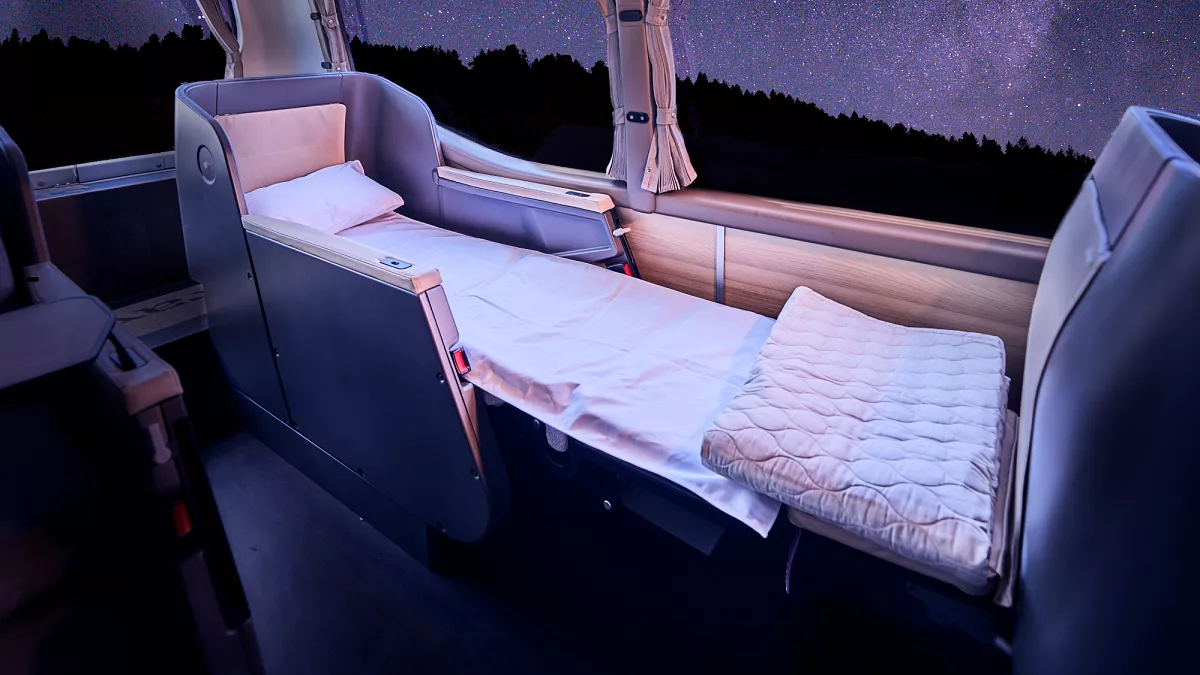
What truly sets Twiliner apart from conventional bus services is its commitment to passenger comfort, featuring amenities that rival those found on sleeper trains and business-class flights. The coaches are equipped with 21 seats (18 on the upper deck and 3 on the lower) that transform completely into beds at the push of a button, allowing travelers to sleep whenever they choose during their journey. These revolutionary seats—the first of their kind on European buses—come complete with pillows and blankets, creating a genuine sleeping experience rather than the uncomfortable semi-reclined position typical of traditional night buses. Each seating area further enhances the travel experience with electrical outlets, personal tables, individual reading lights, and complimentary internet access, along with storage compartments for keeping essential items within easy reach during the journey.
The lower deck of each Twiliner coach houses practical amenities designed to make overnight travel more comfortable. Passengers can prepare for sleep in spacious bathroom and changing room facilities, though it’s worth noting that showers are not available on board. This level also features a convenient snack bar offering light refreshments, with coffee and water provided free of charge to all passengers. The thoughtful design prioritizes a restful environment, making these buses particularly suitable for business travelers and tourists who value arriving at their destination well-rested and ready to explore or attend meetings. The company has clearly studied the pain points of traditional overnight bus travel and addressed them with solutions borrowed from more premium transportation modes.
Regarding luggage allowances, Twiliner maintains policies that balance passenger needs with space limitations. Each traveler may bring one large suitcase weighing up to 23kg (with dimensions not exceeding 80 x 50 x 35cm) plus one carry-on item of up to 5kg (maximum dimensions 50 x 30 x 20cm). The company also accommodates adventure enthusiasts by allowing special equipment such as bicycles, skiing gear, and surfboards, provided these items are booked in advance. This flexibility makes the service appealing to a wide range of travelers, from business professionals to outdoor enthusiasts looking to explore Europe’s diverse landscapes and activities without the hassle of multiple connections or the environmental impact of flying.
Since its November launch, Twiliner has established two primary routes: Zurich to Amsterdam (with stops in Basel, Luxembourg, Brussels, and Rotterdam) and Zurich to Barcelona (stopping in Girona). The services currently operate several times weekly, with expectations to increase to daily departures next year as demand grows. Pricing begins at approximately €180 one-way, positioning the service as a premium alternative that, while more expensive than standard bus travel, offers significantly enhanced comfort and remains competitive with some train and flight options when booked in advance. Apart from mandatory driver changes, the journeys run without scheduled rest stops, maximizing efficiency and allowing passengers to enjoy uninterrupted sleep during overnight travel.
The service does come with some limitations worth noting for potential passengers. Families with very young children will need to seek alternative transportation options, as children under five years old are not permitted on Twiliner coaches. The company explains this policy by emphasizing the “quiet, sleep-friendly environment” they aim to maintain for all passengers. Older children are welcome aboard provided “they are familiar with long-distance travelling” and can respect the peaceful atmosphere required for overnight journeys. Looking toward the future, Twiliner has ambitious expansion plans to create a continent-wide network of overnight bus services within three years. Rather than competing directly with night trains, the company envisions complementing existing rail operations to create a more comprehensive sustainable travel network connecting Europe’s most visited cities. This approach could potentially transform how travelers navigate Europe, particularly for journeys of 500-1000 kilometers where flying creates disproportionate environmental impacts relative to the distance covered.
As Europe continues to enhance its sustainable transportation infrastructure, Twiliner’s innovative approach to long-distance bus travel represents an important development in providing comfortable, environmentally responsible alternatives to air travel. With its unique combination of sleep-focused design, practical amenities, and reduced carbon footprint, this Swiss-based service is well-positioned to attract travelers who prioritize both comfort and sustainability in their journey planning. While the higher price point compared to traditional bus services may limit accessibility for budget travelers, the added value of arriving well-rested at your destination without the environmental guilt of flying presents a compelling option for conscious travelers exploring Europe’s remarkable destinations in the years ahead.