


Sky-Dining Adventure Turns Harrowing for Family in India
In what began as an exciting aerial dining experience but quickly transformed into a nerve-wracking ordeal, a family of four and a staff member found themselves suspended 120 feet above the ground when a sky-dining attraction in Kerala, India, malfunctioned. The crane-operated restaurant, a recent addition to Kerala’s tourism offerings, provides guests with a unique opportunity to enjoy meals while taking in panoramic views. However, during what was supposed to be a standard 30-minute elevated dining session shortly after 12:45 p.m., the platform unexpectedly froze at its maximum height. Officials later determined that a sudden failure in the hydraulic system had left the diners stranded with no mechanism to return them safely to the ground. What made matters worse was a delay in the distress call, which extended the entire rescue operation to nearly four hours.
The trapped individuals included two parents, their young children, and an employee who had been serving them on the platform when the mechanical failure occurred. One can only imagine the mix of emotions—initial concern giving way to growing anxiety as minutes stretched into hours—as they remained suspended high above the earth with no clear timeline for rescue. For the children especially, what had started as an exciting adventure must have transformed into a frightening experience as they watched rescue efforts unfold below them. The family had been in the middle of enjoying their meal with its promised sweeping views when the crane suddenly stopped functioning, turning their leisure activity into an unexpected test of patience and courage as they waited for emergency services to reach them.
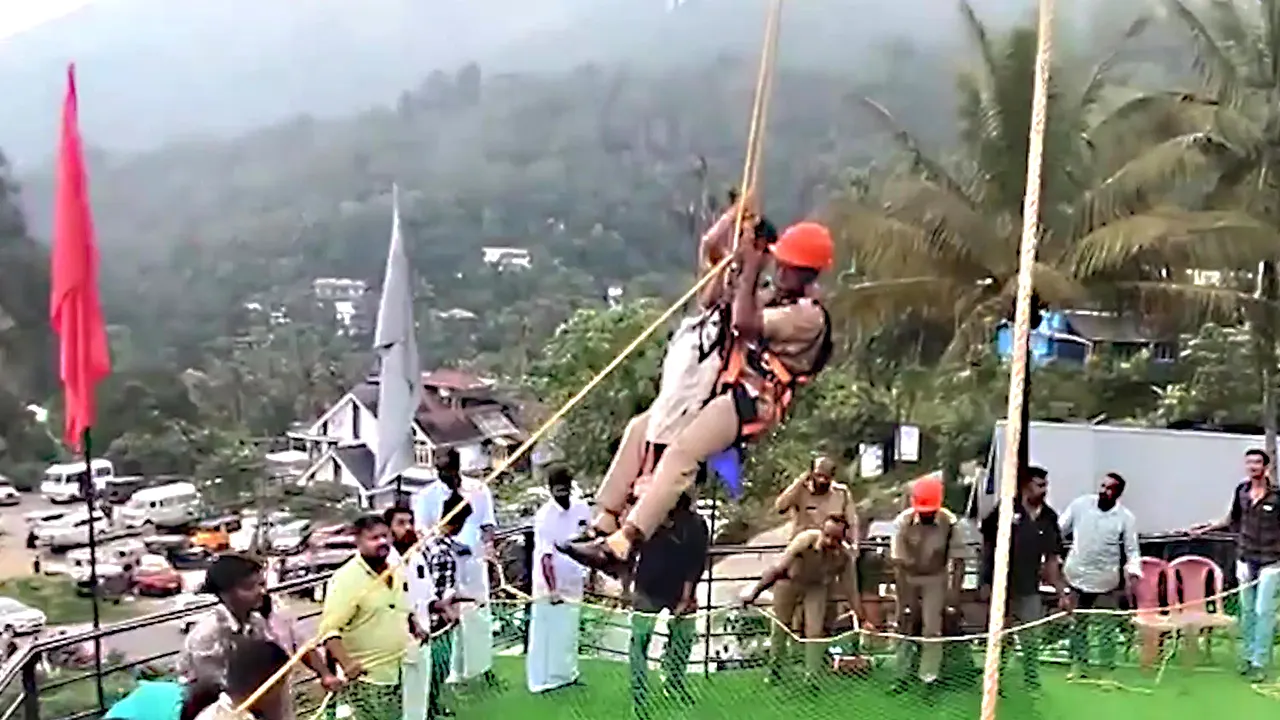
Emergency responders mobilized quickly once the alarm was raised. Fire units from neighboring stations coordinated with local police and Home Guard personnel in a collaborative rescue effort. The technical challenge was considerable—reaching people stranded at a height equivalent to a 12-story building required specialized equipment and training. Firefighters employed ropes to climb to the suspended platform, demonstrating remarkable bravery as they ascended to the stranded guests. Video footage captured the tense moments as rescuers moved cautiously along the ropes, methodically reaching the platform where the family waited. Once there, they carefully secured each person in a safety harness before beginning the delicate process of lowering them one by one back to solid ground.
The rescue operation itself, once underway, took approximately 30 minutes to complete, with all five individuals being brought safely down. Throughout the ordeal, the suspended diners displayed remarkable composure despite their precarious situation. Authorities later revealed that the malfunction appeared to stem from a technical fault, possibly related to an electrical fuse that caused the hydraulic system to stop functioning. This incident highlights the potential risks associated with novel tourism experiences that rely on complex mechanical systems. While innovative attractions like sky-dining platforms provide unique experiences that draw visitors, they also introduce safety considerations that traditional restaurants don’t face. The challenge for operators is balancing the appeal of these extraordinary experiences with rigorous safety protocols.
Fortunately, despite the lengthy duration of the incident and the height at which the platform was stuck, no injuries were reported among those stranded. The successful rescue speaks to the professionalism and capability of the emergency responders who managed to safely retrieve all individuals from their precarious position. However, the incident has raised important questions about the safety regulations governing such attractions. Officials noted that crane-lifted dining experiences currently fall outside the scope of Kerala’s Adventure Tourism regulations—a regulatory gap that may need addressing. In the aftermath of the incident, authorities have indicated that the attraction’s safety compliance will undergo a comprehensive review, potentially leading to new protocols or requirements for similar experiences.
This incident in Kerala serves as a reminder of how quickly innovative tourist experiences can transform from delightful to dangerous when technology fails. As the global tourism industry continuously evolves to offer more novel and exciting attractions, incidents like this underscore the importance of robust safety systems, redundant mechanisms, and clear emergency protocols. For the family involved, what began as a special dining experience became an unplanned adventure that they likely won’t soon forget—though perhaps not for the reasons the attraction’s operators had intended. While sky-dining will undoubtedly continue to attract thrill-seeking tourists, this event may prompt both operators and patrons to approach such elevated experiences with a heightened awareness of what could go wrong when dining with your feet dangling 120 feet above the ground.