






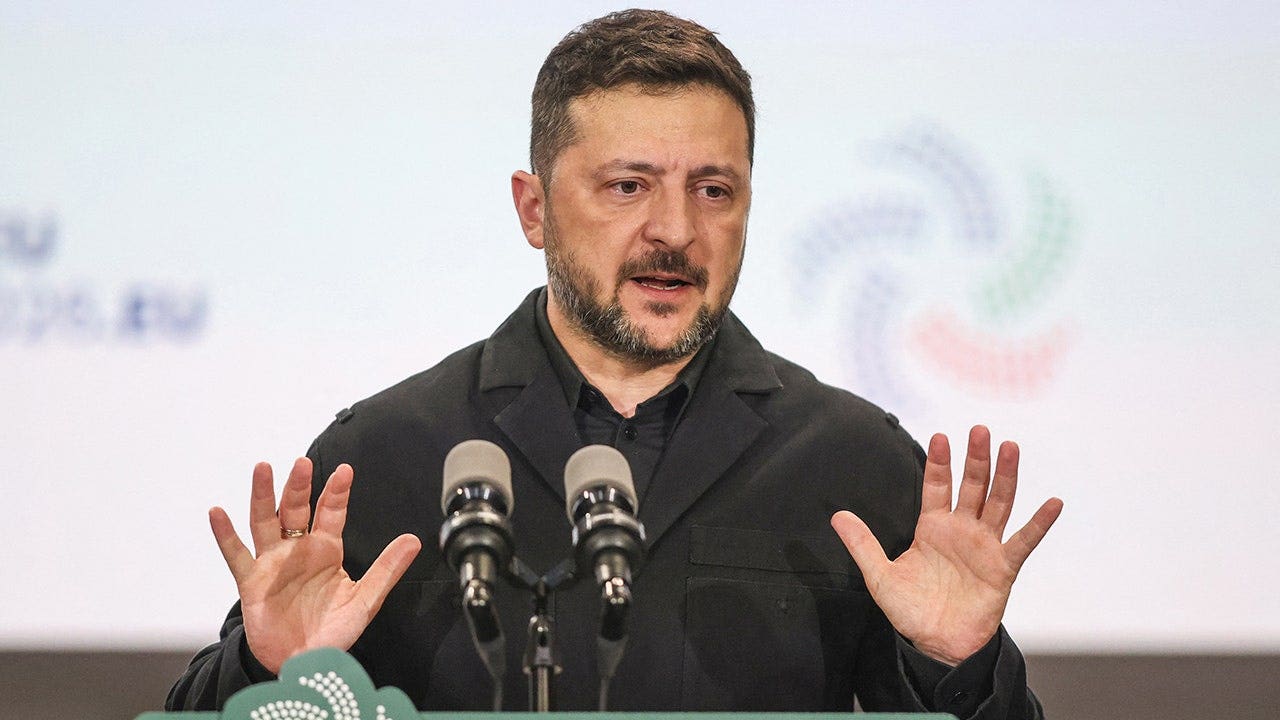
Standing at a critical juncture in a conflict that has redefined modern warfare, Ukrainian President Volodymyr Zelenskyy has issued an urgent, deeply human plea to the international community. Following a devastating and complex aerial bombardment on Kyiv, during which Russia launched a staggering barrage of 68 missiles and 351 attack drones in a single night, the Ukrainian leader made it clear that his nation’s skies remain perilously vulnerable. While Ukrainian defense forces demonstrated immense bravery and skill in intercepting the onslaught of drones and cruise missiles, they were ultimately left defenseless against fast-moving Russian ballistic missiles. Zelenskyy pointedly noted that this tragic gap in protection does not stem from a lack of resolve among his troops, but rather from a critical, exhausting shortage of interceptor missiles, leaving civilian neighborhoods exposed to relentless devastation.
This desperate call for help serves as a dramatic backdrop to the upcoming North Atlantic Treaty Organization (NATO) summit in Ankara, Turkey, where world leaders are gathering to navigate a fractured geopolitical landscape. Among the attendees is President Donald Trump, who has consistently questioned the financial burden of the alliance and recently criticized the “one-sided path” of American contributions. The summit represents a high-stakes arena where the future of international support for Ukraine hangs in the balance. By timing his appeal to coincide with this gathering, Zelenskyy is attempting to cut through the bureaucratic inertia of global diplomacy, urging the United States and European allies to emerge from the Ankara summit not just with statements of solidarity, but with concrete, decisive commitments to bolster Ukraine’s air defense networks.
The emotional core of Zelenskyy’s message lies in his direct challenge to the moral conscience of Western nations hoarding advanced defense systems. He argued that as long as lifesaving Patriot missile systems sit quietly in allied stockpiles rather than active combat zones, Russia is effectively being given a green light to continue its campaign of terror against innocent civilians. This is not merely a request for military hardware; it is a plea to save the lives of ordinary families who sleep in fear of the next air raid siren. Zelenskyy’s words emphasize a painful irony: the very technology designed to protect human life is currently being preserved in warehouses, while residential buildings in Ukraine are reduced to rubble. By framing the issue so starkly, he hopes to illustrate that the hesitance of the West has a very real, human cost on the ground.
The upcoming summit in Turkey is not just a meeting of defense ministers, but a crucible of intense diplomacy, highlighted by a high-profile dinner scheduled for Tuesday. This gathering will bring together Zelenskyy, newly elected South Korean President Lee Jae Myung, European Council President Antonio Costa, European Commission President Ursula von der Leyen, and key NATO heads of state. This dinner represents a vital opportunity for personal, face-to-face diplomacy away from the formal press conferences, allowing Zelenskyy to directly plead his case to those who hold the keys to Western arsenals. In these intimate settings, the abstract numbers of military aid packages are translated into the stark reality of survival for millions of Ukrainians, highlighting the intense pressure on global leaders to find a collective path forward.
As Germany, the United States, and other allies weigh their domestic political pressures against their international obligations, the debate over aid to Ukraine has become increasingly polarized. Trump’s skepticism toward NATO’s financial structure reflects a growing sentiment among some Western electorates weary of prolonged foreign entanglements, yet the alternative—allowing a sovereign nation’s defenses to crumble—presents a nightmare scenario for European stability. Zelenskyy’s appeal serves as a reminder that the war is not a distant policy debate, but an active, daily struggle for survival. The modern Patriot defense systems represent a shield that could stand between Ukrainian families and Russian ballistic missiles, making the decisions made in Ankara a matter of life and death.
Ultimately, the Ukrainian president’s message is a reminder of the immense power that the United States and Europe collectively hold to stop this ongoing humanitarian tragedy. The conflict has reached a stage where political indecision is as dangerous as the weapons being deployed on the battlefield. As world leaders gather in Turkey, the eyes of a battered but resilient Ukraine are fixed upon them, hoping that global leaders will find the political courage to empty their stockpiles and send the interceptors needed to bring safety to Ukrainian skies. Whether the summit results in the “strong decisions” Zelenskyy is begging for remains to be seen, but the human cost of delay grows heavier with every passing night.