





The Brewing Storm Over Iran: A Ceasefire in the Balance
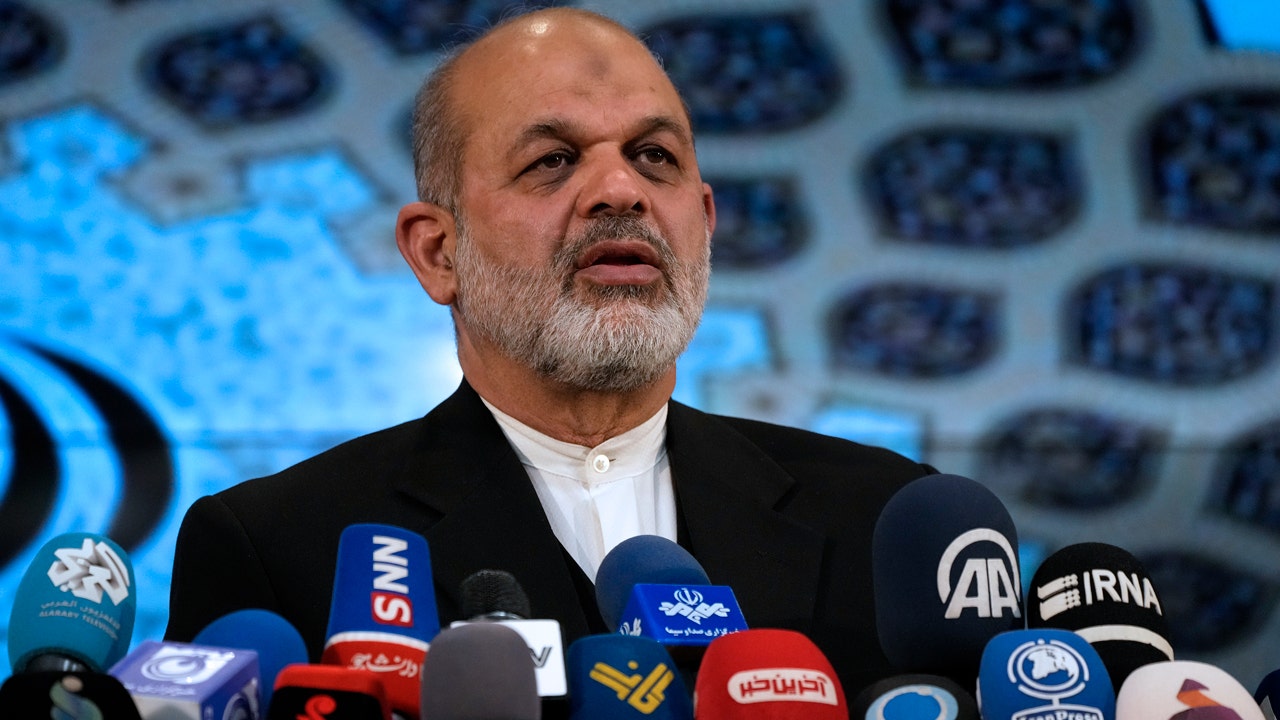
In the tense standoff between Iran and the United States, President Donald Trump’s upcoming deadline for Iran to extend a fragile two-week ceasefire has everyone on edge. As the clock ticks down, eyes are shifting away from Iran’s new president, Masoud Pezeshkian—a relatively unknown figure who’s trying to navigate the country’s turbulent waters—and toward a shadowy figure who’s rapidly becoming one of the most powerful men in Tehran. His name is Ahmad Vahidi, a high-ranking commander in the Islamic Revolutionary Guard Corps (IRGC), Iran’s elite paramilitary force. Analysts say he’s not just another soldier; he’s a hardline ideologue with a history of violence that could determine whether Iran dials down the conflict or escalates it. Lisa Daftari, a foreign policy expert who spoke with Fox News, describes Vahidi as a radical even among Iran’s toughest elites, warning that his elevation to the top of the IRGC sends a clear message: the regime isn’t softening under pressure—it’s doubling down on tactics built on hostage-taking, assassinations, and brutal repression at home.
Imagine waking up to a world where decisions that affect global stability—think wars, alliances, and terrorism—are made not by elected leaders in fancy offices, but by a network of backroom operators with blood on their hands. That’s increasingly the reality in Iran, where formal institutions like the presidency or parliament seem to be losing ground to informal power brokers. Behnam Ben Taleblu, a senior fellow at the Foundation for Defense of Democracies, paints a picture of a “system of men, not laws,” where personal relationships and elite networks trump official processes. This shift is putting Vahidi in a prime spot to influence outcomes. Experts like Beni Sabti from Israel’s Institute for National Security Studies argue that Vahidi might even outstrip the influence of other heavyweights, such as parliamentary speaker Mohammad Bagher Ghalibaf or Supreme Leader Ali Khamenei’s own son, Mojtaba. Sabti notes that Vahidi is unique in meeting face-to-face with the new supreme leader, positioning him as the man who could tilt the scales. It’s like watching a game of chess where the knights and bishops are the real power players, and the kings and queens are just pawns on the board. As Iran’s political landscape fractures, Vahidi’s rise highlights how the IRGC—often called the regime’s “war machine”—is consolidating control, making peace talks feel more like a temporary truce than a lasting détente.
To understand Vahidi’s clout, rewind to a time before most people knew the name Qassem Soleimani, the infamous IRGC commander assassinated by a U.S. drone in 2020. Vahidi was there first, laying the groundwork for Iran’s shadowy empire. He commanded the Quds Force in the 1990s, the elite unit responsible for covert operations, foreign meddling, and backing terror groups abroad. Analysts say he helped establish Iran’s web of allies in places like Lebanon, forging deep ties with militants that have endured for decades. Picture a young operative trained in camps alongside Palestinian and Lebanese fighters, building what would become Hezbollah—an Iran-backed powerhouse that’s terrorized the region. Vahidi didn’t just support these groups; he operationalized them, turning ideology into action. His fingerprints are on some of the most notorious attacks: the 1983 Beirut barracks bombing that claimed 241 American lives, the 1996 Khobar Towers strike in Saudi Arabia, and even a 2008 assault on the U.S. Embassy in Yemen. It’s a resume that reads like a thriller novel, filled with intrigue, betrayal, and bloodshed that has directly targeted American interests and allies.
But Vahidi’s notoriety goes beyond military ops; it’s personal, raw, and haunting for victims worldwide. He’s accused of masterminding the 1994 bombing of the AMIA Jewish community center in Buenos Aires, which killed 85 people and shattered lives in a quiet neighborhood. Argentine prosecutors have linked him to the 1992 Israeli Embassy attack in the same city, and Interpol’s red notice keeps him on America’s most-wanted list. Just recently, in April, Argentina’s President Javier Milei reignited the spotlight by declaring the entire IRGC a terrorist organization and naming Vahidi specifically. Sanctions from the U.S. and EU further isolate him, restricting his travel, finances, and international dealings. He’s been penalized since 2010 for ties to Iran’s nuclear and missile programs, and in 2022, for human rights abuses under his watch as interior minister during the crackdown on protests sparked by Mahsa Amini’s death. Human rights groups report thousands killed with live ammunition, torture, and mass detentions—images that still echo in our minds from those dark days. Yigal Carmon, president of the Middle East Media Research Institute, warns that under Vahidi, more atrocities could loom, both within Iran and against diaspora communities like Jews and others overseas. It’s not just about politics; it’s about real people suffering because of one man’s unrelenting ideology.
Analysts aren’t just alarmed—they’re sounding the alarm that Vahidi represents the pinnacle of Iran’s radical fringe. Even in a regime known for hardliners, he’s an outlier, someone who embodies the most militant impulses of the Islamic Republic. Sabti cautioned that Vahidi’s grip could push Iran away from genuine de-escalation, as he might view continued conflict as a way to bolster the IRGC’s power and resources. Why agree to peace when war funds the revolution’s most fervent protectors? Trump’s apocalyptic warnings about a sweeping U.S. strike if the ceasefire falls apart only heighten the stakes, risking lives of American troops, allies, and global stability if this terror-tied figure is steering Iran’s ship. Diplomats like Vice President JD Vance are on the move—en route to Pakistan for high-stakes talks—trying to mend fences, but the fragility is palpable. A ceasefire might buy time, but critics fear Vahidi sees it as a ruse to regroup, not reconcile. As Carmon puts it, trusting him would be a “grave mistake”—he’s part of the “Death to America” crowd, where ideology trumps diplomacy. Iran’s UN mission stayed silent when asked for comment, leaving outsiders to wonder: is this the face of a regime doubling down on extremism, or a pivot point for change?
In the end, the story of Ahmad Vahidi is a human one—about ambition, ideology, and the cost of power in a fractured nation. For everyday Americans, this isn’t just geopolitical theater; it’s a reminder of how one man’s choices could ignite conflicts that echo across oceans, from Beirut’s shattered barracks to Buenos Aires’ grieving families. As Trump’s deadline looms, the question isn’t just about Iran’s presidency, but whether Vahidi’s hardline vision will prevail, turning hope for peace into another chapter of turmoil. Analysts like Daftari urge vigilance: his ascent signals Tehran isn’t moderating—it’s radicalizing further. For the U.S., allies like Israel and European nations, the risks are clear—heightened threats from terror networks he helped build. Yet, there’s cautious optimism in diplomats’ efforts, like Vance’s Pakistan visit, showing that dialogue isn’t dead. But with Vahidi at the helm, true stability feels elusive. The world watches, balancing on a knife’s edge, praying that wisdom overpowers recklessness. As Fox News notes, you can now listen to articles like this, turning ink into insight—perhaps a small way to stay informed in a world that feels increasingly unpredictable. Ultimately, Vahidi’s story isn’t finished; it’s a cautionary tale for why understanding these gray men matters more than ever in our interconnected lives.