





Nestled in the heart of Central Europe, the picturesque nation of Slovenia is celebrated worldwide for its breathtaking Alpine landscapes, its historic towns like Škofja Loka, and its famous cultural exports, ranging from NBA superstar Luka Dončić to former U.S. First Lady Melania Trump. Yet beneath its tranquil, postcard-perfect exterior, a seismic political transformation is currently unfolding. The country is adjusting to the dramatic return of its most formidable, resilient, and polarizing political figure, Prime Minister Janez Janša. Now embarking on his fourth non-consecutive term as the nation’s predsednik vlade, Janša has engineered a stunning political comeback, assembling a center-right coalition that successfully dismantled the progressive administration of his center-left predecessor, Robert Golob. To many local and international observers, Janša’s political resurrection represents far more than just a standard change in leadership; it marks a fundamental ideological pivot toward populist, nationalist, and highly pragmatic governance. Often compared to Donald Trump due to his aggressive communication style, populist rhetoric, and “Slovenia First” philosophy, Janša is wasting no time in reversing the progressive policies of the previous administration. His return has reignited a passionate national debate about Slovenia’s identity, its democratic institutions, and its place on the global stage, as his fervent supporters welcome a return to economic stability and national pride while his vocal critics warn of an impending slide toward authoritarianism.
On the global stage, Janša is orchestrating a profound realignment of Slovenian foreign policy, marked by a decisive pivot toward traditional Western alliances and a strong stance on global security. In a direct and swift repudiation of Robert Golob’s pro-Palestinian and anti-Israel posture, Janša’s new government has frozen Slovenia’s recognition of a Palestinian state, announced plans to relocate the Slovenian embassy to Jerusalem, and lifted a highly controversial 2025 ban on military trade with Israel. Simultaneously, Janša is prioritizing a revitalization of relations with the United States, a nation he has long revered as a beacon of liberty, democracy, and self-determination. During a recent high-profile America 250 anniversary event hosted by the U.S. Embassy in Ljubljana—an event notably attended by Viktor Knavs, the father of Melania Trump—Janša spoke passionately about the historical inspiration Slovenia drew from the American experiment during its own struggle for independence, expressing his desire for Slovenia to become a “home of the brave in a land of the free.” However, Janša’s foreign policy is far from one-dimensional. While he shares a close personal and ideological bond with Hungary’s nationalistic former Prime Minister Viktor Orbán, Janša breaks sharply with the regional trend of Russian appeasement. He has emerged as one of the European Union’s most outspoken defenders of Ukrainian sovereignty, having famously traveled to a besieged Kyiv in March 2022 alongside the Polish and Czech prime ministers to demonstrate early European solidarity. He recently returned to Kyiv for the Ukraine-Southeast Europe Summit to mark Ukraine’s Statehood Day, reaffirming his commitment to boosting military aid to the war-torn nation and advocating for stricter international sanctions against Moscow.
Domestically, Janša’s agenda is focused on a sweeping deregulation of the Slovenian economy, promising to dismantle what he characterizes as the “inefficiency, stagnation, and administrative bloat” of the Golob era. His vision centers on transforming Slovenia into a dynamic, business-friendly land of opportunity, prosperity, and individual safety where every responsible citizen feels accepted and secure. To achieve this, his administration is preparing a comprehensive package of reforms designed to cut government red tape, lower taxes on businesses, and stimulate private investment. Crucially, Janša is championing the expansion of private options in healthcare and education, areas that have historically been dominated by highly bureaucratized public systems. He is also taking on the daunting task of reforming the nation’s unsustainable pension system, aiming to secure long-term financial stability for Slovenia’s rapidly aging population. Perhaps the most ambitious cornerstone of his economic revival plan is a massive investment in national infrastructure, highlighted by a proposal to construct a second reactor at Slovenia’s Krško nuclear power plant. This energy initiative is framed not just as an economic boost, but as a vital matter of national security, aiming to shield Slovenia from the volatile energy crises currently plaguing Western Europe. By promoting energy independence, cutting public spending, and shrinking the overall footprint of the state, Janša hopes to foster an environment where self-reliance, entrepreneurship, and personal responsibility can flourish, offering a stark contrast to the welfare-state policies of his leftist predecessors.
Beyond economic reform, perhaps no issue defines Janša’s political identity as sharply as his uncompromising stance on national sovereignty, border control, and immigration. Having witnessed the chaotic peak of the 2015 European migrant crisis—when hundreds of thousands of migrants crossed the “Balkan Route” directly through Slovenian territory, marching through local towns and straining public resources—Janša has long advocated for a fortress-like approach to Europe’s borders. He frequently praises Donald Trump’s border security policies and has warned that unchecked migration threatens the cultural, social, and economic fabric of European societies. Almost immediately upon reclaiming office, Janša joined eighteen other European leaders in signing a joint letter demanding a radical, systemic transformation of the European Union’s migration framework. This coalition is calling for aggressive reductions in irregular migration, more effective crackdowns on human smuggling syndicates, a dramatic increase in deportations, and stronger security partnerships with third-party nations outside the EU. In public statements, Janša has been characteristically blunt, asserting that Slovenia is finally aligning itself with nations that refuse to tolerate what he terms “social tourism” and the illegal importation of voters for the European political left. This rhetoric has deeply polarized the nation, drawing fierce condemnation from humanitarian organizations and progressive activists who accuse him of stoking xenophobia and undermining human rights, while resonating deeply with conservative voters who feel that the previous government failed to safeguard the nation’s borders and public safety.
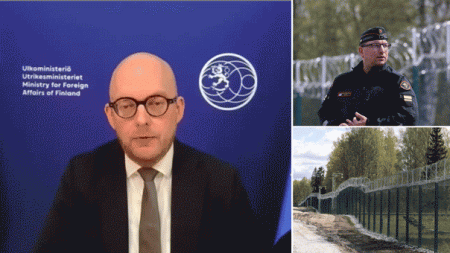
To truly understand Janez Janša’s enduring political survival and his combative governing style, one must examine a personal history deeply rooted in the struggle for Slovenian independence and marked by intense legal battles. Janša’s political career began well before Slovenia existed as an independent state; in 1988, he was arrested by the Yugoslav People’s Army and tried in a closed military court for allegedly leaking classified documents to journalists in what became known as the legendary “JBTZ affair.” His subsequent six-month imprisonment sparked widespread public outrage and galvanized the Slovenian independence movement, leading to his appointment as the nation’s first Minister of Defense during the brief but victorious ten-day war of independence in 1991. Decades later, in 2013, Janša faced another major legal crisis when he was convicted of bribery in connection with a Finnish defense contract and sentenced to two years in prison—the very same facility where he had been held twenty-five years earlier. Janša consistently maintained that the charges were politically motivated, orchestrated by his leftist opponents to destroy his career. After serving six months, he was released, and his conviction was unanimously overturned by Slovenia’s Constitutional Court in 2015. This history of political persecution has created a fierce, battle-tested leader who views his political battles through a highly personal lens. Like Trump, Janša is a prolific and combative user of social media, particularly X (formerly Twitter), where he frequently engages in late-night posting sprees to bypass traditional media outlets, which he regularly accuses of bias, censorship, and actively working to undermine Slovenian democracy.
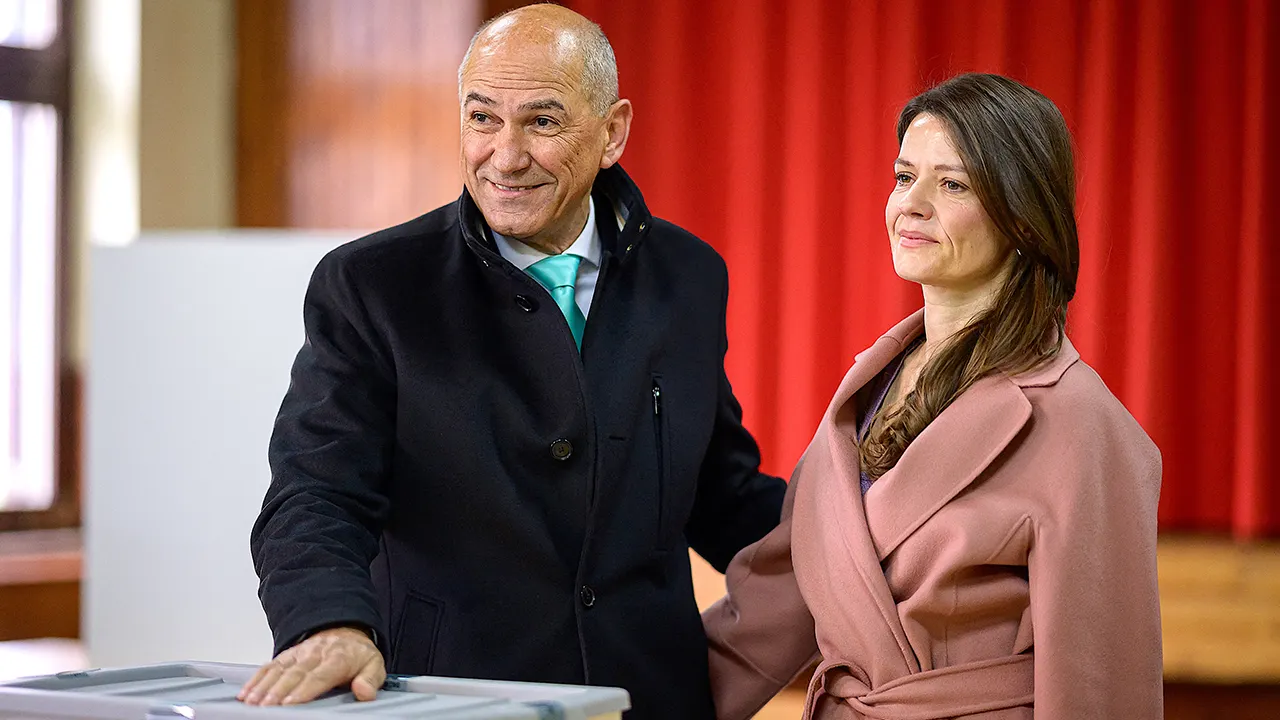
The ultimate testament to Janša’s political cunning and strategic brilliance is the highly unusual democratic process that propelled him back into the prime minister’s office. In the general election held on March 22, the political landscape appeared deeply fractured. While initial polls predicted a landslide victory for Janša’s Slovenian Democratic Party (SDS), the final results were razor-thin. Robert Golob’s Freedom Movement managed to secure 29 seats in the 90-seat parliament with 28.7% of the vote, while Janša’s SDS secured 28 seats with 27.9%. Under normal circumstances, Golob would have formed a government, but after a month of gridlock and failed negotiations with far-left coalition partners, Golob was unable to secure the necessary parliamentary majority, leaving the country in a state of political paralysis. Recognizing an opportunity, President Nataša Pirc Musar declined to nominate a prime minister, leaving the door open for Janša to deploy his legendary skills as a master coalition builder. Through intense, behind-the-scenes negotiations, Janša miraculously secured 51 votes in a secret parliamentary ballot—comfortably exceeding the 46 required to govern. This coalition was built on a fragile alliance of center-right parties, representatives of the country’s Italian and Hungarian minorities, and, in a shocking twist, a single anonymous vote from the opposition benches. As Janša prepares to represent Slovenia at the United Nations General Assembly in New York, his unorthodox ascension to power stands as a powerful reminder of his resilience, leaving both supporters and critics to marvel at a leader who has once again defied the odds to reshape his nation’s destiny.