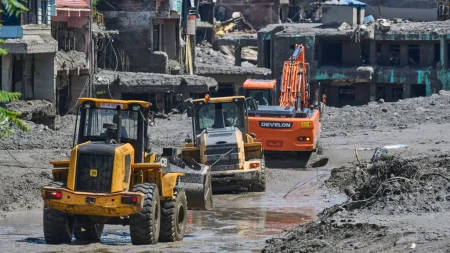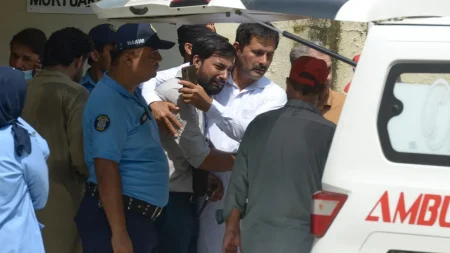



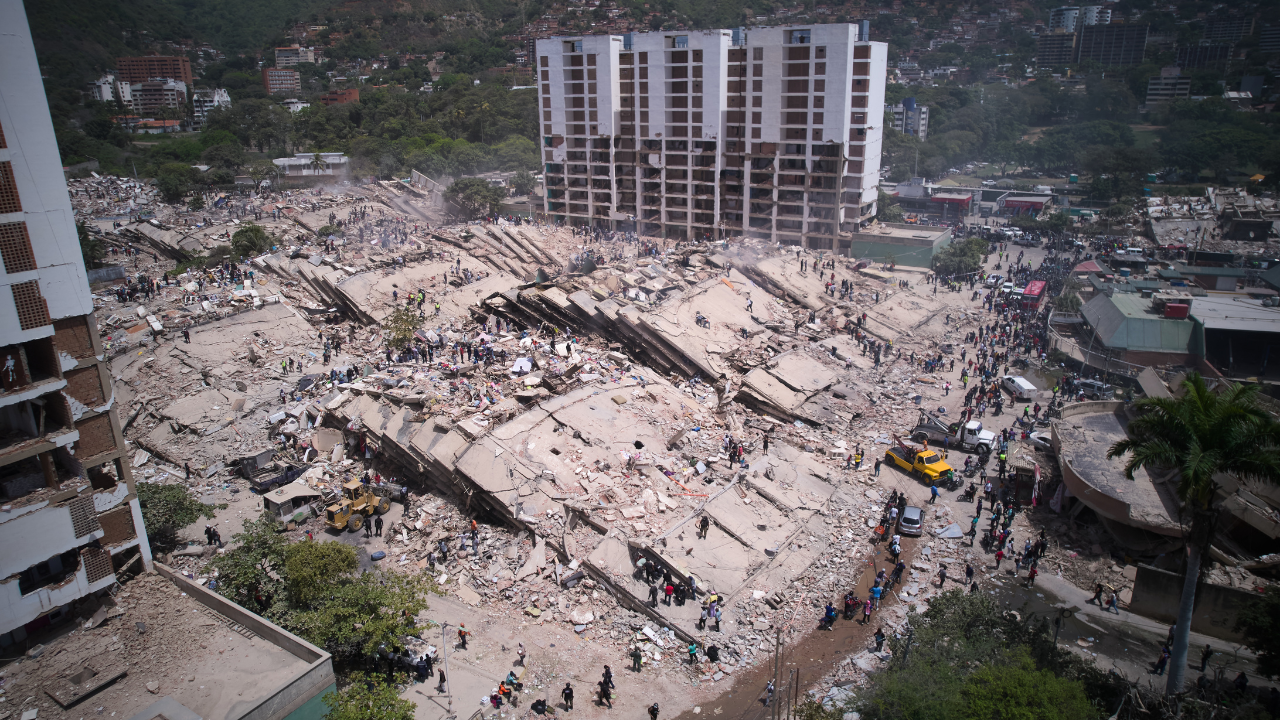
The earth shook twice, shattering the delicate peace along Venezuela’s northern shore and leaving behind a landscape of ruin and unfathomable human tragedy. Three days after successive 7.2 and 7.5-magnitude earthquakes tore through the region, the true scale of the catastrophe is beginning to materialize in devastating numbers: at least 920 lives have been officially declared lost, over 3,300 people are nursing severe injuries in overwhelmed medical clinics, and tens of thousands remain missing under the weight of collapsed concrete. In the coastal towns and cities where the violent tectonic vibrations tore through apartment blocks, schools, and busy marketplaces, the immediate aftermath has been defined by a heavy, suffocating dust and the desperate, echoed cries of those trapped beneath the wreckage of their former lives. First responders, working alongside ordinary citizens who refused to stand idly by, have labored tirelessly through the heat, successfully pulling 243 survivors from the debris so far. However, with every passing hour, the hope of finding more living souls grows increasingly fragile. The physical destruction along the coastline is immense, with once-vibrant oceanside avenues now reduced to jagged piles of concrete, exposed rebar, and scattered personal belongings that tell the silent stories of families disrupted in a terrifying instant. This natural disaster has not just damaged infrastructure; it has shattered the social fabric of communities already weary from years of economic and political hardship, turning a quiet Wednesday into a historic epoch of national mourning. As families hold agonizing, sleepless vigils beside precarious hills of rubble, the air remains thick with a mixture of grief, exhaustion, and the stubborn, desperate belief that their loved ones might still be breathing in the dark, cramped spaces below. The sheer scale of the disaster has completely overwhelmed domestic emergency services, sparking an urgent, international race against the biological clock where every second dictates the barrier between life and death for thousands of buried citizens.
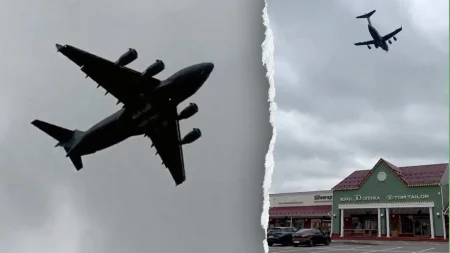
Recognizing the monumental scale of the catastrophe and the severe limitations of local emergency services, the international community has mobilized to offer critical support, led prominently by dispatchments from the United States. Recognizing that the critical window for saving lives is rapidly closing, U.S. Southern Command has coordinated a massive, around-the-clock logistics effort, while the State Department guides a federal response that includes a pledge of $150 million in emergency humanitarian aid. Specialist elite search and rescue teams from Virginia, California, and Florida have landed on Venezuelan soil, carrying with them sophisticated technology designed specifically to navigate the treacherous, unstable environments of collapsed urban structures. Among these, the Los Angeles County Fire Department has deployed a highly trained 73-member elite team, which, alongside their counterparts from Fairfax County, Virginia, represents the only American municipal units fully certified and authorized to operate in disaster zones abroad. These specialists have brought an arsenal of advanced machinery, including heavy concrete-busting tools, thermal imaging cameras, search dogs, and highly sensitive acoustic listening devices capable of detecting the faintest heartbeats or scratchings of survivors trapped deep within the structural ruins. Operating under the auspices of U.S. Southern Command, military transport aircraft have worked through the night to deliver heavy construction vehicles, medical supplies, and life-saving provisions directly to the affected regions. Despite the historically complicated and often hostile geopolitical relationship between Washington and Caracas, this massive deployment of personnel and equipment underscores a fundamental humanitarian truth: that in the face of absolute human suffering, borders, political narratives, and historical animosities must yield to the urgent, universal imperative of preserving human life.
Yet, despite the influx of sophisticated international aid and historical pledges of millions of dollars, a deep and troubling chasm has emerged between the highly publicized foreign assistance and the reality experienced by Venezuelans on the ground. Survivors in the hardest-hit sectors have expressed profound frustration and despair, reporting that the domestic governmental mobilization has been painfully slow, disorganized, and largely absent from the neighborhoods where the devastation is absolute. Local citizens told journalists that they had seen very few state-sponsored search and rescue units in the crucial immediate hours following the disaster, representing a critical lapse because the first 48 to 72 hours are universally recognized as the transition period between saving lives and recovering bodies. The local frustration curdled into anger and profound confusion when the Venezuelan government announced a controversial decree to block civilian access to La Guaira—the coastal state that sustained the absolute worst of the earthquake’s wrath—under the guise of letting official search teams operate without being hampered by citizens. While authorities claimed this permit-based restriction was necessary to streamline rescue operations and maintain public safety, they failed to provide clear guidelines on who would qualify for these permits, effectively locking out anxious family members and blockading informal volunteer networks. This heavy-handed, control-oriented logistical decision has exacerbated the agony of local communities, who feel that their state is more interested in controlling movement and managing narratives than in aggressively excavating the ruins to save their dying citizens.
To understand the profound human cost of this official inertia, one needs only to look at the torment of Nazareth Jimenez, a resident of La Guaira whose story reflects the agonizing plight of thousands along the northern coast. Left with no state rescuers in sight during the vital hours after the disaster, Nazareth was forced to watch her neighbors and community members form makeshift rescue squads, utilizing primitive domestic tools, hammers, and commercial power tools to frantically chip away at the massive concrete slabs of what was once a multi-story apartment building. Hidden beneath those suffocating ruins were her siblings, her nieces, her nephews, and her closest friends, their ultimate fates entirely dependent on the improvised efforts of exhausted volunteers working without safety gear or scientific guidance. Standing amidst the dust and the blinding heat, clutching what little hope remained, Nazareth’s voice became a desperate cry for the world to notice the agonizing reality behind the official statistics and political rhetoric. “We’re making a call for help to the government and countries across the world,” she pleaded to reporters, her eyes filled with tears, her words carrying the heavy weight of an entire nation trapped in limbo, “There are still people alive in there.” Her story highlights the agonizing survival of ordinary citizens who, abandoned by the formal structures meant to protect them, must rely on the raw, heartbreaking solidarity of their equally traumatized neighbors to dig for the voices fading beneath the earth.
This unfolding humanitarian catastrophe has thrown a harsh, unforgiving spotlight on the fragile political landscape of Venezuela, posing an existential challenge to acting President Delcy Rodriguez and her administration. Rodriguez, the former vice president, assumed the presidency under highly contentious circumstances, leading a governing coalition that was established after a United States-backed operation successfully captured and deposed the long-standing president, Nicolás Maduro. Consequently, her administration has operated under a dark cloud of domestic and international skepticism, lacking the mandate of a democratic election and failing to establish a concrete timeline for future national polls. The earthquake has suddenly transformed her precarious leadership into a trial by fire, wherein the efficiency of her administrative response directly correlates to her regime’s ultimate political legitimacy and survival. While her government has attempted to project control by distributing basic food rations and drinking water to displaced survivors in La Guaira, the civilian consensus is that these efforts are a mere drop in the ocean compared to the monumental needs of a homeless and grieving population. If Rodriguez’s administration fails to effectively coordinate the international rescue teams, restore basic utility lifelines, and manage the massive flow of foreign aid transparently, the lingering anger of the population could easily metastasize into widespread civil unrest, threatening to dismantle the delicate political transition that Washington worked so handily to establish.
As the dust slowly begins to settle over the shattered coastal towns, the path ahead for Venezuela stretches out as a long, arduous journey of physical rebuilding and deep emotional healing. The immediate crisis of extracting survivors will soon transition into a protracted humanitarian effort to shelter the tens of thousands of newly homeless citizens, prevent the outbreak of waterborne diseases, and rebuild essential public infrastructure that was already failing before the tectonic plates shifted. This tragedy has once again demonstrated the extraordinary resilience of the Venezuelan people, who, despite enduring years of hyperinflation, political violence, and social collapse, have demonstrated an inspiring capacity for mutual aid and courage in their darkest hour. However, resilience alone cannot rebuild shattered cities or mend the profound psychological trauma of a population that has lost nearly a thousand of its sons, daughters, mothers, and fathers in a single day. The international community, having pledged initial financial aid and sent its finest rescue specialists, must remain committed to Venezuela long after the news cameras leave and the initial shock waves fade from global headlines. Ultimately, the survival of those still trapped, the recovery of those injured, and the future of a nation in political transition will depend on whether global solidarity can transcend geopolitics, ensuring that the human beings suffering in the ruins of La Guaira are never forgotten.