






The global landscape of technology is currently witnessing a monumental, albeit quiet, revolution, with the African continent emerging as the primary geopolitical battleground for a high-stakes digital trade war between the United States and China. For decades, Beijing has systematically expanded its footprint across Africa, leveraging massive infrastructure projects, direct state funding, and deeply subsidized loans to secure political capital, build telecommunications networks, and monopolize critical mineral supply chains. However, a dramatic and highly strategic shift is underway under the Trump administration, which has orchestrated a highly effective, agile public-private partnership aimed at helping American companies outmaneuver their Chinese counterparts in securing the backbone of the future global economy: data centers and the massive energy systems required to sustain them. While various states across America are increasingly tightening regulations on domestic data centers due to their insatiable demand for electricity and strain on local grids, the U.S. government has pivotally redirected this technological ambition abroad, turning Africa into a frontier of unprecedented opportunity for digital expansion. Through the Bureau of African Affairs, the U.S. State Department has successfully facilitated and closed 37 massive commercial transactions since the start of President Donald Trump’s second term, representing an astonishing $25.67 billion in total value, with even more deals currently on the horizon. These actions represent more than just transactional diplomacy; they are part of a deliberate, long-term geopolitical chess game designed to reshape global alliances. Data centers are the absolute beating heart of our modern era, acting as the physical repositories for artificial intelligence, cloud computing, streaming networks, and sovereign international communications. By aggressively backing American tech firms in this arena, Washington is not only countering China’s digital hegemony but is also offering African nations a highly sophisticated, transparent alternative to Beijing’s infrastructure model, effectively proving that American innovation and market-driven partnerships can win out on the global stage.
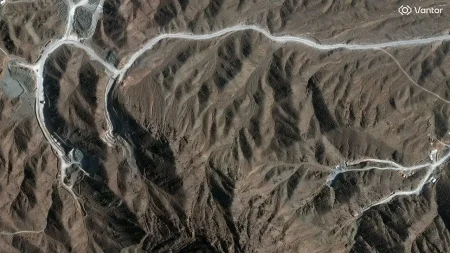
To truly appreciate the magnitude of this American resurgence, one must look at the mountain kingdom of Lesotho, a landlocked nation entirely surrounded by South Africa where the geopolitical playing field was historically tilted heavily in China’s favor. Geographically isolated and financially constrained, Lesotho has long been a primary focal point for Beijing’s classic “checkbook diplomacy,” with China systematically eliminating tariffs on Lesotho’s exports, simplifying cross-border banking through the state-owned Industrial and Commercial Bank of China, and canceling debts on major national projects to secure deep-seated political loyalty. Over the years, Beijing has carefully entrenched itself in the daily life of the kingdom by building essential civil infrastructure, including solar power plants, local fire stations, and even a state-of-the-art police fingerprint examination laboratory. Yet, despite this deep-seated, historically overwhelming Chinese influence, the U.S. government, working closely through its local embassy and the State Department, managed to help American energy developer Convalt Energy secure a historic, breathtaking $6.2 billion agreement with the government of Lesotho. This monumental deal—the largest single transaction in the southern African country’s history—is a massive paradigm shift that includes a 1,200-megawatt pumped-storage hydropower facility paired with a cutting-edge 900-megawatt AI data center. Assistant Secretary of State for African Affairs Frank Garcia highlighted that this massive project will increase Lesotho’s national electricity generation capacity by an unbelievable 1,600 percent, instantly transforming a historically dependent mountain nation into a sovereign net exporter of clean energy to the broader region. Furthermore, this landmark agreement is poised to generate an estimated $2 billion in U.S. energy equipment exports, demonstrating how strategic international diplomacy can yield monumental dividends for domestic American manufacturing while simultaneously empowering African nations with true utility, self-reliance, modern infrastructure, and genuine economic freedom.
Behind this stunning victory in Lesotho is a fundamental shift in business philosophy, championed by visionary executives like Hari Achuthan, the president and CEO of Convalt Energy, who believe that American companies can soundly defeat China on its traditional turf by offering superior, long-term value. Achuthan emphasizes that the path to victory lies not in trying to match Beijing’s heavily subsidized, low-cost bids, but in innovating faster, integrating highly advanced hardware with robust software systems, and remaining intensely focused on the customized needs of the end user. In his view, the next major cycle of global economic growth will be undeniably driven by artificial intelligence, digital infrastructure, and the massive, resilient energy systems required to keep them running, as AI simply cannot scale without physical infrastructure like water, cooling, fiber connectivity, land, and reliable power transmission. Achuthan credits the Trump administration’s heavy focus on private-sector investment and bilateral trade, rather than relying on traditional, bureaucratic government grants, as the catalyst that aligns perfectly with modern business realities in Africa. By pursuing a commercially sustainable infrastructure platform built around long-term investments rather than short-sighted charity, Convalt is establishing a durable operating model that benefits both sides. This approach creates a powerful economic feedback loop, as Convalt’s manufacturing facilities back in the United States are being rapidly developed and scaled to serve both domestic customers and international markets, creating high-paying American jobs while simultaneously satisfying Africa’s exploding demand for digital infrastructure, clean energy, and heavy manufacturing capacity. Ultimately, this strategy shifts the dynamic from passive transactional foreign aid to active, mutually beneficial commerce, fostering a deeper, more sustainable relationship between nations built on mutual respect, trust, and shared technological progress.
This strategic blueprint of prioritizing performance, transparency, and digital sovereignty is yielding spectacular results in other parts of Africa as well, particularly in Central and West Africa, where American cybersecurity and infrastructure firm Cybastion is rapidly carving out a dominant position. In Gabon, a central African nation where China has historically exerted tremendous economic leverage, the local U.S. Embassy played an instrumental role in helping American companies secure over $600 million in business contracts in 2025 alone. Building upon this massive momentum, Cybastion recently secured a monumental $100 million deal to supply two state-of-the-art data centers alongside a high-capacity gas-to-power plant, directly defeating the Chinese state-linked telecom giant Huawei in a fierce, head-to-head competition for the project. This triumph was not an isolated event; shortly thereafter, the U.S. Embassy in the Ivory Coast confirmed an even larger, more ambitious contract for Cybastion valued at $170 million. This sweeping West African initiative will deliver a sovereign data center, a modernized national government digitalization platform, and a cutting-edge border surveillance system designed to protect the nation’s territorial integrity and enhance national security. These consecutive victories signal a massive shift in how African governments view security and technological development, as they are increasingly moving away from closed, potentially compromised Chinese digital ecosystems in favor of the transparent, high-integrity architecture provided by American companies. By securing these critical networks, the United States is helping African partners build resilient digital fortresses, ensuring that their national data, financial transactions, and state security operations remain completely secure from external cyber espionage while simultaneously opening up highly lucrative, long-term export markets for the U.S. technology sector.
At the heart of Cybastion’s spectacular operational success is its CEO, Dr. Thierry Wandji, whose leadership style combines deep technical expertise with a profound, highly empathetic understanding of the African socio-economic landscape. Wandji firmly believes that U.S. tech firms possess a unique, unmatched global competitiveness, but to unlock it, they must approach African nations as equal, respected partners rather than mere digital extraction sites. He points out that Africa currently boasts some of the fastest-growing economies in the entire world, with forward-thinking governments actively prioritizing digital workforce development, sovereign data centers, and the comprehensive modernization of public services as core pillars of their long-term national development plans. Cybastion’s ability to win major, high-stakes contracts over entrenched Chinese competitors stems from its commitment to offering a complete package of innovation, accountability, and localized empowerment. Unlike foreign competitors who often import their own labor, build closed systems, and export local wealth, Wandji’s approach focuses on cultivating local talent, training African engineers, and ensuring that the digital infrastructure built remains a lasting asset for the host nation. He stresses that in the modern digital era, sovereign control over national data is a fundamental right, and Cybastion provides the precise tools for African countries to manage their own digital destinies securely and transparently. This highly human-centric, collaborative approach not only builds immense local goodwill and deep institutional trust but also establishes a highly sustainable business model that resonates deeply with African leaders who are weary of predatory loan schemes and are actively seeking genuine, reliable partners invested in their long-term societal progress.
This shifting dynamic represents a profound, highly necessary evolution in global diplomacy, signaling a clear departure from the outdated era of passive development aid toward a dynamic new paradigm of commercial diplomacy driven by mutual prosperity, technological excellence, and unmatched operational transparency. As Assistant Secretary of State Frank Garcia powerfully pointed out, the choice for African nations in the modern era is becoming increasingly clear: they can either partner with opportunistic entities that trap, coerce, and undermine local sovereignty through unfavorable financial arrangements, or they can align with the United States to build lasting, transparent prosperity. By focusing on critical physical infrastructure, high-tech clean energy solutions, and localized digital empowerment, American companies are proving that they do not need to fear China’s head start in Africa; rather, they can soundly defeat them by offering superior quality, robust safety standards, and long-term community partnerships. Competing solely on low prices is no longer a viable strategy in a world that increasingly values cyber security, system reliability, and institutional trust. The extraordinary success of Convalt Energy in Lesotho and Cybastion in Gabon and the Ivory Coast serves as an inspiring, highly replicable blueprint for how the United States can reclaim its leadership role on the global stage. By seamlessly bridging the gap between Washington’s strategic foreign policy objectives and the innovative, agile capabilities of the American private sector, this new wave of commercial diplomacy is successfully rewriting the rules of the global digital age, ensuring that the digital highways of the future are built on a solid, unbreakable foundation of freedom, security, and shared economic growth.