


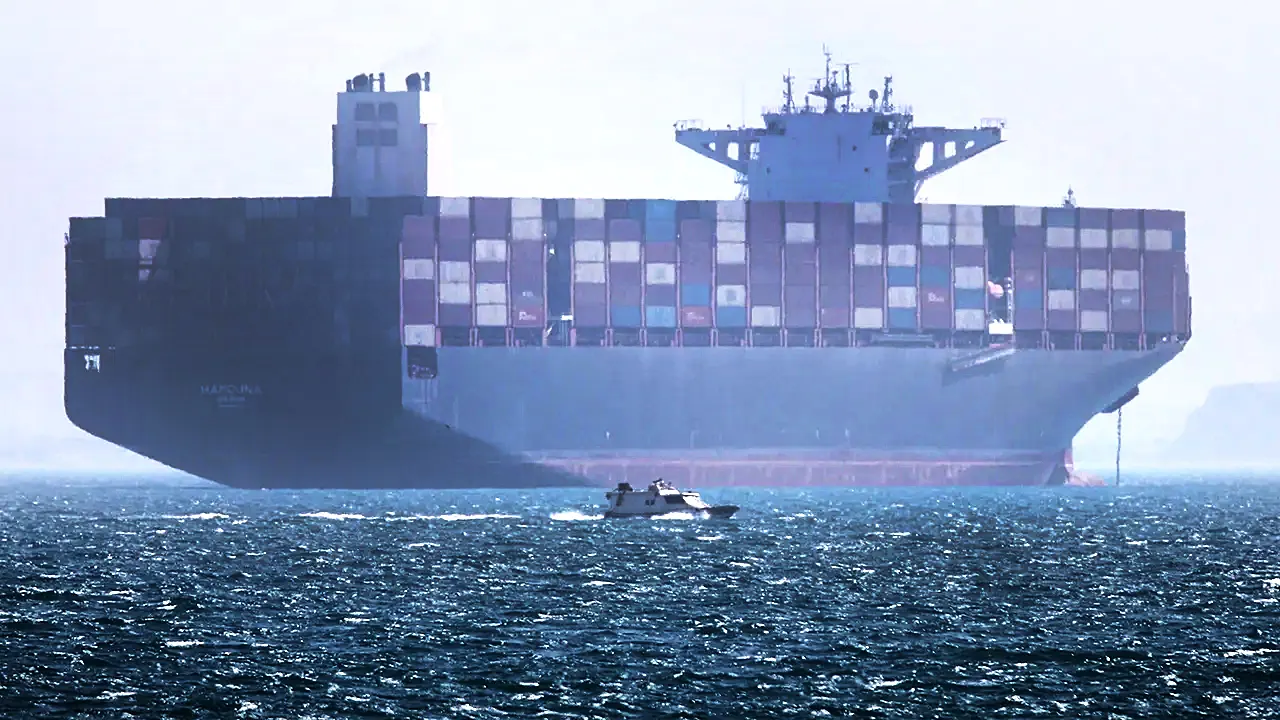
In the high-stakes, marble-clad corridors of the United Nations headquarters in New York, where international diplomacy often dissolves into rehearsed rhetoric and cautious platitudes, Czech Foreign Minister Petr Macinka offered a remarkably candid and pragmatically steel-jawed perspective on global security. Speaking during a series of pivotal security consultations, Macinka delivered an unexpected, strategically crucial pledge that surprised many seasoned observers: the Czech Republic, an entirely landlocked nation nestled in the very heart of Central Europe, is fully prepared to play an active role in securing the freedom of navigation in the highly volatile Strait of Hormuz. For a country with no coastline, no navy, and no maritime fleet, such an offer might initially sound paradoxical, yet Macinka clarified that modern conflict resolution relies as much on electronic intelligence and invisible eyes in the sky as it does on heavy destroyers churning through the water. Prague has already initiated high-level, concrete discussions about deploying its elite, world-class passive surveillance capabilities—cutting-edge, silent tracking systems that can map threats without revealing their own positions—to assist the joint efforts of the Trump administration. This bold commitment signals a profound evolution in how Central European states perceive their global responsibilities, demonstrating that physical geography is no longer an excuse for strategic paralysis. By offering these specialized, highly sophisticated assets to safeguard one of the world’s most critical trading arteries, the Czech Republic is proactively bridging the gap between European operational capabilities and American security expectations, proving that true alliance solidarity is measured by technological utility and political courage rather than simple access to an ocean.
The absolute urgency of securing the Strait of Hormuz is underscored by the staggering economic and geopolitical realities of this narrow marine passage, which serves as the lifeblood of the global energy supply. Connecting the oil-rich Persian Gulf to the open waters of the Arabian Sea, this narrow maritime choke point sees roughly twenty percent of the world’s petroleum consumption pass through its waters daily, meaning that any disruption there immediately triggers a cascading economic crisis felt by everyday consumers worldwide in the form of skyrocketing fuel prices and inflation. Macinka spoke with stark, unvarnished clarity regarding the primary source of this instability, identifying Iran as a dangerous global threat that projects power through four distinct, highly destructive “war tools”: aggressive nuclear proliferation, advanced ballistic missiles and devastating drone technology, the state sponsorship of international terrorism, and direct, hostile interference with merchant shipping. The Czech minister’s urgent warning that Tehran’s nuclear military ambitions must be permanently halted aligns seamlessly with the Trump administration’s renewed pressure on allied nations to carry their own weight in global security operations. This frustration with traditional allies who hesitate to assist in key strategic areas was recently amplified by Secretary of State Marco Rubio, who openly questioned the long-term utility of hosting expensive U.S. military bases in foreign countries that subsequently restrict American operational freedom during critical conflicts, while President Donald Trump went even further by warning that a reluctant, passive NATO risks exposing itself as nothing more than a toothless “paper tiger” in the face of existential global threats.
Rather than retreating in the face of Washington’s blunt criticisms of European security complacency, the Czech Republic has systematically stepped up to lead by example, successfully reaching NATO’s benchmark of spending a full two percent of its Gross Domestic Product on national defense and advocating for a massive surge in continental military readiness. Macinka strongly championed the Trump administration’s demands for European self-reliance, arguing with refreshing, uncompromised honesty that European nations have spent far too many decades enjoying the fruits of peace while hiding comfortably under the protective, taxpayer-funded umbrella of American security. The foreign minister insisted that it is long past time for European leaders to “do their homework,” rebuild their decimated defense industrial bases, and stop expecting Washington to solve every security crisis on their doorstep. In a highly provocative analysis, Macinka directly linked Europe’s persistent defense funding deficits to the European Union’s sweeping, ideologically driven Green Deal climate policies, which have dominated Brussels’ policy agenda. He characterized this obsessive focus on carbon neutrality during a period of massive regional instability as a form of “crazy green alarmism” that has systematically drained hundreds of billions of Euros from core national survival priorities, such as military modernization and industrial resilience. In his view, if European governments were to abandon these financially crippling and economically destructive green mandates, they would instantly liberate the massive amounts of capital necessary to build a truly formidable, independent European military deterrent capable of protecting its own borders.
This fiercely pragmatic philosophy reflects a broader, profound ideological alignment between Prague and the populist-leaning, “common sense” political wave currently reshaping Washington under the Trump administration, a shift that Macinka welcomes with open arms. The Czech foreign minister has positioned himself as an unapologetic defender of this political realignment, openly declaring his deep personal and ideological friendship toward both the United States and the State of Israel during a time of intense global polarization. This stance places him in direct opposition to the traditional, center-left European political establishment, an intellectual clash that was vividly spotlighted during the 2026 Munich Security Conference, where Macinka engaged in a heated, public confrontation with former U.S. Secretary of State Hillary Clinton over the rise of populist movements. In that high-profile forum, Macinka strongly defended the populist democratic shifts sweeping through Europe and America, arguing that these historical movements are not dangerous anomalies but rather a long-overdue, democratic correction by ordinary citizens who feel utterly abandoned by an elite globalist establishment that prioritizes theoretical international treaties over the raw economic and physical security of its own people. By boldly challenging the accepted dogmas of the Western intellectual elite, the Czech Republic is establishing itself as a vital, common-sense ideological anchor on the European continent—one that rejects empty diplomatic speak in favor of sovereign statehood, strong national borders, and a clear-eyed foreign policy rooted in reality.
This deep understanding of raw geopolitics and the value of national sovereignty is what drives Prague’s passionate, highly effective support for Ukraine, a policy that is not merely a matter of contemporary diplomacy but is deeply rooted in the collective trauma of Czech history. For the Czech people, the horrific reality of foreign military invasion and decade-long occupation is not a distant, abstract concept found only in textbooks; it is a painful, living memory of the 1968 Soviet-led Warsaw Pact invasion of Czechoslovakia, which brutally crushed the democratic reforms of the Prague Spring and subjected the nation to twenty years of oppressive Soviet dominance. This historical scar continues to profoundly shape Czech public opinion, instilling an instinctual, deeply felt solidarity with the Ukrainian people as they fight their own existential war against a massive, aggressive neighbor. Rather than offering empty gestures of moral support, the Czech Republic has translated this emotional solidarity into tangible, life-saving military logistics, masterminding a massive, highly successful international ammunition initiative that sought out and purchased artillery rounds from global suppliers. Having personally traveled to Kyiv to receive direct battlefield intelligence briefings from Ukrainian commanders, Macinka revealed that this Czech-led effort delivered more than half a million artillery shells during 2026 alone, providing the critical firepower needed to stabilize the shifting, asymmetrical frontlines and prevent a catastrophic breakthrough by Russian forces prior to any potential peace negotiations.
Looking toward the future, Macinka’s strategic focus remains centered on a hard-headed military reality: the prospects of establishing a lasting, just peace are directly dictated by holding a stable, unshakeable line of defense on the battlefield. He warned that fluctuating, unstable frontlines only serve to harden the territorial and political demands of both warring sides, whereas a frozen, heavily defended front creates the necessary strategic equilibrium that forces the combatants to engage in realistic, constructive diplomacy. With the United States heavily focused on addressing the explosive conflicts currently consuming the Middle East, Macinka issued a powerful, sobering call to action for his fellow European leaders, urging them to finally wake up to the realities of a multipolar world and shed their long-standing patterns of strategic dependency. He insisted that Europe can no longer afford to sit comfortably on the sidelines of its own continent’s security, expecting American diplomats to handle the heavy lifting of resolving the war on their Eastern flank while European families live with the looming anxiety of sudden, catastrophic escalation. Europe must shake off its psychological paralysis, transform its industrial potential into actual geopolitical strength, and claim its rightful, leading place at the negotiating table to shape a sustainable peace, protect the regional balance of power, and secure the democratic future of the continent for generations to come.