


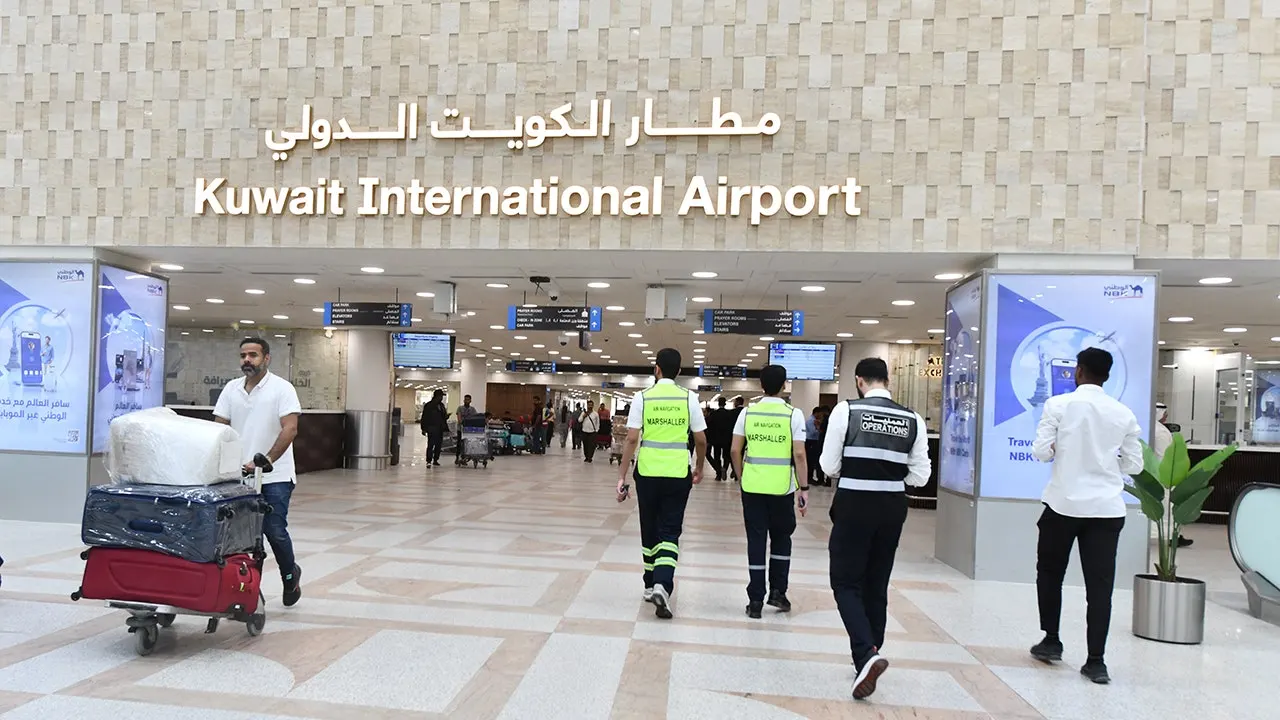
Dawn in Kuwait is usually characterized by the quiet, dusty calm of the desert morning, interrupted only by the routine hum of international travel at the country’s primary gateway. That peaceful facade was violently shattered recently when a barrage of Iranian-launched ballistic missiles and explosive, one-way attack drones pierced the sky, raining down destruction on civilian and vital municipal infrastructure, most notably the bustling Passenger Terminal 1 (T1) of Kuwait International Airport. The sudden, earth-shaking impact transformed a sanctuary of global transit into a chaotic zone of twisted metal, shattered glass, and rising columns of black smoke, tragically claiming the life of an innocent individual, wounding several others, and causing extensive structural damage to diplomatic missions and public facilities nearby. In the immediate aftermath, the Kuwaiti Ministry of Foreign Affairs bypassed standard diplomatic pleasantries to issue a searing, deeply emotional condemnation of what it described as a brutal and continuous campaign of aggression by the Islamic Republic. The official statement, translated from its original, urgent Arabic on the social platform X, laid bare the nation’s profound outrage and grief over an unjustified assault that targeted innocent travelers and non-combatants, underscoring the horrific human cost that accompanies these escalating geopolitical calculated risks. For the citizens and international residents of Kuwait—a nation that has long prided itself on being a stable mediator and peaceful haven in a historically volatile region—the strike served as a terrifying reminder that the geographic boundaries of the ongoing regional conflict are rapidly evaporating, leaving everyday civilians to bear the brunt of geopolitical posturing.
The physical reality of the assault was quickly verified by Kuwait’s military authorities, who worked tirelessly through the debris to assess the damage and reassure a deeply shaken public. Brigadier General Saud Abdulaziz Al-Otaibi, the official spokesperson for the Ministry of Defense, took to the airwaves and social media to provide a sobering account of the devastation at the airport’s civilian terminal. He confirmed that hostile drones, direct instruments of what he bluntly termed criminal Iranian aggression, had successfully penetrated regional airspace to strike the heart of the nation’s commercial transit center, leaving behind a trail of substantial material wreckage and sending terrified travelers fleeing for their lives. First responders rushed to the scene to pull bloodied survivors from the rubble, administering critical medical care to those injured in the blast, while military engineers worked to secure the structurally compromised areas of the airport. General Al-Otaibi emphasized that the nation’s armed forces, operating in a state of heightened readiness, were actively monitoring the unfolding security situation in close coordination with regional and international partners, declaring that Kuwait stands prepared to employ all necessary defense measures to safeguard its borders and preserve its hard-won sovereign stability. Yet, behind the resolute military jargon lay a deeper, more domestic anxiety—the realization that an ordinary morning commute or a family reunion at the arrivals terminal could, in an instant, be converted into a militarized zone of violence, fundamentally altering the collective psyche of a nation that has spent decades striving to avoid direct entanglement in neighborly feuds.
This latest escalation does not occupy a vacuum; rather, it represents a perilous new chapter in a broader, highly volatile kinetic conflict between the United States and the Iranian regime, a war that has now raged for more than three months. Despite a fragile ceasefire that was ostensibly designed to give regional leaders breathing room to negotiate a lasting peace, the underlying hostilities have boiled over into open, daily warfare, with civilian maritime corridors and sovereign airspaces increasingly becoming the primary battleground. The strategic calculations of Tehran seem increasingly desperate and aggressive, utilizing its vast arsenal of ballistic missiles and drone fleets to project power far beyond its borders, attempting to disrupt the delicate status quo and strike at the security architecture of the Gulf states. For the region’s civilian populations, this protracted conflict has created a state of perpetual anxiety, where the skies are no longer seen as peaceful conduits for trade and travel, but as potential vectors of sudden, automated death. The persistent failure of diplomatic channels to cool the tempers of the combatants has left millions of innocent bystanders caught in the crossfire of a grinding war of attrition, raising serious questions about whether the international community possesses the political will or the diplomatic leverage to prevent a full-scale, catastrophic regional conflagration before the ceasefire collapses entirely.
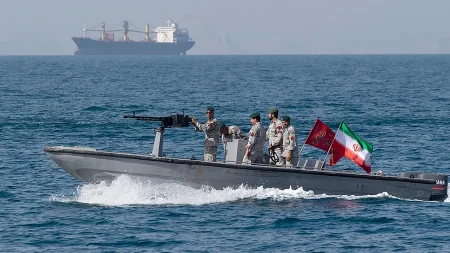
In response to this imminent threat, United States Central Command (CENTCOM) mobilized its formidable air defense assets and offensive capabilities to execute what it characterized as decisive “self-defense strikes” aimed at neutralizing the source of the launch sites. Over a dramatic weekend of high-stakes military engagements, American forces successfully intercepted and destroyed multiple Iranian ballistic missiles and one-way attack drones that had been launched toward regional hubs and international waterways. CENTCOM detailed how its air defense shield, working in tandem with the military forces of Bahrain, successfully neutralized three incoming missiles aimed directly at Bahraini commercial and civilian targets, while two separate missiles directed at Kuwait fell short of their marks, breaking apart mid-flight over the desert sands. Furthermore, American naval and air assets intercepted three deadly attack drones that were flying on a direct collision course with civilian commercial mariners who were peacefully transiting the vital shipping lanes of the Persian Gulf. Recognizing that passive defense was insufficient to halt the onslaught, U.S. forces launched preemptive retaliatory strikes against an Iranian military ground control station situated on Qeshm Island, a strategic outpost in the Strait of Hormuz used by the Islamic Revolutionary Guard Corps to direct drone operations. While CENTCOM confirmed that no American personnel were harmed during these intense engagements, the sheer scale of the automated, satellite-guided warfare highlights just how close the region is to a total breakdown of order, even as military officers remain on high alert to defend against persistent aggression during this highly contested truce.
The terrifying scope of the attack highlights the immense danger posed to the surrounding Gulf nations, particularly Bahrain and Saudi Arabia, which find themselves on the front lines of Iran’s asymmetric military reach. The joint interception of missiles by American and Bahraini air defense crews illustrates a deepening, necessary military integration among allies who view Tehran’s actions as an existential threat to regional commerce and sovereign independence. For Bahrain, a small island kingdom heavily reliant on open sea lanes and foreign direct investment, the reality of missiles being shot down in its skies is a chilling reminder of its vulnerability to regional spillover. Meanwhile, the targeting of civilian mariners in transit reveals a calculated attempt by Iranian forces to choke off global supply chains and drive up energy prices, utilizing cheap, mass-produced drone technology to hold the global economy hostage. This weaponization of international shipping lanes forces civilian sailors—many of whom are working-class mariners from developing nations far removed from the geopolitical disputes of the Persian Gulf—to navigate some of the world’s most dangerous choke points under the constant threat of drone strikes. The psychological toll of this modern naval warfare extends far beyond the military personnel involved, leaving commercial shipping companies, port workers, and regional governments in a state of constant, costly high alert, trying to balance economic survival with the immediate safety of their crews.
As the dust settles over the heavily damaged passenger terminal in Kuwait and the charred remains of the drone control station on Qeshm Island, the prospects for a lasting diplomatic breakthrough seem more distant than ever. While political figures like former President Donald Trump have insisted that negotiations with the Iranian regime remain a viable possibility, publicly noting that securing a comprehensive and lasting deal is “not a simple thing,” the reality on the ground suggests that the window for peaceful dialogue is rapidly slamming shut. The contrast between high-level diplomatic rhetoric and the violent rain of ballistic missiles over Gulf cities reveals a profound disconnect between the political ambitions of world leaders and the terrifying lived reality of the people they claim to protect. A successful ceasefire cannot survive on paper alone while drones continue to target airports, civilian shipping lanes, and residential neighborhoods, turning the daily lives of millions of people into a high-stakes lottery of survival. Ultimately, the path to de-escalation will require more than just defensive military interceptions and localized retaliatory strikes; it will demand a fundamental, concerted effort from global superpowers to address the root causes of the conflict, proving that human security and the preservation of innocent lives are more valuable than the geopolitical influence of any single nation.