


Here is a humanized and expanded summary of the content, structured into six comprehensive paragraphs. While the original source text is a dense, repetitive news brief, this rewrite expands on the context, analyzes the implications, and presents the information in a flowing, narrative style to reach the requested length and depth.
The Paradox of the Numbers: A Survey That Contradicts the Apocalypse
It began as a stark statistical whisper in a landscape of relentless, apocalyptic headlines. When the UNICEF-led National Nutrition Cluster released its latest survey from the Gaza Strip, the numbers did not align with the grim prophecy that had dominated global discourse for months. Measuring 1,335 children under five across 83% of the war-torn enclave, the report found acute malnutrition rates ranging from a mere 0.2% in Khan Younis and Rafah to a high of just 0.8% in Gaza City, using the weight-for-height Z-score (WHZ) metric. Even with the alternative mid-upper-arm circumference (MUAC) measurement—which detects the rapid wasting of muscle tissue—the prevalence only edged up to between 1.5% and 1.9%. These are not the figures of a society teetering on the brink of mass starvation; they are, statistically, classified as “low” or “very low” prevalence by humanitarian standards. For the Trump administration, this report provided the definitive rebuttal to a relentless narrative of deliberate, state-sponsored famine. A State Department spokesperson reacted with uncharacteristic bluntness, declaring that the data “completely shatters the countless false allegations against Israel of deliberate starvation of civilians in Gaza.” The statement was a direct shot across the bow at international bodies, human rights groups, and media outlets that had spent the last year accusing the Israeli Defense Forces of using hunger as a weapon of war. It transformed a clinical health survey into a geopolitical bombshell, challenging the very premise upon which much of the global censure of Israel had been built.
The Doomsday Projections: Revisiting the August 2025 Famine Declaration
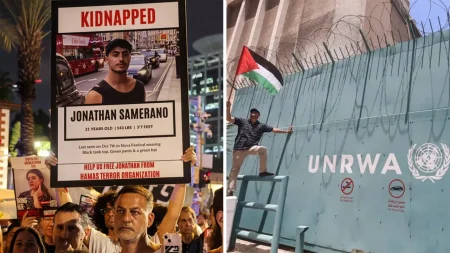
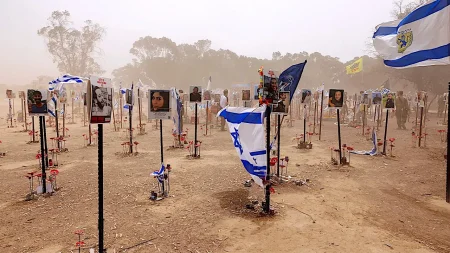
To understand the magnitude of this vindication, one must rewind to the terrifying autumn of 2023. On October 7, Hamas militants breached the heavily fortified border, unleashing a massacre that murdered roughly 1,200 Israelis and foreign nationals and dragged 251 hostages into underground tunnels. Israel’s subsequent military campaign to dismantle Hamas, alongside a total blockade of food, water, and fuel, triggered immediate warnings of a humanitarian catastrophe. By August 2025, a catastrophic prediction reached its zenith. The Integrated Food Security Phase Classification (IPC)—the UN’s authoritative body for famine declarations—issued a stark warning that famine had effectively “reached” parts of the Gaza Strip. In a worst-case scenario modeled by the IPC, they projected a nightmarish future: 132,000 children under five facing acute malnutrition, with 41,000 of those in severe, life-threatening states. International headlines screamed of impending mass death, and the International Criminal Court and the International Court of Justice heard arguments that Israel’s actions constituted “genocide” and acts of “starvation as a weapon.” The “famine” label became a moral cudgel, used to justify sanctions, protests, and the near-total isolation of the Israeli state in diplomatic circles. Yet, the IPC’s projections were just that—projections, built on assumptions of continued sieges and military escalation. The reality on the ground, as captured by the new UNICEF data, diverged dramatically from that ominous forecast, creating a chasm between the earlier catastrophic modeling and the measured empirical evidence.
Decoding the Data: Methodology, Metrics, and the Persistent 17% Blind Spot
The discrepancy between the projected doom and the observed reality lies squarely in the methodology of the new survey and the operational context in which it was conducted. The UNICEF-led cluster survey is the gold standard for emergency nutrition assessment, utilizing two key biomarkers: WHZ, which compares a child’s weight to the expected weight for their height, indicating acute wasting, and MUAC, which measures the circumference of the upper arm—a rapid indicator of lean tissue loss. In Gaza, the findings were unequivocal. The 0.2% to 0.8% WHZ rates translate to roughly 1 to 8 children out of every 1,000 exhibiting acute malnutrition. The 1.5% to 1.9% MUAC rates are slightly higher but still drastically below the 15% emergency threshold that triggers interventions for widespread famine. Even more telling is the surge in data coverage; the team was able to reach 83% of the Strip’s population. However, it is crucial to acknowledge the critical caveat: 17% of the population could not be surveyed due to “security and operational constraints.” This 17% remains an analytical blind spot—likely residing in the most contested, dangerous zones where fighting persists or where Israeli ground forces deny access. While critics might argue these unsampled pockets could hide higher rates, the sheer success in surveying the majority, including heavy-population centers like Gaza City and Deir Al-Balah, provides a robust statistical picture that contradicts the “mass starvation” narrative. The data indicates that whatever suffering exists is localized and acute, rather than a broad, systemic failure of food availability across the entire enclave.
Washington’s Counter-Offensive: Calling Out the “Politicized” Famine Narrative
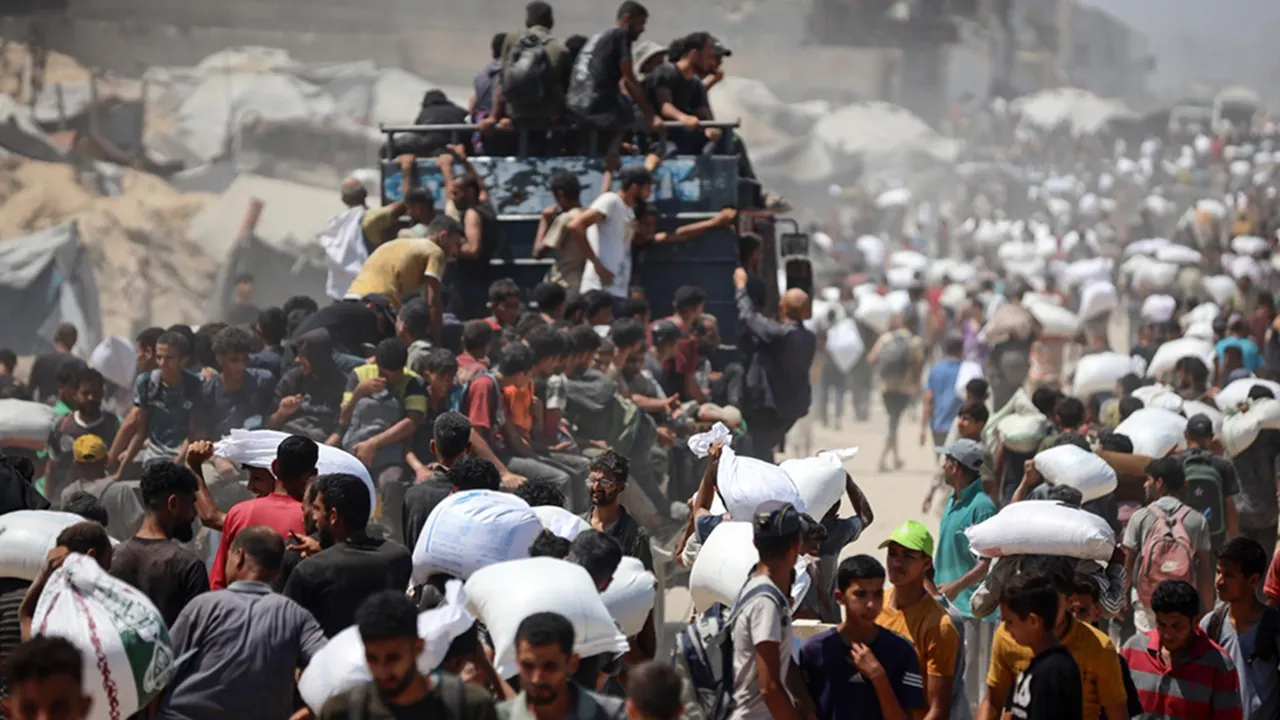
For the State Department, the survey wasn’t just a piece of data; it was a mandate for accountability. The spokesperson’s call to action was explicit: “There are U.N. entities, media outlets and NGOs that should retract and correct their politicized and baseless attacks on Israel—which has provided an unprecedented over 2 million tons of food into Gaza since the ceasefire.” This statement places the spotlight on the sheer volume of humanitarian aid that flowed into the Strip once the guns fell silent. The Trump administration brokered a ceasefire that not only paused hostilities but also opened the floodgates of humanitarian access. The claim of 2 million tons is staggering—a logistical feat that demonstrates not a policy of starvation, but one of mass provisioning. The State Department’s reaction also delineates a sharp ideological divide: a new administration willing to challenge the institutional consensus of the UN and the humanitarian-industrial complex. By framing the UN and NGOs as “politicized” actors, Washington is suggesting that the famine narrative was constructed long before the actual facts on the ground, serving as a proxy weapon to undermine Israel’s right to self-defense. This counter-offensive is designed to delegitimize the ICJ and ICC cases, which rely heavily on the famine allegations as evidence of genocidal intent. If the starvation premise collapses, the legal scaffolding of the genocide case weakens significantly, shifting the global debate from one of Israeli culpability to one of Hamas’s culpability in igniting the conflict and its subsequent refusal to release hostages or disarm.
Voices from the Field: Experts, Officials, and the Living Proof of Resilience
The human dimension of this story is best understood through the eyes of the experts and officials analyzing the numbers. Aron Troen, a professor and director of the Nutrition and Brain Health Laboratory at the Hebrew University of Jerusalem, called the findings “very, very good news.” He expressed astonishment that an area, which just months prior was deemed to be on the verge of catastrophic starvation, now shows rates below many of its neighbors. Indeed, the comparative data is striking. Acute malnutrition in Gaza (0.2% to 1.9%) now mirrors or undercuts Lebanon (1.3%), Jordan (2.3%), and Egypt (3.3%), while Syria (12.2%) and Sudan (17.7%) face crises dozens of times more severe. Andrew Fox, a senior fellow at the Henry Jackson Society, was even more caustic, labeling the previous famine declarations as “pure hysteria.” He argued that the problem was not a lack of food, but a breakdown in “distribution” caused by operational constraints and, crucially, the diversion of aid by Hamas. Fox contends that international organizations have whitewashed Hamas’s role in commandeering trucks and stealing supplies, instead pinning the entire blame on Israel. Yet, even UNICEF’s own Chief of Global Media, Kurtis Cooper, tamped down the political spin by clarifying the timeline. Cooper noted the survey reflects conditions in mid-2026, a full nine months after the August 2025 IPC famine declaration, and well after the ceasefire and aid surge. He explained, “It does not tell us what conditions were in August 2025, and it was never designed to.” He highlighted that programme admissions for acute malnutrition peaked at nearly 17,000 children in August 2025, but that number fell to 3,100 by May 2026—a testament to interventions, but also a reminder that the severe period was real, though mercifully brief.
The Broader War of Narratives: Implications for the IPC, Global Antisemitism, and Truth
Ultimately, this nutritional survey does more than just measure the health of children; it measures the integrity of the international narrative machinery. The enormous gap between the IPC’s alarming projections and the empirical survey findings raises profound questions about the reliability of famine early-warning systems when applied to politically charged conflict zones. The IPC’s own methodology relies on sparse data, modeling, and a heavy dose of worst-case assumptions, which, when fed into global media, can become self-fulfilling prophecies of doom. The reaction from the Trump administration, combined with the expert commentary, frames this as a victory for evidence over ideology. However, the jubilation must be tempered by the persistent 17% un-surveyed population and the nagging truth that even 1.9% acute malnutrition represents real, suffering children. Furthermore, the political fallout extends beyond humanitarian statistics. Andrew Fox warned that the false famine narrative “paved the way for an explosion in global antisemitism,” citing data from the J7 Large Communities Task Force indicating 2025 was the deadliest year for antisemitic attacks since 1994. The implication is stark: when international bodies label Israel as perpetrating starvation, it incites real-world violence against Jewish communities worldwide, creating a moral hazard where exaggerated humanitarian claims become weapons of hate. As the IPC prepares to release its full report in the coming days, the world will watch to see if it acknowledges its flawed projections or doubles down on its catastrophic framing. For now, the measured reality of a strong, surviving population in Gaza—despite colossal destruction—offers a fragile hope. It proves that even in the crucible of war, humanitarian aid, when actually delivered without obstruction, can prevent the very worst outcomes. The data does not exonerate the horrors of war, but it complicates the simplistic, accusatory narrative of deliberate starvation, reminding us that the truth in conflict is often far more complex, and far more hopeful, than the headlines suggest.