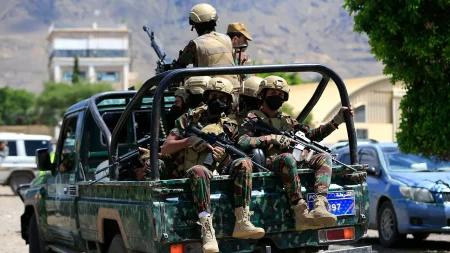





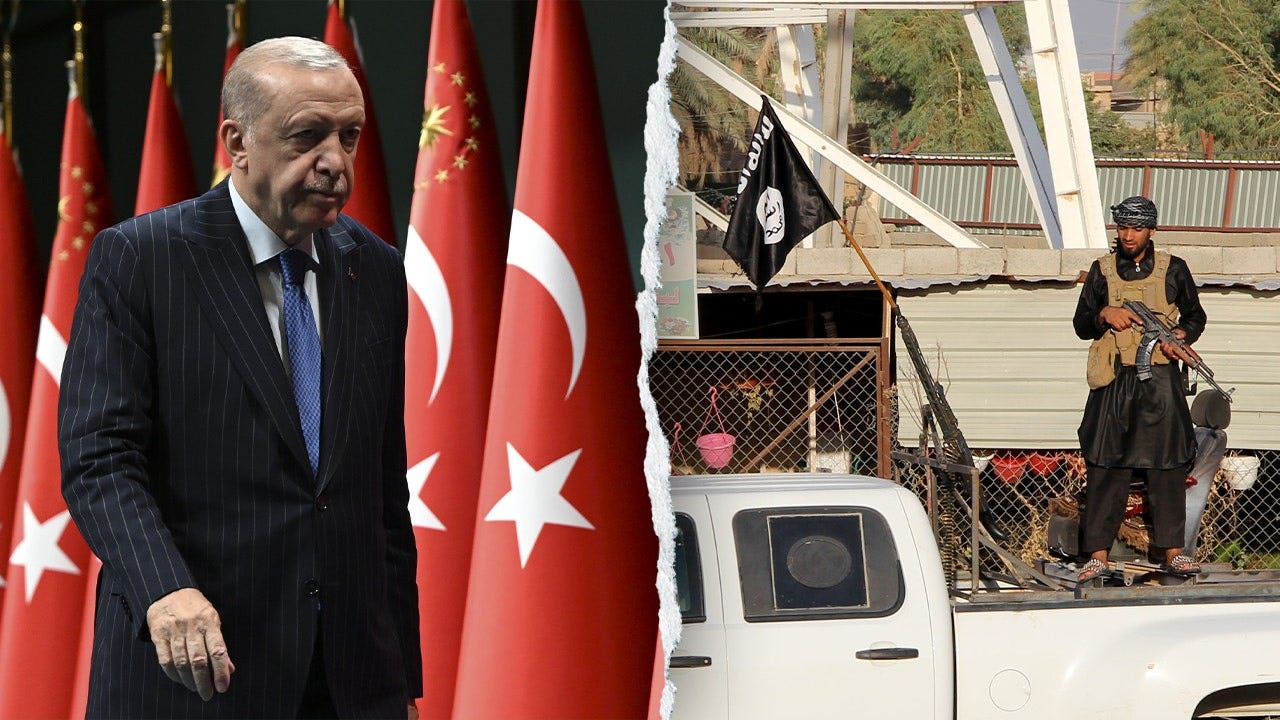
In the pale light of a Tuesday morning, the historic and bustling streets of Ankara, Turkey, were abruptly shattered by the synchronized roar of armored vehicles and the urgent commands of heavily armed tactical police squads. In a massive, pre-dawn sweep designed to neutralize brewing security threats, Turkish law enforcement authorities executed a series of coordinated raids across the capital city, detaining over 200 individuals suspected of harboring ties to various extremist organizations, including the Islamic State (ISIS). According to official statements released by the office of Turkey’s chief prosecutor, the sweeping counter-terrorism operation was initiated after judicial officials issued formal detention orders for 241 suspects, culminating in the swift apprehension of 209 individuals. For the ordinary citizens of Ankara, who woke up to the sight of barricaded streets and heavily guarded public squares, the arrests served as a jarring reminder of the invisible wars quietly waged beneath the surface of daily urban life. The timing of this massive security crackdown was far from a coincidence; it unfolded just two weeks before the highly anticipated NATO summit scheduled for July 7-8 in Ankara, an event of immense global significance that is expected to draw heads of state from around the world, including U.S. President Donald Trump. In the high-stakes theater of global diplomacy, the Turkish government understood that providing absolute security for visiting foreign leaders was not merely a logistical necessity but a critical test of national prestige. As the city prepared to host the world’s most powerful military alliance, the tension on the ground was palpable, highlighting the delicate balance between maintaining democratic normalcy and deploying the heavy, sometimes suffocating hand of state security to preempt tragedy before it could unfold on the international stage.
Beneath the sensational headlines and raw arrest statistics lies a complex, multi-threaded tapestry of ideological extremism that continues to plague the geopolitical crossroads of Turkey. Among the 209 individuals swept up in the dragnet, authorities identified at least 56 as alleged operatives of ISIS, a group that has long viewed Turkey both as a transit corridor and a prime target for devastating acts of mass violence. However, the raid also cast a wide net over other violent factions, leading to the capture of 35 suspected members of the Revolutionary People’s Liberation Party/Front (DHKP-C), a radical far-left organization infamous for orchestration of armed attacks, suicide bombings, and targeted assassinations within Turkish borders over the span of several decades. This diverse array of detainees highlights a harrowing reality for the Turkish populace: the country faces a fragmented, multi-front security challenge where radical religious fundamentalism and militant Marxist-Leninist ideology exist as twin shadows over modern society. For the average Turkish citizen, the threat is not an abstract political debate but a visceral, historical trauma shaped by memories of past bombings in crowded town squares, train stations, and night clubs. By arresting dozens of operatives from diametrically opposed extremist groups in a single, sweeping gesture, the Turkish state sought to signal to its domestic audience and the international community that it remains vigilant against all forms of radicalism, regardless of the political or religious banners under which they hide.
The political undercurrents of these arrests run deep, directly impacting Turkey’s complex and often contentious relationship with its Western allies within the NATO framework. Over the past several years, Turkey’s position within the alliance has faced intense scrutiny from Washington and European capitals, driven by concerns over Ankara’s domestic human rights record, its military interventions in northern Syria, and controversial diplomatic ties with regional entities like Hamas and the Muslim Brotherhood. The upcoming July summit represents a critical diplomatic arena for Turkish President Recep Tayyip Erdoğan, who must navigate these deep-seated skepticism while asserting Turkey’s indispensable role as NATO’s easternmost anchor. By executing such a highly visible and successful counter-terrorism operation just days before President Donald Trump and other Western leaders arrive, Turkey aims to forcefully demonstrate its commitment to the collective defense of the alliance. The message is clear: Turkey is actively policing its own territory, mitigating threats that could easily spill over into Europe, and serving as a vital shield against the dark forces of global terror. Yet, this display of security prowess also highlights the enduring paradox of Turkish geopolitics, where the very measures used to ensure the safety of international dignitaries—such as mass detentions and the suspension of civil liberties—often fuel the exact Western criticisms regarding democratic backsliding that Ankara is so desperate to dispel.
The persistence of ISIS operatives in Turkey, as evidenced by this latest raid and the previous detention of 125 suspected members in December, serves as a sobering reminder of the global threat’s resilience. Many had falsely assumed that the terrorist organization was permanently crippled following the collapse of its territorial caliphate in Iraq and Syria, a military victory achieved largely through a grueling, years-long campaign spearheaded by the United States. However, the reality on the ground paint a far more dangerous picture of a highly adaptable adversary that has successfully transitioned from a pseudo-state into a decentralized, clandestine insurgency. Stripped of its borders, ISIS has mutated into a global franchise of terror, utilizing encrypted communications and digital networks to recruit, fundraise, and coordinate operations across continent-spanning networks. This decentralized model allows local cells to operate autonomously in countries like Turkey, waiting in the shadows for the opportune moment to strike high-profile targets. For security agencies worldwide, the ongoing arrests in Ankara demonstrate that the battle against ISIS cannot be won solely on the battlefield; it requires an endless, exhaustingly repetitive cycle of intelligence gathering, financial tracking, and localized police actions to prevent the group from reconstituting its deadly capabilities.
This shifting terrain of global terrorism has forced major powers, particularly the United States, to expand their focus far beyond the Middle East to emerging hotbeds of extremism, most notably on the African continent. Recognizing that ISIS has capitalized on local grievances, poverty, and weak governance to establish powerful affiliates across Africa, the U.S. military has intensified its regional counter-terrorism operations. In May, President Donald Trump authorized a series of highly precise, high-stakes military strikes in Nigeria, aimed at disrupting the group’s leadership structure and preventing the establishment of a new territorial stronghold. The most significant outcome of this campaign was the elimination of Abu-Bilal al-Minuki, the globally recognized second-in-command of ISIS, who had sought refuge in the volatile regions of Africa to orchestrate the group’s global resurgence. In a public statement shared on his social media platform, Truth Social, President Trump reflected on the strategic victory, emphasizing the critical role of intelligence networks in tracking down the elusive leader. Trump wrote, “Abu-Bilal al-Minuki, second in command of ISIS globally, thought he could hide in Africa, but little did he know we had sources who kept us informed on what he was doing. He will no longer terrorize the people of Africa, or help plan operations to target Americans.” This strike not only delivered a severe psychological and operational blow to the group but also underscored the globalized nature of modern warfare, where decisions made in Washington impact security dynamics from the deserts of Africa to the streets of Ankara.
Ultimately, the threats of terrorism and the dramatic state actions taken to counter them are not merely matters of military strategy and political posturing; they carry a profound, deeply human cost that resonates across the globe. Alongside the quiet victories of intelligence agencies and the successful execution of pre-emptive raids like the one in Ankara, the shadow of fear continues to loom large over the aspirations of everyday people. This anxiety has been recently amplified by chilling calls from ISIS propaganda arms, urging lone-wolf sympathizers to launch devastating attacks on soft targets during major international events, such as the upcoming World Cup. Such threats aim to weaponize fear, transforming moments of global unity, celebration, and athletic triumph into landscapes of terror and division. Yet, in the face of these dark prognostications, the collective human spirit consistently reveals an enduring resilience. From the citizens of Ankara who refuse to let security crackdowns disrupt their families’ daily routines, to the communities in Nigeria striving to rebuild their lives in the aftermath of violent conflict, there is a shared, stubborn determination to pursue a life of peace, dignity, and normalcy. The arrest of over 200 suspects in a Turkish metropolis is a testament to the ongoing vigilance required to protect our societies, but the true victory lies in the quiet persistence of humanity, which continues to gather, celebrate, and hope for a safer, more unified world in spite of the shadows that threaten to define it.