


In the five days immediately following a key American sanctions deadline, at least 83 flights operated by U.S.-sanctioned Iranian airlines landed in Turkey, according to new flight data analyzed by the Foundation for Defense of Democracies. The report, released Sept. 28, offers a striking illustration of how difficult it is for Washington to fully isolate Tehran, especially when one of its own NATO allies remains a practical gateway for the sanctioned carriers. FDD researchers reviewed Flightradar24 histories and found arrivals at Istanbul, Ankara and Izmir between Sept. 23 and Sept. 27, after the Treasury Department’s wind-down period had expired. The flights involved 12 different Iranian airlines, including Iran Airtour and Caspian Airlines with 12 landings each, Iran Air with 10, and ATA Airlines and AVA Airlines with nine each. Eight of those 12 carriers had been newly designated by Treasury on Sept. 8, when the department announced sweeping sanctions on Iran’s aviation industry under Executive Order 13902, blacklisting all 27 remaining active Iranian airlines. Washington’s argument was clear: Iran’s civilian aviation sector has been used to transport weapons, personnel and illicit cargo, and any foreign business continuing to service these carriers would risk losing access to the U.S. financial system. Yet the FDD data suggests that, at least in Turkey, the message has not fully landed, and the gap has become a new point of tension in an already complicated U.S.-Turkish relationship.
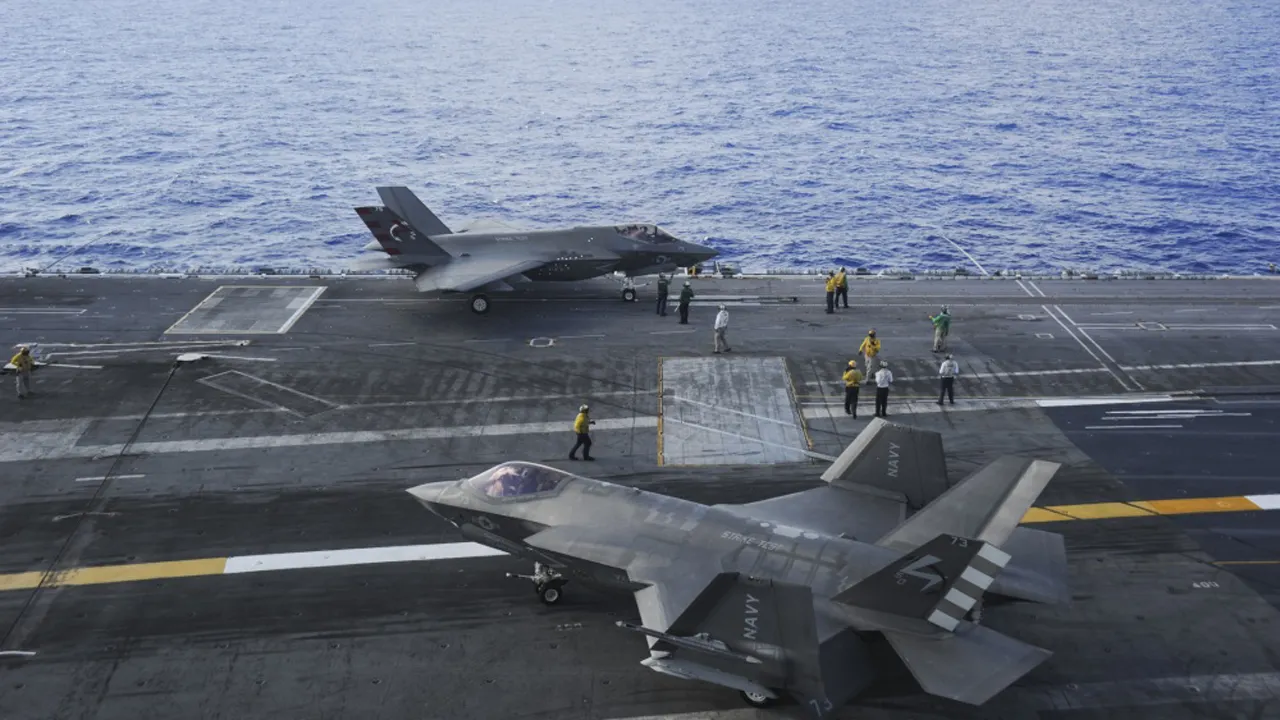
What makes this especially delicate is the political backdrop. Turkey is a NATO member, and President Donald Trump has repeatedly emphasized his personal rapport with Turkish President Recep Tayyip Erdoğan. During a visit to Turkey in July 2026, Trump said his administration would lift sanctions imposed on Ankara after Turkey purchased Russia’s S-400 air-defense system, and he signaled openness to restoring Turkey’s access to the F-35 fighter jet program. Turkey was removed from that program after the S-400 purchase, and congressional restrictions tied to that system remain an obstacle, but Erdoğan said as recently as Sept. 24 that he expects Washington to take “concrete steps” toward Turkey’s return. In the middle of all this, Treasury Secretary Scott Bessent had warned that after the Sept. 23 wind-down deadline, companies providing sanctioned Iranian airlines with fuel, landing support or other services would face serious consequences. FDD cited Bessent saying that by that date, Iranian airlines would be “shut down around the world.” That obviously didn’t happen in Turkey. The Treasury Department, asked about the continued flights, told Fox News Digital that it has been raising the issue directly with senior Turkish officials and has warned Turkish companies and financial institutions about their sanctions exposure. A spokesperson pointed to “productive engagements” with Turkish authorities last month, saying these had already yielded tangible results, including the cancellation of Mahan Air flights and the revocation of Bank Mellat’s license. The spokesperson added that the administration’s broader “Operation Economic Outcast” campaign is working, noting that Iran’s rial has hit record lows, no Iranian crude oil was loaded onto tankers in September, and countries across the region are taking steps to restrict Iran’s access to international finance and commercial aviation.
Turkey has not been entirely unresponsive to American pressure. Turkish Airlines, AJet and Pegasus removed Iran from their flight schedules, and Mahan Air, which has been under U.S. sanctions since 2011 for supporting Iran’s Islamic Revolutionary Guard Corps-Quds Force, suspended its service to Turkey starting Sept. 21. Those are meaningful steps, and the Treasury Department has credited them as evidence that dialogue with Ankara can produce change. But the FDD data shows that many other sanctioned carriers are still moving through Turkish airspace and landing at Turkish airports. Some of these airlines have been on the U.S. blacklist for years. Caspian Airlines and Meraj Air, for example, were designated as Specially Designated Global Terrorists in August 2014. Treasury said at the time that Caspian had transported IRGC personnel and weapons to Syria, while Meraj had ferried illicit cargo, including weapons, to the Syrian government. Others were only added to the list in the sweeping Sept. 8 action, meaning their continued presence in Turkey could be read as a direct challenge to the newest U.S. sanctions. The fact that these carriers are still operating routes to a major NATO ally raises questions not only about enforcement but also about the effectiveness of Washington’s pressure campaign. The sanctions are designed to create a choice for foreign companies: stop doing business with Iran or face financial isolation. In Turkey, some companies have made that choice, but others haven’t, and the result is a patchwork of compliance and defiance that leaves the United States in a difficult diplomatic position.
FDD researcher Ahmad Sharawi, who co-authored the report with Sinan Ciddi, said the continued flights reveal a pattern of Ankara taking symbolic actions while quietly tolerating the broader Iranian presence. “The fact that sanctioned Iranian airlines continue to land in Turkey, despite Washington’s clear effort to restrict their operations, is a testament to Ankara’s willingness to take symbolic measures while turning a blind eye to much of Iran’s broader activity,” Sharawi told Fox News Digital. He argued that Washington could increase the pressure by targeting the Turkish companies that provide ground services, fuel and other support to the sanctioned carriers. The United States has sanctioned Turkish entities in the past for supporting Israeli adversaries and sanctioned Iranian actors, so there is precedent for such action. “Continuing to target companies that provide that support would send a clear message to Ankara that facilitating Iran’s sanctioned networks will carry consequences,” Sharawi said. He also suggested that this kind of targeted enforcement could have a practical impact on Iran’s ability to maintain its routes. If private Turkish companies fear losing access to the American market, they will have much less incentive to keep servicing Iranian airlines. Once those companies begin cutting ties, Iranian airlines would find it far harder to operate in Turkey at all. Sharawi’s analysis points to a broader lesson: sanctions are only as strong as their enforcement, and enforcement sometimes means making difficult choices about friends and allies.
The Turkey findings are not the only sign that Washington’s campaign to isolate Iran still has weak points. Around the same time, another advocacy group, United Against Nuclear Iran, raised alarms about Iranian maritime activity off the coast of Malaysia. UANI said its investigators traveled roughly 100 nautical miles into the South China Sea near Malaysia’s Eastern Outer Port Limits, where they observed a concentration of Iranian-linked tankers, cargo vessels and bulk carriers. Around those ships, they said, were Malaysian bunker vessels supplying fuel, creating what the group described as a “floating city” supporting Iran’s sanctions-evasion network. UANI CEO Ambassador Mark D. Wallace said in a statement that seeing the ghost tankers firsthand made it clear the network was serving as an “illicit Malaysia-backed lifeline for the Iranian regime.” The group called on the Treasury Department to sanction entities associated with Malaysia’s Pengerang petroleum complex, as well as Malaysian officials or companies allegedly involved in facilitating the trade. It’s worth noting that these findings were produced by UANI and have not been independently verified, and the call for sanctions is an advocacy position, not a determination that any Malaysian entity has violated U.S. law. Still, Fox News Digital has learned that Treasury has already mapped Iranian oil-smuggling networks, facilitators and financial channels, including deceptive shipping activity off the coast of Malaysia, and that senior Treasury officials have been raising the issue with Malaysian and other foreign government counterparts. The picture that emerges is of a global cat-and-mouse game, with Iranian operators constantly shifting their tactics and Washington trying to close one door only to find another slightly ajar.
Taken together, the FDD and UANI reports highlight the sheer scale of the enforcement challenge facing the United States. Washington is trying to cut Iran off from international aviation, shipping, finance and oil markets all at once, and while the pressure has clearly caused real pain to the Iranian regime, the system is leaky. Sanctions can be issued with great fanfare, but their real-world impact depends on the willingness of foreign governments and private companies to cooperate, and that willingness is often shaped by competing interests. Turkey is a NATO ally with a complex relationship with both Washington and Tehran; Malaysia is a trading nation with its own economic calculations. In both places, the letter of the law and the reality on the ground can diverge significantly. The Treasury Department, for its part, continues to expand the campaign. On Sept. 29, it announced another round of sanctions targeting individuals and companies it said had procured weapons and components for Iran’s Ministry of Defense and Armed Forces Logistics. That suggests Washington is determined to keep pushing, even as it works through diplomatic channels to bring allies into line. Whether those efforts will be enough to fully ground Iran’s airlines and halt its shadow fleet remains an open question. But for now, the flights into Turkey and the “floating city” off Malaysia serve as reminders that the battle is far from over. Both the Turkish and Malaysian embassies were contacted for comment but did not respond, leaving the official silence to speak for itself.