





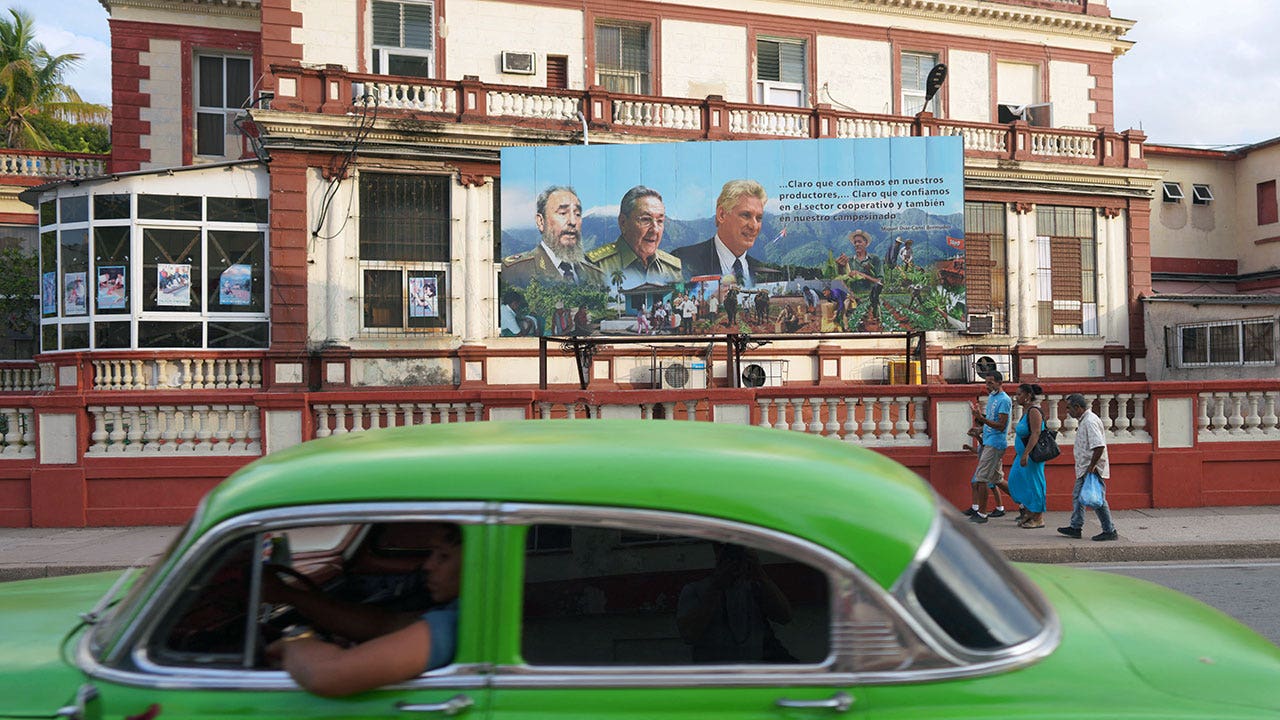
The United States has long maintained a highly complex, emotionally charged relationship with the island nation of Cuba, a dynamic defined by decades of systemic isolation, ideological warfare, and deep-seated geopolitical standoffs. Recently, this tense and historic narrative took an unprecedented turn as the Trump administration introduced a sweeping, highly aggressive escalation of economic pressure designed to fundamentally reshape how the global community interacts with the Havana regime. By signing a landmark executive order on May 1, the administration initiated what foreign policy experts describe as the most significant and consequential expansion of U.S. sanctions on Cuba in several generations. What makes this policy shift so profoundly disruptive is its departure from traditional unilateral limits; for the first time in history, the United States is implementing what are known as secondary sanctions on the island. This means the pressure is no longer confined inside American borders to stop U.S. citizens and companies from dealing with Cuba. Instead, the administration is stretching the long arm of American law across oceans, threatening foreign businesses, international banks, and global conglomerates with severe economic penalties if they continue to operate within key sectors of the Cuban economy. By forcing international enterprises to make a stark and painful choice between trading with a small Caribbean island or maintaining their access to the massive, indispensable American financial system, the policy aims to cut off the financial lifelines of the Cuban government. This aggressive strategy seeks to permanently close the historical loopholes that allowed foreign investors to thrive in Cuba, effectively neutralizing the isolation that the direct U.S. embargo was originally built to achieve. Consequently, this policy is sending shockwaves through foreign boardrooms from Madrid to Toronto, creating a high-stakes diplomatic and economic friction point that challenges traditional boundaries of international commerce and national sovereignty while setting a new precedent for global political enforcement.
At the absolute epicenter of this aggressive financial dragnet lies Grupo de Administración Empresarial S.A., universally known and feared as GAESA. This sprawling, opaque, military-aligned conglomerate has silently and systematically woven itself into the fabric of daily Cuban life, controlling an estimated forty to seventy percent of the island’s entire economic infrastructure. GAESA does not operate like a normal corporation; it is a powerful military empire that dominates Cuba’s most lucrative and essential industries, including international tourism, mining, retail, shipping ports, and financial services. According to leading foreign policy analysts and think-tank researchers, such as Max Meizlish, a former Treasury Department official, GAESA has served as a massive, multi-billion-dollar shield that protects and enriches the ruling communist regime while the vast majority of ordinary Cuban citizens endure crushing poverty. Under the new U.S. framework, any foreign enterprise doing business with GAESA-linked operations is classified as an active enabler of a repressive military state. Over the last few decades, international entities—particularly major Spanish hotel chains and Canadian mining companies—have poured millions of dollars into developing luxury beach resorts and extracting valuable natural deposits like nickel and cobalt. Supporters of the new sanctions argue that while these foreign corporations claimed to be helping the local economy, they were actually partnering with GAESA, transferring vast wealth directly into the coffers of Cuba’s ruling elite while the average worker received next to nothing. The narrative put forward by proponents of the policy is clear: the longstanding embargo was not failing because it was unjust, but because foreign investors were actively undermining it, allowing a corrupt military apparatus to sit on twenty billion dollars in global assets while starving its own population of economic freedom and basic dignity.
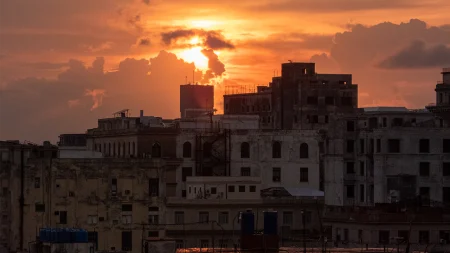
However, the human cost of this high-level geopolitical strategy is where the policy faces its most intense, agonizing, and heartbreaking criticisms. While policymakers in Washington debate systemic pressure, economic leverage, and geopolitical positioning, the immediate impact of these measures is felt directly on the streets of Havana, Santiago, and small rural communities across the island. Cuba is currently experiencing its most devastating economic and humanitarian crisis since the collapse of the Soviet Union, with daily survival becoming a desperate, exhausting struggle for millions of ordinary families. According to international relief organizations like the World Food Programme, daily life is defined by acute food insecurity, skyrocketing inflation, and a severe shortage of life-saving medicines and hospital supplies. Mothers wait in long, grueling lines under the hot sun just to secure a single loaf of bread, grandparents go without essential heart medications, and children are forced to study under the dim light of candles during frequent power outages. The reality of life under these conditions is marked by rolling, unpredictable blackouts that plunge entire cities into darkness, disrupting fragile hospital operations, failing vaccination cold chains, spoiling scarce food supplies, and paralyzing essential public safety nets. Opponents of the new secondary sanctions, including prominent Cuba scholar William LeoGrande, argue that targeting foreign businesses will inevitably push the civilian population deeper into misery. LeoGrande explains that when foreign investors are scared away by the threat of American penalties, the Cuban government loses its primary source of hard currency. Without these vital funds, the state is unable to import the basic necessities of life, including fuel to run power plants and grain to feed its citizens. Critics argue that the regime’s political elite will always find ways to protect themselves from hardship, meaning the true, devastating burden of these secondary sanctions is borne entirely by innocent, ordinary families who are already pushed to their absolute psychological and physical limits.
Amidst this spiral of domestic deprivation, observers warn that the administration’s policy could trigger a massive humanitarian and regional security crisis that directly impacts the borders of the United States. History has repeatedly shown that when economic conditions on the island become entirely unlivable, the resulting desperation creates an unbearable pressure valve that inevitably bursts into mass migration events. Experts point back to the Mariel boatlift of 1980 and the rafter crisis of 1994 as cautionary tales of what happens when a population loses all hope for a viable future at home, prompting desperate citizens to build makeshift rafts to cross the turbulent Florida Straits. By systematically choking off the remaining avenues of foreign capital, the United States risks unintentionally engineering another massive, chaotic exodus of refugees seeking survival on American shores. This potential migration wave is not just a theoretical concern; it represents a looming logistical and political challenge for domestic border enforcement agencies, as families choose to risk their lives on treacherous overland journeys through Central America or on unpredictable seas rather than watch their children suffer from chronic malnutrition. Furthermore, the extraterritorial nature of these secondary sanctions has sparked intense diplomatic pushback from some of America’s closest global allies. Governments in Spain, Canada, and the European Union have historically viewed the U.S. embargo as an ineffective, outdated relic of the Cold War. By threatening to penalize European and Canadian corporations that are operating legally under their own domestic laws, the United States risks alienating key international partners and destabilizing diplomatic relationships. This creates a deeply fractured diplomatic front, where the shared pursuit of human rights and democratic reform in Cuba becomes dangerously entangled in bitter allegations of American overreach, trade protectionism, and a total disregard for international law and sovereignty.
In response to these deeply concerning humanitarian and diplomatic warnings, United States officials and policy advocates staunchly defend the escalation, arguing that the blame for Cuba’s misery lies squarely with the regime itself. On background, U.S. government representatives reject the narrative that American sanctions are the root cause of the island’s physical decay and social suffering, pointing out that the regime has perpetually used the embargo as a convenient scapegoat for its own systemic mismanagement. They emphasize that the Cuban dictatorship has spent over sixty years implementing failed, highly centralized communist economic policies, suppressing domestic private enterprise, and committing widespread human rights violations that have systematically crippled the nation’s natural productivity and agricultural sectors. Furthermore, officials point out that the U.S. embargo is carefully designed with major humanitarian carve-outs, explicitly permitting the legal export of agricultural products, medicine, and critical medical equipment to the island. Rather than using its remaining resources to alleviate the suffering of its people, the Cuban government is accused of hoarding billions of dollars in secretive offshore bank accounts and channeling funds into unprofitable state tourism developments owned by the military. Supporters of the sanctions point out that while the island’s hospital systems crumble and the electrical grid fails due to a lack of maintenance, GAESA has sat on billions of dollars in assets and cash. For proponents of the policy, the critical problem has never been that the economic embargo went too far, but rather that it was continuously bypassed by international actors who prioritized corporate profits over the basic human rights of the Cuban people. From this perspective, the secondary sanctions are a painful but necessary step to finally force the regime to face the systemic reality of its political failures, stripping away the international shield that has protected the dictatorship from the consequences of its own corruption and administrative incompetence.
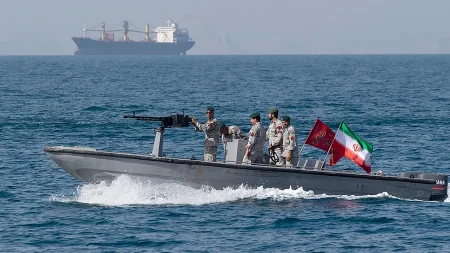
Ultimately, the escalation of sanctions against Cuba highlights a deep, ongoing debate that defines modern international relations and foreign policy. This is a deeply human and familiar political struggle that mirrors long-standing U.S. strategies toward other authoritarian regimes, such as those in Iran and Venezuela, where the strategy of extreme economic isolation is deployed as a primary tool to force political transition or democratic reform. Supporters of this approach maintain that only by applying maximum, inescapable pressure can democratic nations hope to weaken the financial foundations of oppressive governments, starve military elites of their funding, and compel dictatorial regimes to negotiate or step down. From their perspective, making it impossible for the regime to fund its security forces is the only path to liberation. Conversely, critics view this methodology as a fundamentally flawed, outdated, and cruel strategy that consistently fails to dislodge entrenched elites—who always manage to insulate themselves from the economic pain—while inflicting severe, disproportionate suffering on the most vulnerable segments of society. As the June wind-down deadline approaches and the global corporate community begins to distance itself from the Cuban market, the island nation stands at a critical and highly fragile crossroads. The ultimate success or failure of this policy will not be measured by economic statistics, high-level diplomatic agreements, or political rhetoric, but by the real-world impact on the millions of Cubans caught in the middle of this high-stakes ideological war. Whether these severe measures will finally spark the democratic renewal that generations of Cubans have dreamed of, or simply deepen the isolation and daily suffering of an already exhausted population, remains an open and deeply consequential question for the future of the Western Hemisphere and the millions of human lives bound to its fate.