





On what began as a completely ordinary and peaceful Friday morning, the vibrant hallways of Debsirin Nonthaburi School—a respected institution nestled in the Nonthaburi province just northwest of Bangkok—were suddenly and violently transformed into a scene of unimaginable terror. The school, which should have been a safe haven of laughter, curiosity, and academic pursuit, quickly became a landscape of fear as the echoing cracks of gunfire pierced the air. For the young students and dedicated educators inside, the routine of their morning lessons was instantly shattered, replaced by the primitive instinct to survive. As the terrifying sounds of gunshots reverberated from a neighboring building, teachers acted with heroic speed, locking doors, turning off lights, and urging their frightened pupils to crowd into corners and hide beneath desks. In the heavy, suffocating silence of those barricaded classrooms, children clung to one another in absolute terror, listening to the chaos outside and praying that the danger would pass them by. One brave student later described the agonizing minutes spent huddled in the dark, where every footstep in the hallway felt like an approaching threat, until the tense silence was finally broken by the firm, reassuring knocks of Royal Thai Police officers who cleared a safe path for them to evacuate the building. The sudden eruption of violence laid bare the fragile vulnerability of spaces we assume to be safe, transforming an ordinary school day into an indelible, heartbreaking nightmare for hundreds of families who had sent their children off that morning expecting nothing but safety, friendship, and education. This loss of innocence within the classroom walls leaves a permanent scar on the community, reminding us of how quickly peace can be stolen.
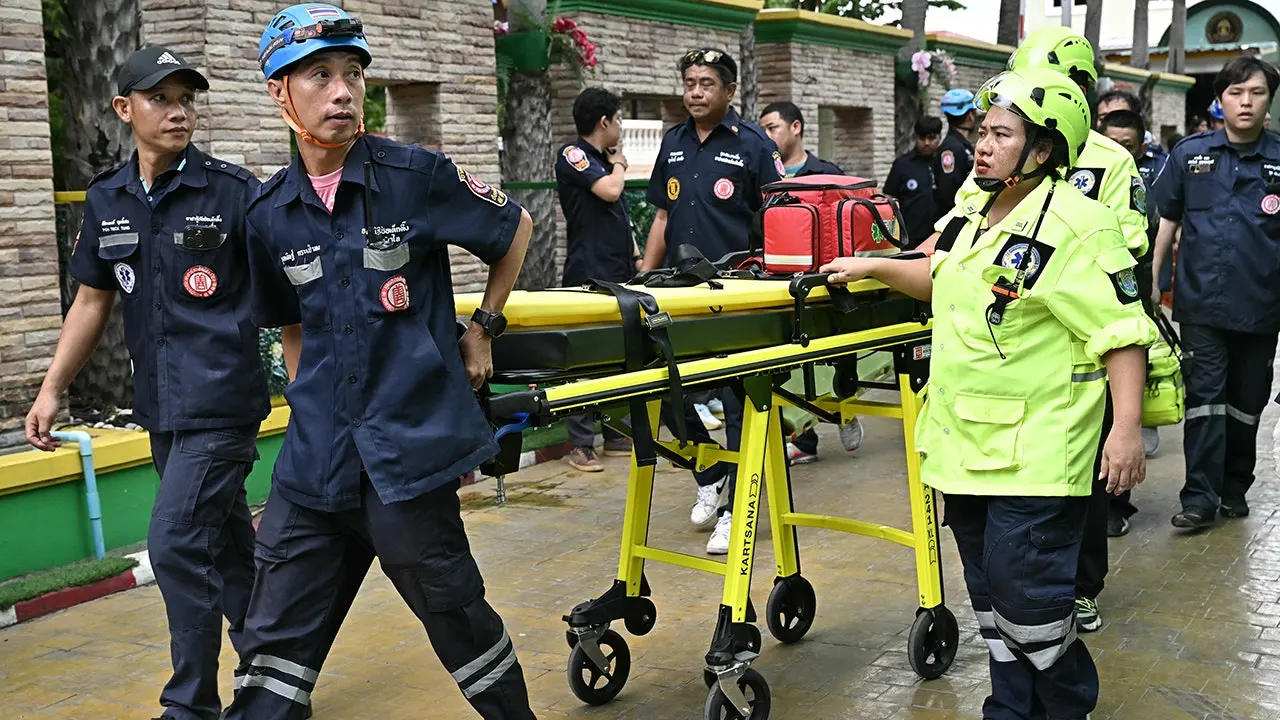
As the immediate danger subsided and the police secured the campus, a dense fog of grief, panic, and deep confusion descended upon the local community, with families and authorities alike struggling to comprehend the scale of the tragedy. Outside the school gates, the air was filled with the frantic wails of sirens as emergency vehicles rushed the injured to nearby medical facilities, while panicked parents, desperate for any news of their children, crowded the streets in a heart-wrenching display of collective anxiety. In the chaotic aftermath, conflicting reports from government and police officials only served to heighten the agonizing suspense for families waiting at hospital doors. Royal Thai Police spokesperson Trairong Piwpan initially indicated to news broadcaster Channel 3 that fifteen individuals had been injured, with several fighting for their lives in critical condition, while Thailand’s Health Minister, Pattana Promphat, later presented an even more devastating picture, stating that twenty-two people had been hurt, with nine in critical care. The injuries sustained on that dark day were not limited to gunshot wounds; many victims suffered severe physical trauma from falls, stampedes, and the sheer, desperate panic of trying to escape the active shooter. This statistical discrepancy in the early hours of the investigation underscored the sheer chaos of the scene, leaving a devastated community to navigate a painful blur of hope and dread as they waited to learn the fates of their beloved children and teachers, proving that the trauma of such events ripples far beyond those directly hit by gunfire.
As investigators began the grim task of reconstructing the events of that fateful Friday, a deeply disturbing and profoundly tragic backstory emerged, revealing that the violence had actually begun long before the shooter ever stepped foot on the high school campus. Deputy Interior Minister Polapee Suwunchwee revealed to a stunned nation that the young perpetrator, a student at the school, had committed an unspeakable act of violence at home, taking the lives of his own grandparents before embarking on his deadly rampage at the academy. The weapon used to carry out this multi-layered tragedy was believed to have been quietly taken from a member of the shooter’s own family, highlighting a devastating breach of trust and safety within the domestic sphere. The young shooter himself was eventually transported to a hospital in serious condition, where he later succumbed to his injuries, leaving behind a trail of unanswered questions, broken lives, and a family completely destroyed from the inside out. This horrifying progression of events underscores a haunting and deeply human reality: the tragedy that spilled into the schoolyard was not an isolated incident, but the catastrophic culmination of a deeply personal, domestic crisis that ultimately consumed three generations of a single family and shattered an entire community. It forces us to look closely at the invisible fractures within homes, where silent struggles can quietly ferment into unimaginable violence that eventually spills over onto innocent bystanders.
The true, agonizing heartbreak of the Debsirin Nonthaburi School shooting lies not in the cold statistics or the official police reports, but in the innocent lives that were so abruptly and violently cut short. Among the deceased were devoted teachers who had committed their lives to guiding, inspiring, and protecting the next generation, alongside young students whose bright futures, dreams, and potential were extinguished in a matter of moments. While initial police reports suggested that three teachers and three students had perished, other official accounts pointed to the loss of five dedicated educators, painting a heartbreaking picture of selflessness as teachers likely placed themselves in harm’s way to shield their students from the gunfire. Every single number reported by the authorities represents an empty chair at a family dinner table, a classroom that will forever feel quiet and incomplete, and a family shattered by a profound grief that words can never fully heal. These victims were not mere casualties of a senseless act; they were beloved sons, daughters, mentors, and friends who brought light and joy to their community, and their sudden absence leaves an irreplaceable, aching void in the hearts of everyone who loved them. The loss of these educators is particularly devastating, as they represent the moral anchor of the school, individuals who went to work to foster hope but ended up making the ultimate sacrifice to protect the children in their care.
This devastating event in Thailand is a painful reminder that the plague of school violence is a global tragedy that knows no geographic or cultural boundaries, echoing similar heartbreaking incidents that continue to devastate families in the United States and across the world. The shooting at Debsirin Nonthaburi School reignites critical, urgent conversations surrounding gun control, mental health support, and the vital necessity of securing firearms within households to prevent them from falling into the hands of troubled individuals. When a child can easily access a lethal weapon from a family member and turn it upon classmates and mentors, it exposes a systemic vulnerability that demands collective, international reflection and action. The profound grief felt by the parents in Nonthaburi province is the exact same agonizing pain felt by families in Georgia, North Carolina, and countless other communities worldwide that have been forced to bury their children due to senseless violence. This tragedy forces us to confront the uncomfortable reality that until societies prioritize comprehensive mental wellness, active intervention for struggling youth, and responsible firearm ownership, our schools will remain vulnerable to the shadows of preventable violence. It is a stark call to action for governments and communities globally to recognize that the safety of our children is a universal responsibility that transcends politics, demanding real, actionable safety measures.
In the long, difficult days and months that lie ahead, the people of Nonthaburi and the wider Thai nation must find a way to navigate their collective trauma and begin the slow, painful process of healing. The physical wounds of the survivors may heal in time, but the psychological scars of that Friday will require an enduring lifetime of support, empathy, and community solidarity to mend. As makeshift memorials grow outside the school gates—filled with flowers, messages of love, and tearful tributes to the lost—there is a powerful, collective call to action to ensure that such a tragedy is never allowed to happen again. True healing will not come from trying to forget the horror of that day, but from honoring the memories of the victims, wrapping the survivors in unwavering support, and actively working to build a safer, more compassionate society. Through the tears, the anger, and the overwhelming grief, the resilient spirit of the community must shine through, proving that love, unity, and a shared commitment to protecting our youth can ultimately overcome the darkness of a single, devastating day, turning a place of tragedy back into a sanctuary of hope. By standing together, the community can ensure that the legacy of those lost is not defined by the violence of their deaths, but by the love, strength, and positive change their memories continue to inspire.