


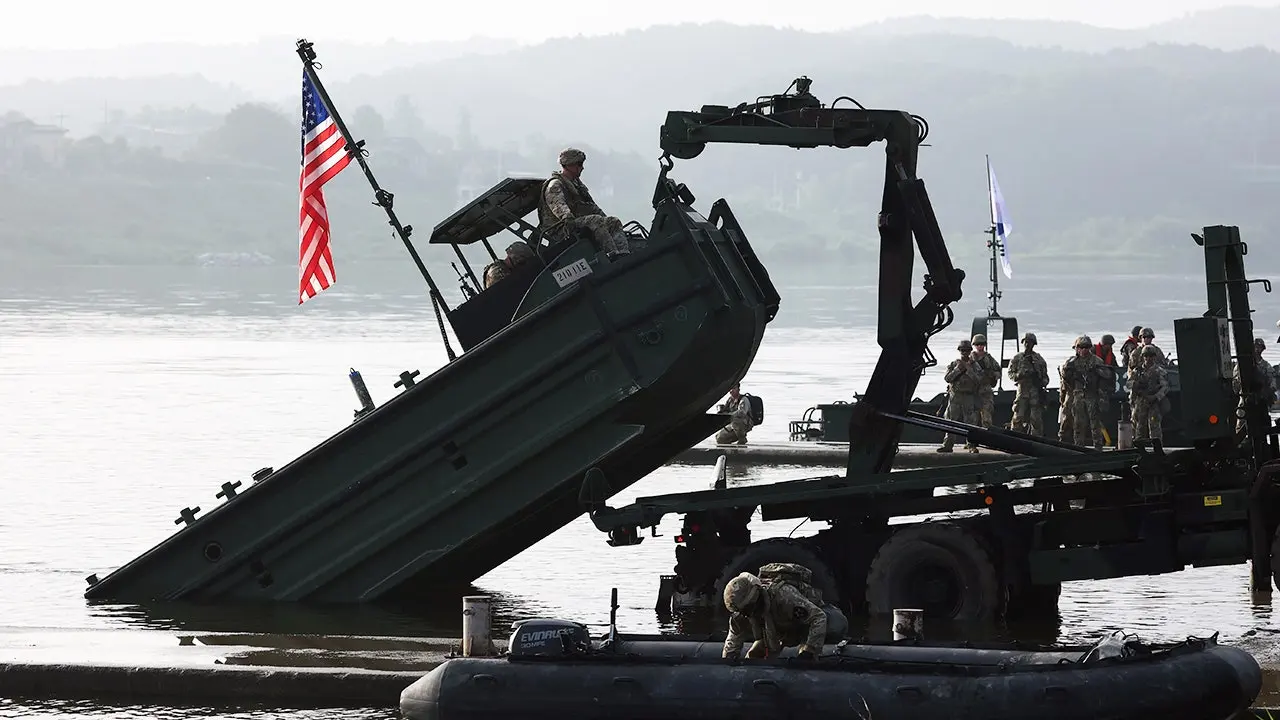
There is a particular kind of anxiety that settles over a country when it realizes its oldest and most trusted friend may not see the world the same way anymore. That feeling was hard to miss in South Korea this week, as President Lee Jae Myung gathered his cabinet and spoke in careful, deliberate tones about the need for the nation to strengthen its own military capabilities. His words were not meant as an attack on the United States. They were something more complicated: a recognition that the old comfortable assumptions about the alliance no longer feel quite so safe. The timing made it even more striking. The annual Ulchi Freedom Shield exercises, a joint military training event between the United States and South Korea, had just begun. For years, these exercises have been a symbol of solidarity, a show of strength meant to deter North Korea from ever testing the limits of peace. But this time, the exercise was shadowed by an order from Washington. President Donald Trump had announced over the weekend that he wanted the U.S. involvement in these drills to be “substantially reduced,” and he made it clear through social media, in his unfiltered and deeply personal way, that he saw the whole enterprise as unnecessarily hostile to North Korea. In Seoul, there was no hysteria, no dramatic emergency meetings. But there was a quiet unease, the kind that settles into the bones when people start to wonder whether the promises they have relied on for decades are still promises at all. South Korea has lived with the reality of war, or the threat of it, for generations. Its citizens understand what it means to be alert. What they are less used to is the feeling that Washington might not be standing right beside them.
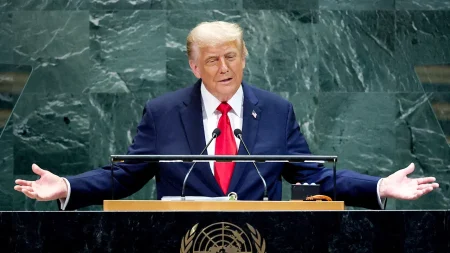
The announcement itself was vintage Trump: a social media post, written in the same voice he uses for everything else, blending personal grievance with national policy. He wrote approvingly of Kim Jong Un, the leader of North Korea, describing their relationship as a very good one. He complained that the joint exercises were costly and that the United States was paying more than its share. And he argued that these drills sent a signal that was “totally inappropriate and hostile” toward a country that, under his presidency, had been “unthreatening and respectful.” Those words landed like a thunderclap in a region where North Korea’s missile tests are not distant headlines but urgent, recurring events. In recent weeks, Pyongyang had ramped up its launches, adding to the very tension that the military exercises were meant to address. Yet here was the American president, speaking warmly about the leader responsible for those launches while questioning the value of the exercises designed to guard against them. To many South Koreans, it felt like a strange inversion of reality. The drills were not aggressive adventures; they were defensive rehearsals, a way of being prepared for the worst even while hoping for the best. In a country where the capital lies so close to the demilitarized zone, where young people still serve in the military as part of their civic duty, the idea that their training was a provocation was hard to accept. But there was also a strange, uncomfortable truth to Trump’s message. Alliances are not free. The exercises do require resources, and Americans have grown tired of carrying global burdens. From Washington, the Korean Peninsula can seem far away; from Seoul, it is home. The gap between those two perspectives has never been bigger.
President Lee’s response was not a fiery speech or a defiant rejection of Washington. It was a quieter, more serious message about self-reliance. He told his cabinet that Ulchi Freedom Shield was a purely defensive exercise, which was his way of pushing back against the idea that the drills were aggressive. But he did not stop there. He went on to say that a strong alliance makes the foundation of security stronger, and that strengthening South Korea’s own capabilities increases its value as an ally. That sentence was carefully chosen. It was a way of saying, among diplomats, that South Korea cannot simply depend on America forever. Lee specifically spoke about boosting South Korea’s nuclear-powered submarine program, a sensitive and ambitious goal for a country that has long operated under the U.S. security umbrella. This is not just a matter of buying new equipment; it is a shift in mindset. For decades, South Korea has trusted that the American military would come to its defense if all else failed. That trust is still there, but it is no longer unconditional. Lee also emphasized that peace with North Korea remains a top priority. He is not trying to provoke a war or escalate tensions. But he added that the country must be prepared for a “worst-case scenario.” Those words are heavy. They reflect a leader who is trying to keep hope alive while preparing for the possibility that hope may not be enough. When you live in a region where history has shown time and again that peace is fragile, preparation is not paranoia; it is survival. Lee’s push for stronger national defense is not about abandoning the alliance. It is about asking the more difficult question: what happens when the world changes, when the friend who once protected you starts to drift away, and when you can no longer take preservation for granted? That is the question every country asks at some point, and South Korea is asking it now.
In the middle of all this, Lee’s national security advisor, Wi Sung-lac, offered a more hopeful interpretation of Trump’s relationship with Kim Jong Un. At a briefing, Wi said he hoped the friendly relationship between the U.S. and North Korean leaders would lead to meaningful dialogue between Pyongyang and Washington. It was a generous thought, and perhaps a necessary one. In times of uncertainty, people cling to the possibility that the very thing causing discomfort might become the source of peace. Trump has met Kim before, and those meetings were unprecedented. There is no denying that personal diplomacy can break through barriers that formal negotiations cannot. But hope, in this part of the world, is never entirely simple. North Korea’s missile tests are not just messages to Washington; they are lived realities for everyone in the region. South Koreans have heard promises of peace before, and they have seen those promises dissolve. Still, the Lee administration seems willing to leave the door open. It understands that a total break with Washington would be dangerous, but it also understands that ignoring reality would be foolish. The only way forward is to keep talking, keep hoping, and keep preparing at the same time. That takes a kind of resilience that is difficult to maintain. It is exhausting to live with the threat of war, and just as exhausting to wonder whether the powers that be truly understand what is at stake. But the people of South Korea are used to living with complexity. Their history has never been simple. Their future will not be either.
Then came the other twist in the story, the one that revealed just how transactional the relationship between Washington and Seoul has become. Trump, in the same social media post, complained that he had recently asked South Korea to join the United States in the “denuclearization” of Iran, and that Lee’s government had responded with a simple “No thanks.” Trump added the parenthetical “somewhat unrelated?” but the irritation in his words was unmistakable. For Trump, alliances are not just about shared history or democratic values; they are about support in the moment, loyalty in action, and a willingness to show up when the United States calls. South Korea’s refusal to get entangled in Iran was, in his eyes, another reason to question the value of the partnership. But the reality is far more complicated. South Korea depends heavily on energy imports from the Middle East. Its economic relationships in that region are deeply woven into its national survival. Saying yes to a request about Iran would not have been a simple favor; it would have been a strategic choice with enormous consequences. Lee’s government made a calculation based on South Korean interests. That is what sovereign leaders are supposed to do. Yet in the new landscape of international relations, such calculations can be viewed as betrayal. The human cost of this tension is not just diplomatic. It can be felt in Korean-American communities, in students who dream of studying in the United States, in families that have relatives in both countries. When political trust erodes, people feel it in their personal relationships too. They start to wonder if the respect they thought existed was real, or if they were only valuable as long as they were useful. Trump’s public frustration over Iran was a reminder that the old rules have changed. Nothing is automatic anymore. Every alliance has to be renegotiated, almost in real time, and the burden of that uncertainty falls heaviest on those who need security the most.
In the end, this is a story about the quiet breakup of an assumption. South Korea has built its modern identity around the belief that America will be there when it matters most. That belief has survived wars, dictatorships, economic crises, and political upheaval. It may survive this moment too. But it will never feel quite the same. When an American president speaks warmly of Kim Jong Un and criticizes the very exercises designed to protect against the threat that Kim represents, something shifts in the atmosphere. It changes when and how South Korea prepares for the future. Lee’s push for stronger independent capabilities, including nuclear-powered submarines, is not an act of defiance; it is an act of maturity. It is a recognition that the world is not static, that the friend you relied on yesterday may not always be as reliable tomorrow, and that the only true guarantee of survival lies in one’s own strength. And yet, there is room for hope. Even as Trump’s comments stung, South Korean officials spoke publicly of wanting dialogue with North Korea, of believing in the possibility of peace. That may seem contradictory, but it is not. Human beings are capable of holding two contradictory truths at once: preparing for the worst while striving for the best. That is exactly what Lee is trying to do. He is not abandoning the alliance. He is not attacking Washington. He is simply leading his nation into a new era, one in which friendship must be accompanied by resilience. The exercises may shrink, the tone may change, and the old certainties may fade. But the spirit of South Korea will not break. It has faced too much to fall apart now. And as the world becomes more unpredictable, the rest of us may have much to learn from a country that has always understood, however painfully, that security is never a gift. It is something you earn, something you build, and something you hold onto with both hands, even when the ground beneath you starts to tremble.