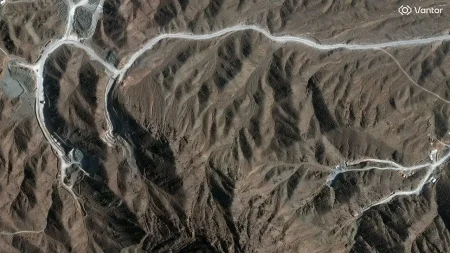





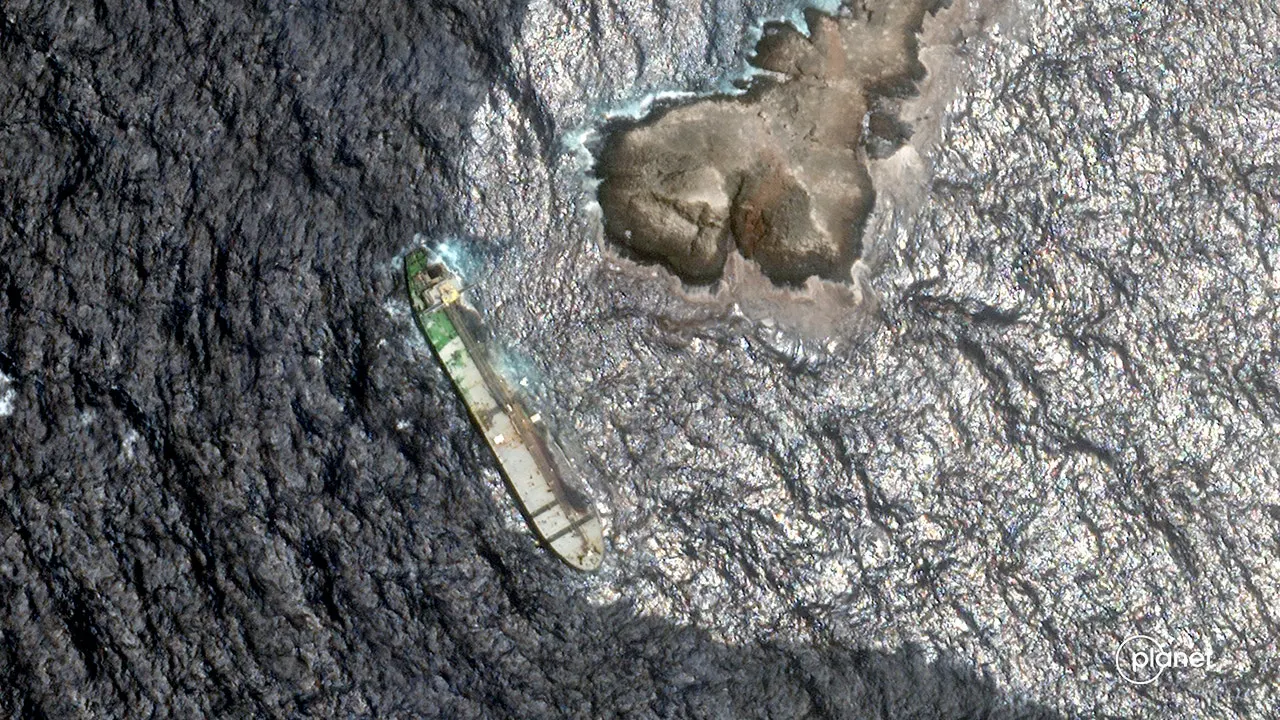
In the pristine, azure expanse of the Arabian Sea, a slow-motion ecological and humanitarian disaster is unfolding off the coast of southern Oman. The Hallaniyat Islands, particularly the protected sanctuary of Qibliyah Island in the Dhofar governorate, have long been a haven for rare marine life, untouched beaches, and traditional fishing communities. Today, however, this quiet paradise is being choked by a spreading dark stain. High-resolution satellite imagery has revealed a growing oil sheen spanning roughly 20 square kilometers—about eight square miles—clinging to the waters around the island, with thick, toxic patches of crude oil already washing ashore and blackening the coastline. For the local communities who rely on these waters for their livelihoods, and for environmentalists watching from afar, the sight of this encroaching pollution is a heartbreaking testament to the collateral damage of global conflict and maritime neglect.
At the center of this environmental crisis is the Caroline Bezengi, an aging, 899-foot supertanker that has become a pariah of the high seas. Flying the flag of Cameroon, the vessel is widely recognized by international maritime authorities as part of Russia’s “shadow fleet”—a clandestine network of aging, poorly maintained, and under-insured tankers used to bypass Western energy sanctions imposed after the invasion of Ukraine. Sanctioned by the United Kingdom, the European Union, Canada, and Switzerland, the ship was carrying a massive cargo of over 800,000 barrels of Russian crude oil loaded at the Black Sea port of Novorossiysk. The human cost of operating these shadow vessels is immense; often staffed by underpaid crews working under highly hazardous conditions with little regulatory oversight, these ships are floating environmental time bombs waiting to detonate in some of the world’s most sensitive marine habitats.
The crisis began in earnest in early June when the Caroline Bezengi suffered a sudden and terrifying onboard emergency. While transiting near the Yemeni port of Mukalla on June 8, the crew reported a massive explosion on board, the cause of which remains unconfirmed. For the mariners aboard, it was a moment of sheer terror, stranded on a crippled giant loaded with highly flammable crude oil in one of the world’s most volatile shipping lanes. Left adrift and severely damaged, the vessel eventually washed into the shallow, protected waters of Oman, where it has remained stranded ever since. The initial explosion is believed to have severely compromised the tanker’s structural integrity, and maritime experts monitoring the vessel have noted a dangerous list, signaling that the ship is taking on water and slowly losing its battle against gravity and the sea.
Now, a relentless ticking clock threatens to turn this localized spill into a catastrophic regional disaster. The region has entered its annual monsoon season, characterized by ferocious winds, powerful swells, and unforgiving waves that continuously batter the crippled tanker’s compromised hull. Environmental experts, including Wim Zwijnenburg of the Dutch peace organization PAX, warn that the ship is at extreme risk of breaking apart entirely under the physical stress of the weather. Satellite imagery confirms that the rate of the leak has accelerated in recent days, indicating that at least one of the ship’s cargo holds has been breached. If the hull fails completely, the remaining hundreds of thousands of barrels of heavy crude will pour directly into the sea, creating an ecological dead zone that could take decades to recover.
The immediate casualties of this disaster are the fragile ecosystems and the human communities that depend on them. The waters of Dhofar are a biological treasure trove, home to endangered seabirds like the petrel, rare sea turtles, and unique coral reefs that support a vibrant array of marine life. Local Omani fishermen, who have harvested these waters for generations, face the terrifying prospect of having their entire way of life wiped out overnight by the toxic slick. Activists from organizations like Greenpeace Germany have expressed deep alarm over the worsening situation, pointing out that oil is already coating the shores of the marine reserve. They warn that a full-scale spill would not only devastate the immediate coastline but could drift widely, devastating fisheries, choking coastal mangroves, and destroying tourism across the wider Arabian Sea.
As the oil continues to seep into the ocean, a frustrating cloud of geopolitical bureaucracy and silence stalls any effective rescue operation. Oman’s Ministry of Transport, Communications, and Information Technology issued an ultimatum to the vessel’s elusive owners, demanding the removal of the ship and its hazardous cargo by July 23. That deadline has passed with no clear response, highlighting the lawless nature of the shadow fleet, where ownership is often shielded behind shell companies to evade accountability. While the United Nations’ International Maritime Organization claims to be monitoring the situation, no concrete salvage plan has been initiated. This leaves the delicate shores of Oman trapped in a perilous waiting game, serving as a sobering reminder of how the hidden currents of global geopolitics can wash ashore in the form of a devastating environmental tragedy.