





In the quiet hours of a London evening, a twenty-two-year-old Ukrainian national named Roman Lavrynovych sat staring at the soft, blue glow of his smartphone, completely unaware that his life was about to be dismantled by a shadow operator on the other side of Europe. Far from his homeland, which had been ravaged by conflict, Lavrynovych was an easy target for exploitation, characterized by the financial anxieties and displacement that so often haunt young immigrants trying to make a life in a bustling foreign capital. Through the encrypted channels of Telegram, he crossed paths with an enigmatic handler who hid behind the brazen pseudonym “El Money.” This was no random criminal transaction; it was a deeply clinical process of cyber-grooming designed to turn human vulnerability into an instrument of terror. The handler, whom intelligence agencies later identified as a highly trained Russian diplomat and information warfare operative, acted with the patient precision of a master puppeteer. He began by offering small, ostensibly trivial tasks, slowly building a rapport grounded in financial dependency. To a young man struggling to survive, the promise of cold cash was a powerful sedative against moral reservation. As the tasks grew increasingly hostile, the carrot dangled by “El Money” expanded to include the shocking offer of Russian citizenship—a bitter irony for a young Ukrainian national—accompanied by a steady stream of pro-Putin propaganda. By the time Lavrynovych realized the gravity of the web he had spun around himself, he was no longer just a struggling youth; he had been successfully weaponized by a foreign intelligence apparatus, demonstrating how easily the psychological vulnerabilities of ordinary people can be harvested through a mobile screen to serve the destructive ambitions of distant regimes.
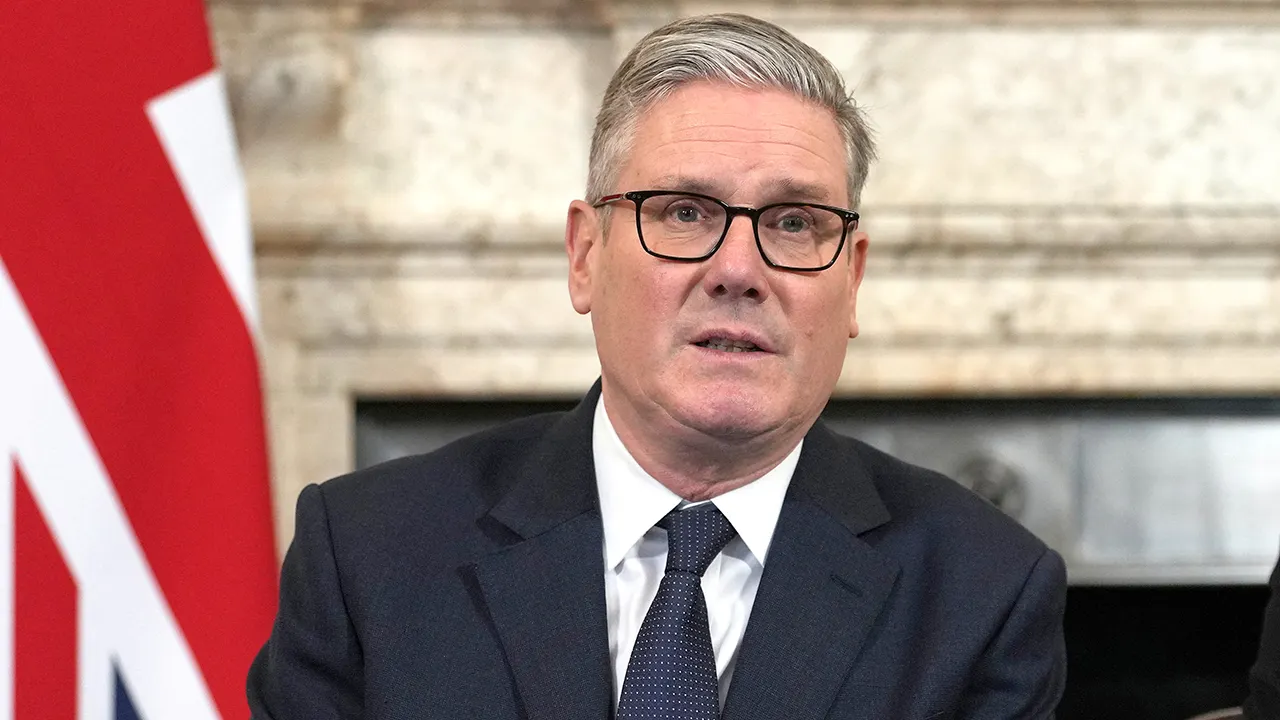
The transition from digital manipulation to physical violence manifested in a terrifying five-day reign of terror across London in May, aimed directly at the personal and historical life of British Prime Minister Keir Starmer. The campaign of chaos began on May 8, when a Toyota vehicle formerly owned by Starmer was suddenly engulfed in flames, sending a shocking signal to security services that the Prime Minister’s personal history was being systematically targeted. Three days later, on May 11, the arsonists struck again, igniting a blaze at the entrance of a residential property managed by a company where Starmer had previously served as a prominent director and major shareholder. Far from being satisfied with these warnings, the perpetrators executed their most brazen attack on May 12, setting fire to a house currently owned by the Prime Minister himself. The sheer recklessness of these actions put innocent civilians at extreme risk, turning quiet residential streets into active battlegrounds of foreign hostility. It was a terrifying reminder of how easily geopolitical conflicts can spill over into the domestic spheres of ordinary citizens, altering the peace of suburban neighborhoods in an instant. The fires were not merely property damage; they were symbolic strikes against the head of the British government, designed to show that no one, not even the leader of a nuclear-armed Western democracy, was beyond the reach of Moscow’s shadow warriors. Commander Helen Flanagan of London’s Counter Terrorism Policing would later remark that it was a matter of sheer, miraculous luck that these fires did not claim human lives, pointing to the profound disregard for human safety exhibited by the perpetrators who acted as remote-controlled agents of destruction.
Beyond the immediate destruction of the fires, the arson campaign was merely the tip of a vast, highly sophisticated iceberg of Russian sabotage and disinformation designed to tear at the social fabric of the United Kingdom. Investigators revealed that the puppet master, “El Money,” was not acting alone but was an integral part of a Moscow-directed state apparatus dedicated to sowing division and fear within British society. This geopolitical strategy combined physical acts of arson with a digital campaign of terror, utilizing fake far-right and radical Muslim online communities on Telegram and other social media platforms to generate mutual suspicion and civil unrest. By fabricating artificial clashes of culture and ideology, Russian intelligence aimed to paralyze the British public with fear, distracting the government from its foreign policy objectives, particularly its robust support of Ukraine. The sheer duplicity of the operation was staggering: a Russian handler, masquerading behind digital avatars, recruited Ukrainian and Romanian citizens to attack the properties of the British Prime Minister, thereby weaponizing the very people displaced by Eastern European instability against their host nation. When confronted with these damning findings, the Russian Embassy in London resorted to its standard script of outright denial, dryly rejecting any association between the state’s foreign ministry and unlawful domestic activities in the United Kingdom. This diplomatic denial stands in stark, cynical contrast to the mounting evidence of a coordinated, hybrid warfare strategy that views European capitals not as neutral diplomatic arenas, but as fertile ground for calculated chaos.
Despite the sophistication of the Russian puppet masters, the physical executors of the plot proved to be far less adept at concealing their tracks, leading to a swift and dramatic intervention by British counter-terrorism detectives. The digital breadcrumbs left by Roman Lavrynovych became his undoing; detectives quickly reconstructed his movements by utilizing local CCTV networks and analyzing cell phone data, which revealed that he had conducted extensive, clumsy reconnaissance of the target properties before lighting the matches. On May 13, just a day after the final fire of the campaign, police closed in and arrested the twenty-two-year-old, cutting short his desperate plans to flee the city. Meanwhile, his co-conspirator, twenty-seven-year-old Romanian national Stanislav Carpiuc, who was also born in Ukraine, attempted a frantic escape from the country. On May 17, as he sat in the busy departure lounge at Luton Airport, waiting to board a flight to Romania, he likely believed he had escaped the dragnet of British justice. However, moments before he could step onto the tarmac and disappear back into Eastern Europe, undercover detectives intercepted him, bringing a cold, sudden end to his flight. The third suspect, thirty-five-year-old Petro Pochynok, was ultimately acquitted during the subsequent legal proceedings, highlighting the meticulous standards of the British judicial system even when dealing with matters of national security and foreign espionage. The rapid apprehension of the suspects demonstrated the high-stakes vigilance of the UK’s domestic security services, closing a terrifying chapter before it could claim innocent lives.
The subsequent legal proceedings in London shed a harsh light on the tragic waste of human potential represented by the convictions of Roman Lavrynovych and Stanislav Carpiuc. These two young men, who had come to the West in search of opportunity, now face the grim reality of long-term imprisonment in British penitentiaries, their lives forever altered by their blind obedience to an invisible digital master. The trial laid bare the chilling messages exchanged between Lavrynovych and “El Money,” including one conversation where the handler coldly acknowledged the severity of the attack on the British Prime Minister’s property, advising Lavrynovych to take the blood money and flee London immediately. This evidence underscored the absolute disposability of the recruits in the eyes of their Russian handler, who viewed them not as comrades, but as cheap, expendable assets to be used and discarded once their mission was complete. In response to this unprecedented breach of national security, the British government has introduced sweeping new legislative powers aimed specifically at targeting foreign-state-linked groups, including high-profile operations connected to hostile foreign regimes. This legislative overhaul marks a decisive pivot in how Western democracies defend themselves, recognizing that the modern threats to national sovereignty are no longer just military actions, but hybrid campaigns that seek to recruit vulnerable residents on domestic soil to carry out acts of terror.
The arson attacks targeting Keir Starmer’s properties serve as a stark and sobering reminder that the line between global geopolitics and local safety has permanently dissolved. This disturbing incident highlights how easily the virtual world can metastasize into real-world violence, converting a simple messaging application into a portal for foreign state sabotage. The tragic trajectory of Roman Lavrynovych and Stanislav Carpiuc—two young men from Eastern Europe who exchanged their freedom for empty promises of money and Russian citizenship—exposes the profound human cost of modern hybrid warfare. In this flat, hyper-connected world, our digital spaces have become the new silent battlefields where the dispossessed are groomed to strike at the heart of Western democracy. As governments struggle to adapt to these fluid, hard-to-track threats, the responsibility falls not only on intelligence agencies but on society to understand the profound vulnerability of our connected lives. While the Russian government continues to deny its role in director-level sabotage, the charred remains of a Prime Minister’s former car and the cold prison cells now housing two young men stand as a grim, human testament to the devastating reality of modern proxy warfare.