






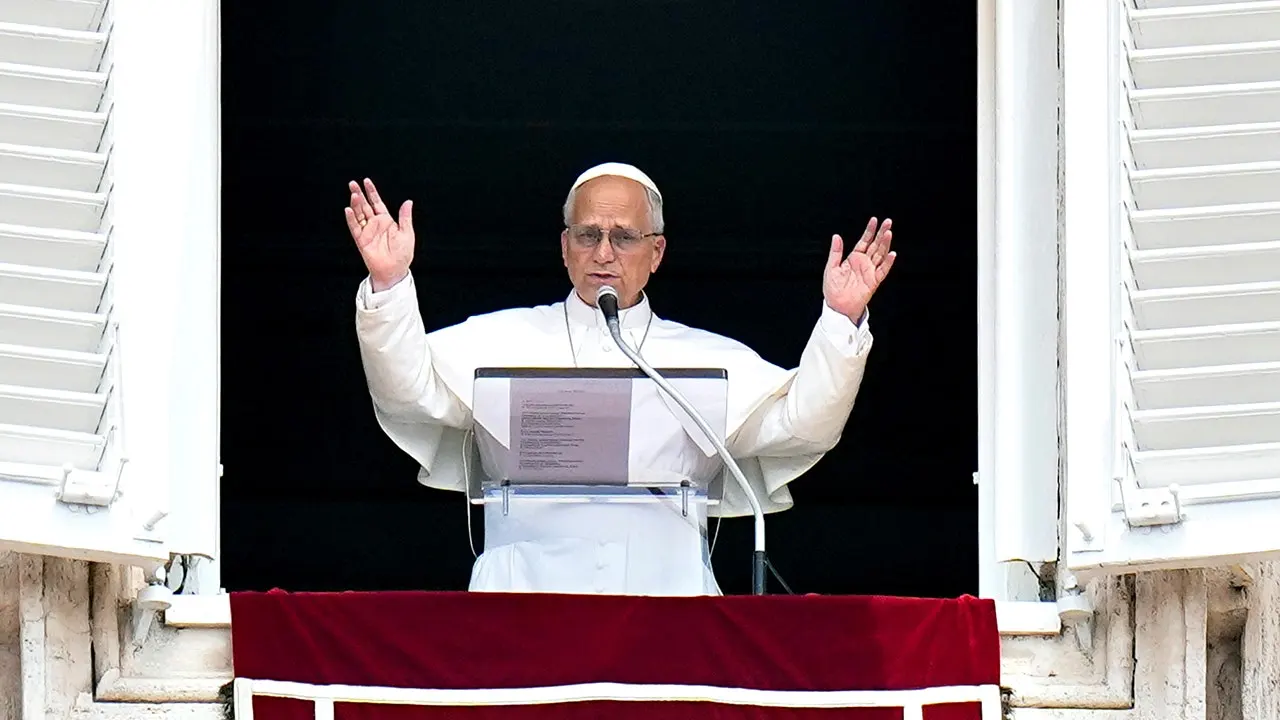
In an emotional, late-hour appeal that laid bare the agonizing fractures within the modern Catholic Church, Pope Leo XIV issued a deeply personal plea to the leadership of the Society of St. Pius X (SSPX), begging them to halt their scheduled consecration of four new bishops. Writing directly to Father Davide Pagliarani, the traditionalist group’s superior general, the pontiff bypassed formal diplomatic channels to deliver an urgent, heartfelt message of reconciliation. Standing on the precipice of a historic and self-inflicted wound, the Pope urged the breakaway faction to abandon plans for Wednesday’s ceremony in the quiet, alpine town of Econe, Switzerland. The Pope did not mince words about the gravity of the impending event, labeling the unilateral consecrations a “sin of extreme gravity” that threatened to permanently sever the group’s tenuous ties with the Holy See. For a Pope whose ministry has been defined by mercy, dialogue, and rebuilding broken bridges, the letter represented a desperate, personal attempt to avert a spiritual catastrophe. “I plead with you and ask you with all my heart: please turn back!” wrote Pope Leo, his words echoing not as a distant monarch issuing a decree, but as a grieving father trying to keep his family from breaking apart.
At the heart of Leo’s warning is the severe canonical penalty associated with consecrating bishops without the explicit mandate of the Bishop of Rome. Under Catholic canon law, such an act is considered an open break with papal authority—a formal schism—which triggers an automatic, immediate excommunication (latae sententiae) for both the bishop performing the ordinations and the men receiving them. Beyond the legalistic terminology of the Church’s ancient law codes, Pope Leo focused intensely on the human and spiritual cost of this decision on the everyday faithful who look to the SSPX for spiritual nourishment. He warned that embarking on this rebellious path would grievously harm ordinary believers, leaving them spiritually orphaned and casting doubt on the legitimacy and validity of the sacraments they receive within the society’s chapels. For the countless families, young people, and elderly parishioners who attend SSPX masses worldwide, the looming excommunications threaten to place their very sacramental lives into a state of painful uncertainty, forcing them to choose between their love for traditional liturgy and their loyalty to the successor of Saint Peter.
This escalating crisis represents the most formidable ecclesiastical challenge yet for Pope Leo XIV, whose groundbreaking pontificate has otherwise been marked by an accessible, deeply human style of leadership. As the first American-born Pope, Leo has consistently sought to heal internal wounds within a highly polarized Church, striving to accommodate traditionalist Catholics who harbor a deep spiritual affection for the traditional Latin Mass while keeping them anchored to the universal flock. He has shown himself to be a leader of immense warmth and approachability, recently joking during a high-profile visit to Madrid that young Spaniards would likely prefer the music of pop star Bad Bunny over listening to his own speeches. Yet beneath this self-deprecating humor lies a shepherd of fierce conviction, one who has passionately championed the rights of marginalized immigrants, honored historic humanitarians like America’s first saint, and worked tirelessly to ensure the Church remains a welcoming home for all. The defiance of the SSPX strikes at the very heart of Leo’s pastoral dream, threatening to overshadow his efforts at reconciliation with a painful legacy of division and mutual distrust.
The Society of St. Pius X was forged in the turbulent aftermath of the Second Vatican Council during the late 1960s and 1970s, establishing itself as a staunch bulwark against the modernizing reforms sweeping through the global Church. Founded by the French Archbishop Marcel Lefebvre, the society rejected many of the council’s landmark decrees, most notably the transition from the ancient Latin Mass to the vernacular, local-language liturgies that are standard in parishes today. To its defenders and members, the SSPX is not an engine of rebellion but a vital ark of preservation, maintaining what they believe to be the unadulterated, timeless teachings and liturgical beauty of the historic Catholic faith. In response to the Pope’s urgent letters, the society defended its decision to proceed with the consecration of the four new bishops, citing an ongoing “state of necessity” within the Church. They argue that the spiritual crisis of the modern world and the perceived dilution of Catholic orthodoxy leave them with no choice but to secure their own succession of bishops to ensure that traditional training, ordinations, and sacraments can continue uninterrupted for future generations.
This impending confrontation is heavily clouded by the painful memories of 1988, when Archbishop Lefebvre ignored a similar, desperate warning from Pope John Paul II and went ahead with the unauthorized consecration of four bishops. That fateful decision resulted in the immediate excommunication of Lefebvre and his chosen bishops, casting the traditionalist movement into a decades-long canonical wilderness. In 2009, Pope Benedict XVI, in a major gesture of goodwill aimed at healing the rift, lifted those excommunications to pave the way for theological dialogue, hoping to fully reintegrate the SSPX into the church’s official structure. However, despite years of intense theological discussions and attempts at compromise under subsequent pontiffs, the society has remained outside the Church’s formal canonical boundaries, unable to reach an agreement on Vatican II’s teachings regarding religious liberty and ecumenism. The planned ordinations in Switzerland threaten to undo decades of slow, delicate progress, dragging the Church back to the dark days of 1988 and cementing a division that many had hoped would eventually be resolved through patience and mutual understanding.
Today, the Society of St. Pius X is no longer a small, localized fringe group, but a sprawling global movement boasting hundreds of priests, seminarians, schools, and traditional religious houses spanning dozens of countries across the globe. This rapid expansion represents a powerful, living subculture of modern Catholicism, drawing in young families and vocations who are captivated by the solemnity of the old Latin rites but are now left adrift at the margins of the institutional Church. As the hours tick down toward the ceremony in Econe, the looming schism highlights a profound tragedy: a vibrant community of faith and a Pope who deeply values unity are locked in a painful, seemingly unavoidable collision course. Whether Father Pagliarani and his council will heed Pope Leo’s emotional plea to “turn back” remains to be seen, but the outcome will undoubtedly shape the spiritual landscape of the Catholic Church and the hearts of millions of traditionalist believers for generations to come.