





For the people of the Woro community in Nigeria’s Kwara State, February 3 began like any other day, rooted in the familiar rhythms of agrarian life and community warmth. That peace was violently shattered in a matter of hours when jihadi militants swept through the village, leaving a trail of absolute devastation in their wake. In a brutal display of ideological violence, the attackers slaughtered 160 villagers, leaving the survivors to process an unimaginable loss while being forced at gunpoint into the wilderness. Among the chaos, 163 villagers were taken hostage, starting a grueling six-month journey into the heart of captivity. These innocent men, women, and children were target-selected not for any crime, but for their steadfast refusal to abandon their own beliefs and submit to the radical religious doctrines of their captors. As they were marched deep into the dense, unforgiving forests, the weight of their grief was compounded by the terrifying uncertainty of what lay ahead, marking the beginning of a survival struggle that would test the very limits of human endurance.
Once inside the sprawling, dense forest near a secluded river, the captives quickly realized that survival would require a fragile balance of physical endurance and mental fortitude. The environment itself was a hostile warden, with damp earth, swarming insects, and the constant threat of exposure. Under the watchful, heavily armed eyes of their captors, the hostages—mostly women and children—lived in a state of perpetual vigilance, forced to scramble at a moment’s notice to extinguish cooking fires and hide beneath the thick forest canopy whenever the distant, low rumble of military helicopters echoed overhead. Yet, the physical hardships were only part of the torment; the psychological warfare was relentless. Hauwa Saliu, one of the survivors, later recalled how their captors subjected them to constant interrogation, repeatedly demanding to know if they had finally surrendered their faith and accepted the jihadists’ extremist ideology. In the face of this ceaseless pressure, Hauwa and her fellow captives clung to silent, whispered prayers, pleading for a rescue they feared in their darkest moments might never actually come, unable to truly believe they would ever see their homes again.
Amidst this profound darkness, small but extraordinary acts of humanity emerged as beacons of hope, none more profound than the heroic efforts of Amira Saliu. A professional nurse by training, Amira found herself thrust into an unimaginable role when the realities of life and nature refused to halt for their captivity. Over the course of those six harrowing months, ten pregnant women among the hostages went into labor under the open sky, completely stripped of modern medical facilities, sanitary environments, or even basic supplies. With nothing but her instincts, her training, and her bare hands, Amira stepped forward to deliver all ten infants into the world, navigating the delicate boundaries of life and death without sterile gloves, clean water, or pain relief. Each successful delivery was a quiet triumph of life over the bleakness of their surroundings, a testament to the resilient spirit of women who refused to let the cruelty of their captors extinguish the spark of new generation, even as they cradled newborn babies on the cold, damp forest floor.
Yet, the miracle of new life stood in stark contrast to the grim reality of death that hovered constantly over the encampment, where starvation and illness were daily companions. Mary Ishaya, a 44-year-old survivor, painted a chilling picture of their daily existence, describing long, agonizing stretches of days where they went without a single morsel of food, their bodies slowly wasting away. When the physical toll became too much for the weakest among them to bear, the survivors were forced into the heartbreaking task of digging shallow graves to bury their fellow captives who succumbed to the brutal conditions. Reflecting on the ordeal after their rescue, Mary struggled to find words that could adequately capture the depth of the horror they witnessed, noting that they lived face-to-face with death on a daily basis. The emotional scars of having to lay friends and loved ones to rest in unmarked forest graves, while starving and terrified, created a heavy burden of grief that the survivors will carry with them long after their physical wounds have healed.
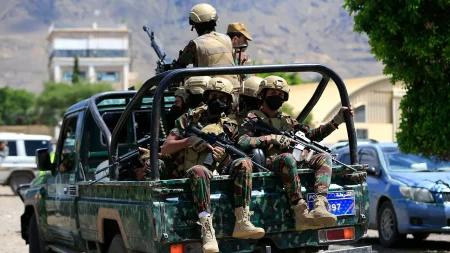
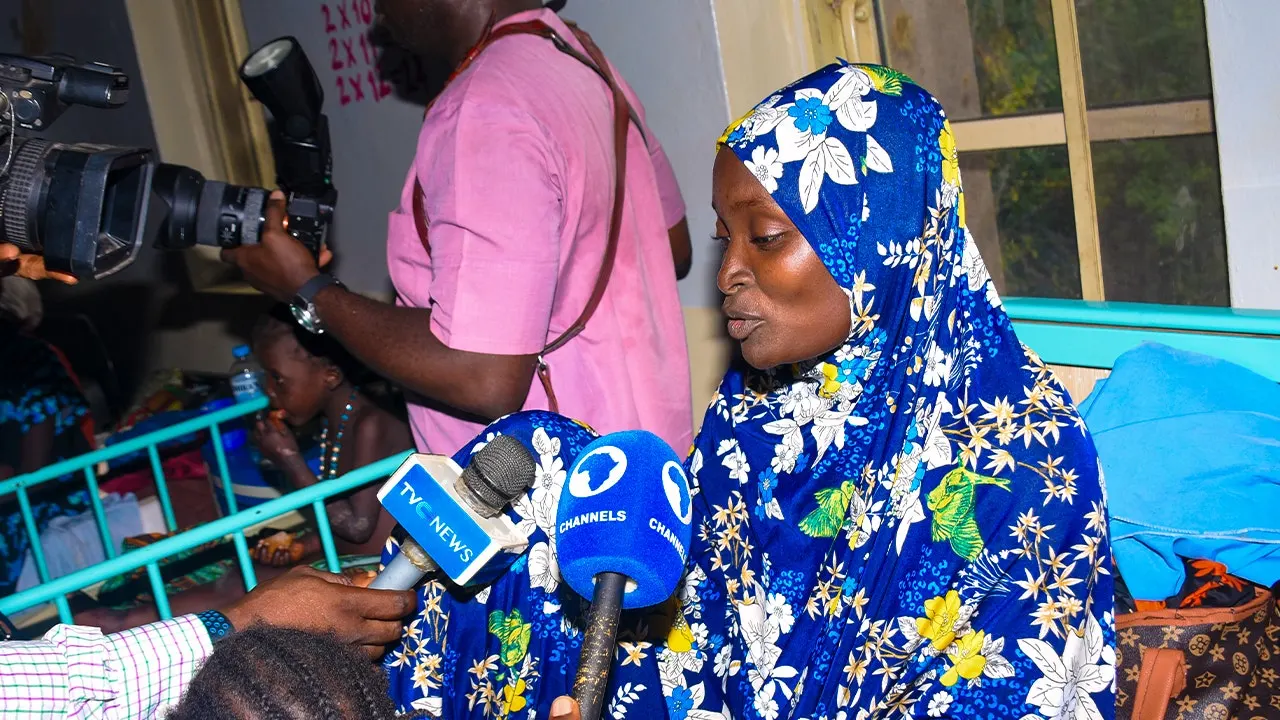
The nightmare finally broke when Nigerian security forces launched a massive, coordinated sweep, resulting in what officials have hailed as the largest rescue operation in the nation’s history, liberating a total of 308 hostages over the span of a single week. For the 163 survivors of the Woro community, the transition from the dark, silent forest to the bright, sterile environment of a hospital recovery ward was overwhelming. Kwara State Governor AbdulRahman AbdulRasaq visited the survivors, visibly shaken as he addressed reporters at a emotional press conference where forty-six of the most vulnerable victims were receiving urgent medical care. Surrounded by frail, wide-eyed children and exhausted, traumatized women, the governor expressed the collective grief of a region struggling to comprehend the sheer scale of the tragedy. He openly admitted that the community had not yet come to terms with the horror, calling the targeting of innocent women and children a profound shame that has left deep, enduring scars on the nation’s collective conscience.
This devastating episode highlights the complex, ongoing security crisis in Nigeria, where a deep-seated militant Islamic insurgency in the north continues to clash with the country’s large Christian population, who make up nearly half of the nation’s citizens. The escalating violence has drawn significant international attention and intervention, including decisive military actions authorized by the United States to target Islamic State-affiliated groups in northern Nigeria to protect vulnerable civilian populations. These international efforts, which included a coordinated joint military action in May that resulted in the elimination of senior Islamic State leader Abu Bakr al-Mainuk, highlight the global scale of the fight against extremist terror. As the survivors of the Woro raid begin the long, agonizing process of rebuilding their lives and healing their shattered minds, their story stands as a powerful reminder of both the devastating human cost of ideological warfare and the miraculous, unbreakable strength of the human spirit in the face of absolute darkness.