


1. A Bold Symbol of Friendship and Defense
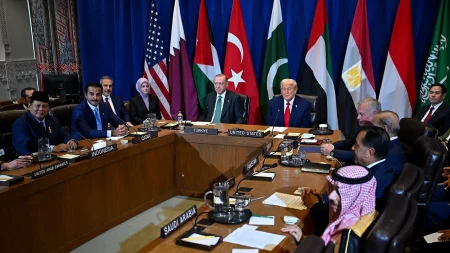
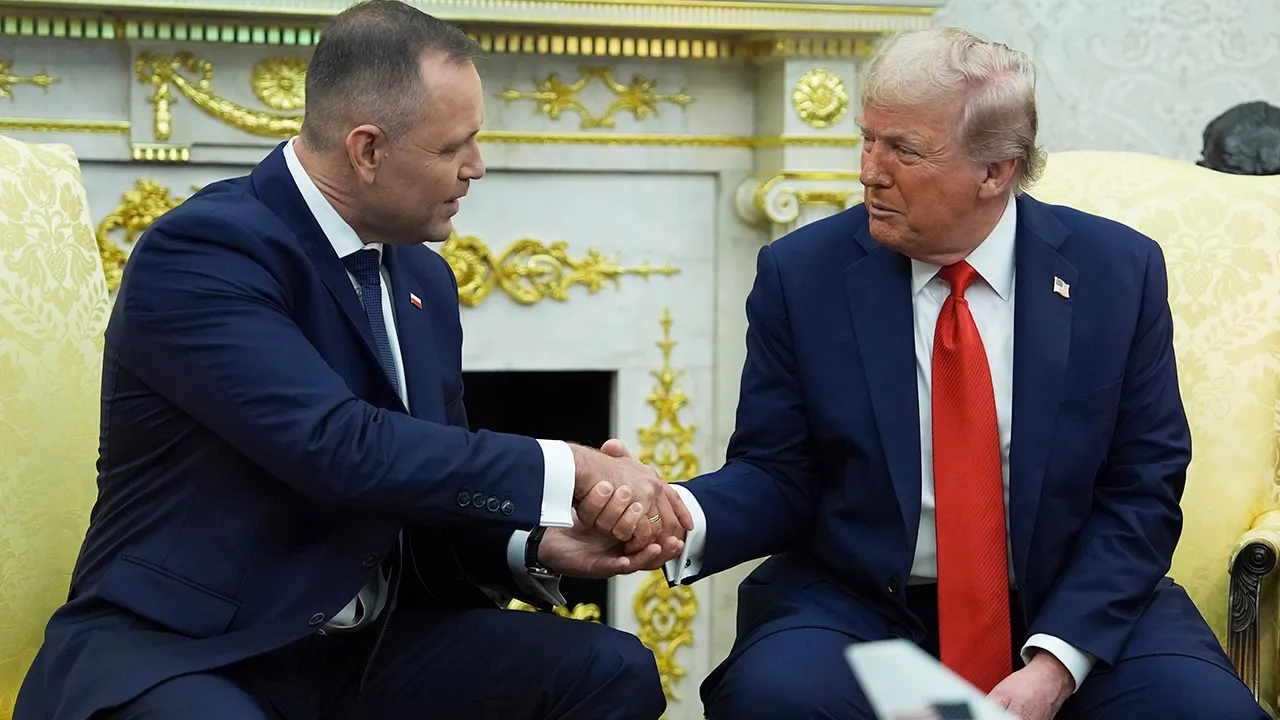
There is something almost poetic about naming a military base after a sitting American president—especially when that president is Donald Trump. Yet that is precisely what Poland’s president, Karol Nawrocki, has once again put on the table. Speaking in New York on September 22, Nawrocki revived a long-cherished Polish ambition: the creation of a permanent United States Army base on Polish soil, to be called “Fort Trump.” For Poland, this is more than a symbolic gesture. It is a lifeline, a beacon of reassurance, and a concrete answer to a fear that has haunted the nation for generations: the fear of being left alone to face an aggressive Russia. Nawrocki expressed confidence that Warsaw and Washington would strike a deal, and he even allowed himself a hopeful vision—one where President Trump would personally cut the ribbon at the base’s inauguration. “I hope that when work on the base is completed, President Trump will be able to personally attend the inauguration of ‘Fort Trump,’” he said. The remark felt less like diplomatic formality and more like a personal invitation between allies, a sign of how deeply intertwined Poland’s security hopes have become with the American political moment. But behind that warm sentiment lies a cold strategic reality: Poland wants permanent American boots on the ground, not just promises and rotations. The country has spent years pleading, negotiating, and positioning itself as America’s most loyal ally in Central Europe retical. And in the current geopolitical climate, with Russian aircraft probing NATO airspace and the war in Ukraine grinding on, Warsaw believes the time for symbols to become substance has finally arrived.
2. A Proposal Born Years Ago, Now Revived
The “Fort Trump” idea did not spring up overnight. It dates back to 2018, when Nawrocki’s predecessor, President Andrzej Duda, first floated the name during an earlier push to secure a lasting American military presence. Duda knew that a permanent base would send an unmistakable signal to Moscow: Poland is not a transient staging ground or a temporary outpost. It is a forward bastion of the Western alliance, protected not just by treaties but by steel, concrete, and American soldiers living on Polish land. For years, the idea flickered in and out of official conversations, sometimes fading as Washington and Warsaw squabbled over troop levels, costs, and logistics. But now, with Nawrocki in office and the security environment in Eastern Europe deteriorating, the idea has come roaring back. The Polish president is not merely repeating an old talking point; he is framing it as an inevitability. When asked about timelines, he acknowledged that administrative and financial details remain unresolved. “It’s hard for me to give specific dates, but I think this matter has been definitively confirmed, because President Trump is known for keeping his word,” Nawrocki said, displaying a trust that is striking in the often cautious world of international diplomacy. He also told Bloomberg that infrastructure preparation is already progressing, with “the appropriate infrastructure” being selected. To him, the base is “only a matter of time”—and with President Trump’s term running through 2029, Nawrocki seemed to believe that the ground could be broken, and even the base completed, before the American president leaves office. That optimism is as much about diplomacy as it is about urgency: every month that passes without a permanent base is a month in which Poland must rely on rotational forces, a fact that unsettles Polish defense planners.
3. The Helicopter That Changed the Mood
If anyone doubted why Poland is pushing so hard for Fort Trump, the universe provided a timely answer within hours of Nawrocki’s remarks in New York. A Russian Mi-8 military helicopter, flying from Russia’s Kaliningrad region, briefly penetrated Polish airspace near the northern town of Braniewo. The aircraft crossed into Poland at 11:08 a.m., pushing roughly 300 meters deep before exiting just 42 seconds later. Forty-two seconds. That is less than a minute—but it was more than enough to set alarms ringing across the Polish defense establishment. Polish radar systems tracked the helicopter the entire time, and Polish fighter aircraft were scrambled while ground-based air defense units shifted to standby. The incursion ended quickly, but the message was clear: Russia is testing NATO’s readiness, probing the alliance’s reaction times, and reminding Poland that it remains the frontier. Foreign Minister Radosław Sikorski even brought up the incident during a briefing with Polish media after his address to the United Nations Security Council. For the Polish military, this was not just a random violation; it was a deliberate act of testing. The details—a short, shallow incursion, quickly reversed—fit a pattern familiar to NATO observers. Moscow often uses such incursions to gauge how quickly defenses can respond, where gaps exist, and how much political noise a small provocation can generate. For Polish commanders, the message was not lost: your country is a target of opportunity, a proving ground for Russian military audacity, and you need more than NATO’s goodwill to defend the border. In the days that followed, the incident became a quiet argument for the base—an unintentional but powerful piece of evidence that Poland’s anxiety about Russia is not paranoia, but lived experience.
4. Russia’s Shadow Over Poland
The helicopter incursion, however, was only the latest in a disturbing series of Russian actions near NATO’s eastern border. Polish Prime Minister Donald Tusk had warned on September 18 that, according to Warsaw’s intelligence, Russia was planning drone and missile strikes against eastern NATO countries—strikes that Moscow could cynically present as accidental. That warning was not abstract. Russian drones have repeatedly entered NATO airspace and even crashed on alliance territory, including in Poland and Romania. These incidents are often dismissed by Moscow as navigational errors or technical failures, but NATO countries have spent years scrambling fighter jets in response to suspicious Russian aerial activity near their borders. For ordinary Poles, the threat feels intimate. They see the war in Ukraine raging just across the border. They hear air raid sirens from villages in the east. They watch as Russian missiles cross skies not so different from their own. The idea that a Russian drone could “accidentally” land in Poland is not a hypothetical scenario but a recurring headline. Tusk’s warning was a blunt acknowledgment that Russia may be willing to test Article 5—the sacred NATO principle that an attack on one ally is an attack on all—by relying on ambiguity and plausible deniability. If a drone or missile were to strike Polish territory and Moscow called it a mistake, how would NATO respond? Would the alliance rally around Warsaw, or would there be agonizing debates about proportionality? Poland wants Fort Trump precisely to avoid putting that question to the test. A permanent American base would make any Russian strike on Poland an immediate, undeniable act of war against the United States. It would raise the cost of miscalculation so high that even Putin’s risk calculus would be shaken.
5. The Numbers Behind the Dream
While names and symbols matter, negotiations over Fort Trump are ultimately about numbers. Deputy Defense Minister Stanisław Wziątek confirmed that the installation would likely host between 3,000 and 5,000 U.S. troops. But Poland’s ambition is far greater: Warsaw ultimately hopes to host around 15,000 American soldiers, building on the roughly 10,000 U.S. troops already stationed in the country, mostly on a rotational basis. That distinction between “rotational” and “permanent” is critical. Rotational forces come and go, their presence subject to budget cycles, political whims, and shifting Pentagon priorities. Permanent forces, by contrast, commit Washington to Poland in a deeper, more durable way. They bring families, infrastructure, supply chains, and—most importantly—an unmistakable presence that cannot be quietly packed up and shipped home. For Poland, permanent basing would transform it from a temporary ally into a permanent fortress—a true eastern flank bulwark. The remaining question, according to Wziątek, is precisely where the base will be located. Local officials across Poland have been lobbying for years to host the installation, viewing it as an economic boon as much as a security guarantee. The infrastructure selection process now underway will likely take into account strategic location, proximity to NATO’s eastern border, training space, and the support of local communities. Meanwhile, President Trump himself has signaled that progress is real. On Truth Social, he described the developments as a “historic step for our Great US/Polish Alliance,” crediting Nawrocki’s leadership. “Thanks to the bold leadership of my friend, Karol Nawrocki, President of Poland, major progress is being made towards establishing a US Army base in Poland,” Trump wrote on September 17. The message was short, but for Polish officials, it was powerful. The American president was publicly embracing a project that had once seemed like a distant dream. The deal was no longer just Polish talking points—it was an American priority.
6. A Future Written in Steel
At its heart, the Fort Trump proposal is about more than demographics and troop numbers. It is about what a country does when it feels the edge of history pressing against it. Poland has experienced the worst of what Europe can do—invasion, partition, occupation, and betrayal. It remembers 1939, when its allies failed to save it from both Nazi Germany and the Soviet Union. It remembers the decades of Soviet domination that followed the Second World War. And it now watches with grim certainty as Russia assembles its forces, tests its missiles, and sends drones toward NATO skies. In that context, Fort Trump is not merely a military installation; it is a monument to a promise—the promise that Poland will never again be left alone to face an aggressor. Nawrocki’s optimism may be bold, but it is rooted in a deep understanding of what American leadership has meant for his country. The base would be named after a man who has often criticized NATO allies for not paying their fair share, but who has also shown affection for Poland and its people. Naming the base Fort Trump is a gesture of gratitude and provocation, a way of binding the United States so tightly that no future president could easily undo the commitment. Is the timeline realistic? Can the administrative and financial hurdles be cleared before 2029? Those are open questions. But Navrocki has made it clear that he believes the political will exists on both sides. “This matter has been definitively confirmed,” he said, brushing aside doubts. For Poland, the base is not just about defending territory—it is about belonging. It is about being inside the room, not waiting outside. It is about knowing that when the warning sirens sound, America will already be there, present and permanent. Fort Trump, if built, will be a name carved into the landscape of European security for generations—a reminder that sometimes the best way to deter a war is, paradoxically, to prepare for one. And in that sense, it may become one of the most consequential military decisions of the decade.