


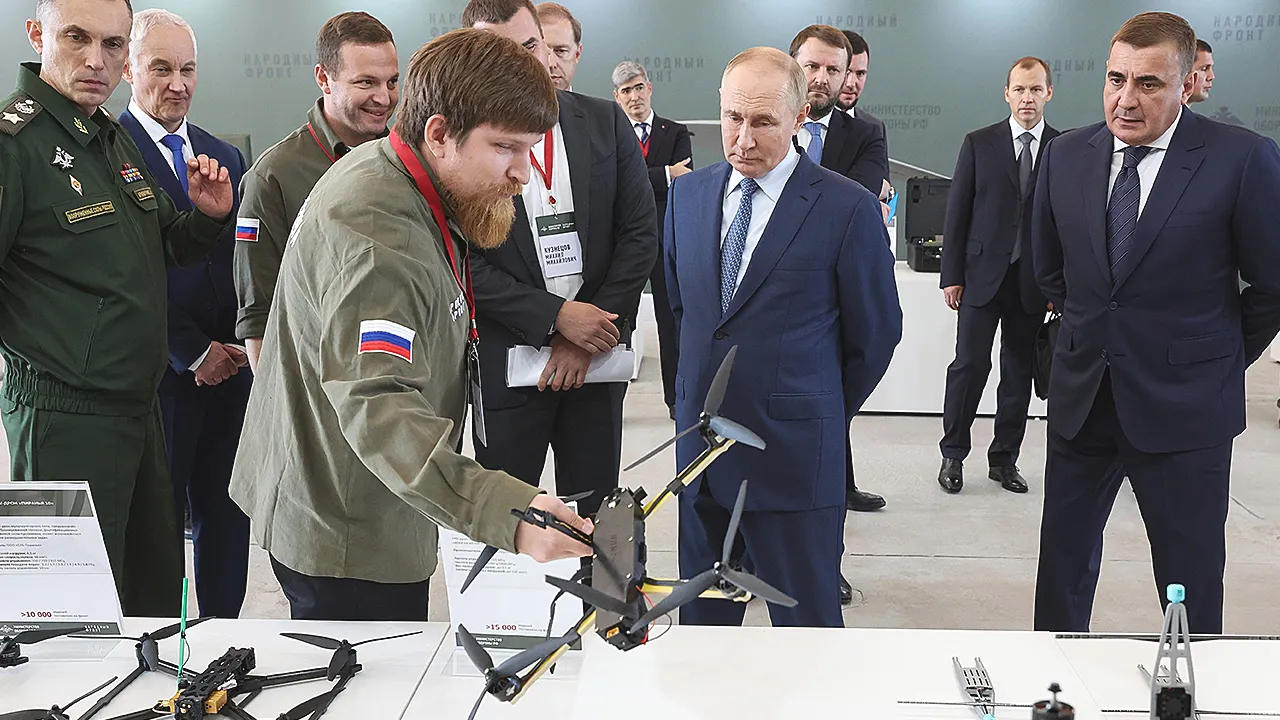
The theater of modern warfare has shifted from muddy trenches to the quiet, highly specialized laboratories where the future of combat is engineered, sparking a chilling new phase of targeted violence in the Russia-Ukraine conflict. No longer are soldiers on the front lines the sole targets of this devastating war; instead, a shadow war of assassinations and espionage is actively hunting the minds behind the technology reshaping the battlefield: drone developers, executives, and software engineers. The reality of this threat became terrifyingly clear on August 4, when a devastating car bomb detonated near Yekaterinburg, critically injuring Vladimir Tkachuk, the chief of Russian drone manufacturer Uraldronzavod, and claiming the life of his driver. Uraldronzavod is the powerhouse behind the notorious “Upyr” (or “Ghoul”) first-person-view attack drones that have wreaked havoc on Ukrainian positions. This brazen strike was preceded only days earlier by another targeted hit in Tula, where Andrei Cherezov, the head of a rival Russian drone firm, was shot three times overnight in what appeared to be a highly coordinated assassination attempt. While neither Kyiv nor independent authorities have officially claimed responsibility for these specific incidents, they signal a dramatic, lethal escalation. This new frontier proves that the intellectual architects of military tech are now viewed as high-value, high-consequence targets, transforming private citizens and commercial innovators into the frontline casualties of global geopolitics.
To understand why these tech leaders are being hunted, one must look at the unprecedented speed at which drone warfare evolves, turning human expertise into the ultimate strategic bottleneck. According to Cameron Chell, the CEO of Draganfly, a prominent drone technology firm, targeting the leadership and engineering talent of these defense startups is a calculated move to cripple an adversary’s military adaptability. Unlike traditional heavy military hardware, which can take years or even decades to develop, drone technology operates on a hyper-accelerated timeline where vital software updates, countermeasures, and hardware iterations occur every ten to thirty days. Because drone manufacturing facilities are highly decentralized and distributed to avoid easy detection, destroying the physical factories themselves is an incredibly difficult task. Consequently, intelligence agencies have realized that eliminating a single visionary engineer or a project lead can throw an entire weapons program into chaos, instantly halting crucial shipments to the front lines and leaving soldiers on the battlefield vulnerable to obsolete technology. By targeting the intellectual core of these companies, adversaries can achieve immediate, asymmetric results on the battlefield that conventional artillery strikes simply cannot match.
This campaign of terror and espionage is far from confined to the borders of Ukraine and Russia; its reach has extended deep into Western Europe, threatening the security of sovereign NATO nations and their domestic defense industries. German security agencies recently disrupted a sophisticated Russian intelligence operation by arresting two suspected operatives accused of scouting and spying on a Bavarian drone manufacturing company. Investigative reports revealed that this espionage ring was laying the groundwork to target Stefan Thumann, a high-ranking executive at the firm, illustrating that Western innovators supporting the democratic alliance are firmly within Moscow’s crosshairs. This chilling revelation follows on the heels of a massive, joint U.S.-German intelligence operation earlier in 2024, which successfully foiled a highly organized Russian plot to assassinate Armin Papperger, the high-profile CEO of the prominent German defense giant Rheinmetall. These calculated operations reveal a systematic, state-sponsored effort by the Kremlin to paralyze Western defense production through fear, blackmail, and targeted violence, proving that the boardrooms and laboratories of Europe have become active combat zones in Russia’s broader hybrid war against the West.
As the conflict hurtles toward a future dominated by artificial intelligence and fully autonomous weapon systems, the premium placed on cutting-edge engineers has skyrocketed, making them even more attractive targets. Modern military doctrine is rapidly moving away from human-in-the-loop systems toward total autonomy, where drones can hunt, navigate, and make lethal decisions independently of human operators or jam-prone radio signals. The next eighteen months are projected to be a critical window of innovation for AI-driven warfare, a field where Ukrainian developers currently hold a distinct technological edge over their Russian counterparts. For intelligence agencies looking to blunt this technological curve, targeting small, agile drone startups is an incredibly attractive, low-risk, and cost-effective strategy compared to trying to breach the fortified defenses of massive, state-run military complexes. These small tech firms, often born out of civilian garages or commercial tech hubs, lack the heavy military security infrastructure of traditional defense contractors, leaving their brilliant but exposed staff highly vulnerable to professional operatives who can strike with relative ease and achieve massive geopolitical impact.
The execution of these shadow operations highlights a fascinating and stark contrast in how Kyiv and Moscow approach the psychological and tactical dimensions of clandestine warfare. While both sides actively employ these lethal tactics, their methods reflect their unique strategic postures and historical legacies. Ukraine, fighting an existential war of survival with its back against the wall, tends to favor blunt, direct, and immediate kinetic strikes—such as sudden car bombings or close-range shootings in apartment hallways—which send a terrifyingly clear message to the Russian military establishment and deeply rattle the domestic Russian psyche. Conversely, Russian tactics are deeply rooted in the institutional memory of the Cold War and the long-standing intelligence networks of the Soviet era. Moscow relies heavily on patient, elaborate, state-organized networks that utilize low-level local assets, meticulous long-term surveillance, and complex international infiltration to target assets abroad, such as in Germany. While Russia maintains a significant advantage in sheer manufacturing volume, Ukraine’s agility, rapid technological innovation, and ruthless determination have allowed them to punch far above their weight, weaponizing fear in a way that has profoundly disrupted Russian defense leadership.
Faced with this grim and dangerous reality, the global drone manufacturing industry is undergoing a paradigm shift, forcing tech companies to view physical security and cyber defense as existential business requirements. Executives who once worried primarily about venture capital funding and software bugs are now forced to undergo hostile-environment training and coordinate directly with national security agencies to protect their lives and their families. Companies like Draganfly are actively collaborating with federal authorities, implementing rigorous cybersecurity firewalls to protect sensitive intellectual property, and establishing strict physical protocols to shield their employees from surveillance and physical harm. There is a palpable sense of urgency across the defense tech sector, as leaders recognize that they can no longer take their personal safety for granted. By treating executive protection, cybersecurity, and physical location shielding with a newfound, sober seriousness, the industry is adjusting to a terrifying truth: in the age of autonomous warfare, the line between the software engineer writing code in a quiet office and the soldier fighting in the trenches has been permanently erased.