






Paragraph 1: The Political Whiplash in Sinaloa
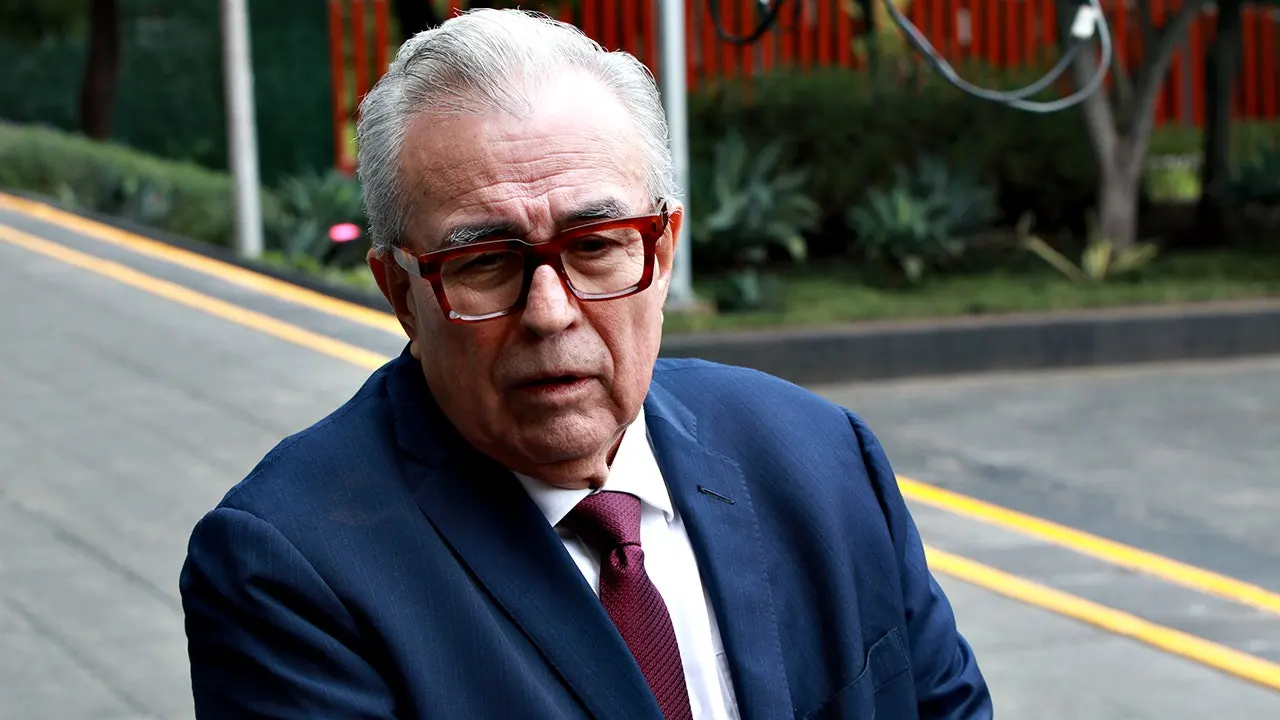
The political landscape of Sinaloa, a region already simmering with cartel violence and national scrutiny, experienced a breathtaking whiplash this weekend that left observers and citizens alike confounded. Rubén Rocha Moya, the 77-year-old governor, abruptly requested an indefinite leave of absence from his post on Saturday—a startling reversal that came less than 24 hours after he had triumphantly returned to the office following a grueling three-month hiatus. For a seasoned politician, such a rapid and confusing about-face is almost unheard of, suggesting either a profound personal crisis or a calculated strategic retreat under unimaginable legal and political pressure. The man who had stepped back into the governor’s mansion with the swagger of a vindicated leader just hours earlier found himself once again handing over the reins, leaving the state government in a state of administrative limbo. His previous absence had been forced upon him by the shadow of a U.S. federal indictment—a dark cloud that has now become a permanent storm hovering over his political career. The abruptness of his second departure, coming so soon after his carefully choreographed return, paints a portrait of a man caught in a relentless vice, where every move he makes is scrutinized, and every hope of resuming normal governance is immediately dashed by the cold, unforgiving machinery of international justice and domestic political survival.
Paragraph 2: The Cryptic Letter and the Weight of the Indictment
The mechanics of his departure were as cryptic as the timing was jarring. In a letter dated August 22 and stamped as received by the Sinaloa State Congress that very same day, Rocha Moya formally requested what he termed a “temporary leave of an indefinite nature, for more than 30 days.” The document, stripped of any customary explanations or timelines, offered no indication of when he might return, nor did it provide a specific rationale for this fresh exit. The omission of a reason speaks volumes, leaving the public to speculate wildly about whether the move was prompted by a deteriorating legal situation, mounting intra-party pressure, or perhaps a fragile state of health for a man in his late seventies. The backdrop to this bewildering move is the explosive April indictment from U.S. prosecutors, which charged Rocha Moya and nine other current and former high-ranking government and law enforcement officials with drug trafficking and related weapons offenses. The charges allege a staggering betrayal of public trust: that these officials partnered directly with the infamous Sinaloa Cartel to distribute massive quantities of narcotics across the border into the United States. This indictment made Rocha Moya the first sitting Mexican governor in history to face such charges from Washington, a dubious distinction that has transformed his governorship from a political appointment into a high-stakes legal battleground, and which now threatens to unravel the fragile fabric of U.S.-Mexico diplomatic cooperation.
Paragraph 3: A Defiant Manifesto of Innocence
In the hours following his announcement, Rocha Moya took to social media platform X—formerly Twitter—to fire back at his accusers with a passionate, defiant manifesto, attempting to seize the narrative and cast himself as a victim of a malicious conspiracy. He wrote of returning to work “with a clear conscience and head held high, with the strength of truth on our side,” a rhetorical flourish that seemed to ignore the legal quicksand he was standing in. He reminded the public that his initial 112-day absence was spent not in hiding, but in active cooperation with Mexican authorities, revealing that he had personally appeared before the Attorney General’s Office to answer investigators’ questions regarding the U.S. accusations. He insisted, with emphatic conviction, that the investigation had produced no evidence whatsoever to prove he committed a crime, characterizing the entire affair as a series of “false accusations” engineered by the U.S. government. But his defiance did not stop at the border; he leveled a sharp accusation at his political opponents both at home and abroad, claiming they were deliberately trying to damage both Mexico’s national sovereignty and the left-wing political movement he represents. His words carry the weight of a man cornered, who sees himself not as a defendant but as a martyr for political independence, yet his insistence on innocence rings hollow against the sheer volume of evidence the U.S. Department of Justice claims to have assembled, and humanizes the tragic fall of a man who may have believed his position made him untouchable.
Paragraph 4: The Cold Shoulder from His Own Party
Despite his bold public posture, the reality of his political situation was made starkly, and somewhat cruelly, clear by the reaction from his own political family. Rocha Moya’s return to office on Friday was met not with an embrace, but with a frosty distance that must have felt like a physical blow. The ruling Morena party—the very vehicle that propelled him into the governor’s mansion—issued a terse statement asserting it had no advance knowledge of his decision to return, and quickly distanced itself from any association with his current predicament. This was a devastating signal: in Mexican politics, party support is the oxygen that sustains a governor’s authority, and without it, he was left politically strangled. The federal Interior Ministry compounded his isolation by falling back on stark, bureaucratic language, stating that the decision to return was his alone, and pointedly reminding the public that the Attorney General’s investigation into him remains open. The message was unmistakable: Rocha Moya was now a liability, a pariah whose presence threatened to taint the entire party’s reputation. The human tragedy here lies in his sudden, complete abandonment. The colleagues who once shared his platform now scramble to unlink their political futures from his, and the once-mighty governor finds himself standing utterly alone on a stage where he once commanded legions, contemplating a future where his only constant companions are subpoenas and legal counsels.
Paragraph 5: Sheinbaum’s Scathing Rebuke and Diplomatic Tension
The most pointed and consequential response, however, came from the very top of the Mexican government. President Claudia Sheinbaum posted a message on X that was unmistakably aimed at Rocha Moya, delivering a moral and political scolding wrapped in the language of national duty. “No personal interest can ever stand above the interests of the people and the Nation,” she wrote, a clear hint that she viewed his messy, self-serving maneuvering as a distraction from the country’s more pressing needs. She continued, “Mexico deserves public servants who understand that positions are temporary, but responsibility to the Nation is eternal,” a sentence that effectively branded him as a politician who had forgotten the fundamental public trust. Coming from a president of his own party, this was the final nail in the coffin of any hope he had of political rehabilitation. This episode has also ignited a fierce diplomatic firestorm between Mexico City and Washington. Sheinbaum has publicly labeled the U.S. charges as a form of “foreign interference” in Mexico’s internal affairs, a position that resonates with nationalist sentiment but infuriates American prosecutors. Meanwhile, Mexican officials counter that Washington has failed to provide sufficient evidence to justify Rocha Moya’s arrest or extradition, creating a legal and political standoff that threatens to poison the bilateral relationship just as critical trade and security negotiations are ongoing.
Paragraph 6: The Broader Crisis of Governance and the Road Ahead
The saga of Rubén Rocha Moya is far more than the fall of a single politician; it is a seismic tremor that has exposed the deep corrosion within the intersection of organized crime, politics, and international law enforcement. The April indictment of ten officials—including Rocha Moya—allegedly collaborating with the Sinaloa Cartel to flood the United States with narcotics reveals a systemic infiltration that shocks the conscience. For the people of Sinaloa, living under the capricious rule of cartels and now a disgraced governor, the state government appears to be a hollow shell, paralyzed by scandal at the very moment when strong, trustworthy leadership is most desperately needed. The indefinite nature of his leave leaves the state in a precarious holding pattern, with an interim leader likely to be appointed, but lacking the mandate or public confidence to enact meaningful change. Internationally, the case has strained relations to a breaking point, with the U.S. viewing the indictments as a legitimate act of justice against international crime, and Mexico interpreting them through the lens of sovereignty and alleged imperial overreach. As Rocha Moya retreats once more into the shadows of uncertainty, he leaves behind a shattered political career, a state government in disarray, and an international relationship frayed by trust and betrayal. The path forward is unclear, but one thing is certain: the human cost of this political catastrophe—measured in eroded public trust, broken alliances, and the relentless moral weight of a drug war that continues to consume lives on both sides of the border—will be paid by the Mexican people for years to come.