





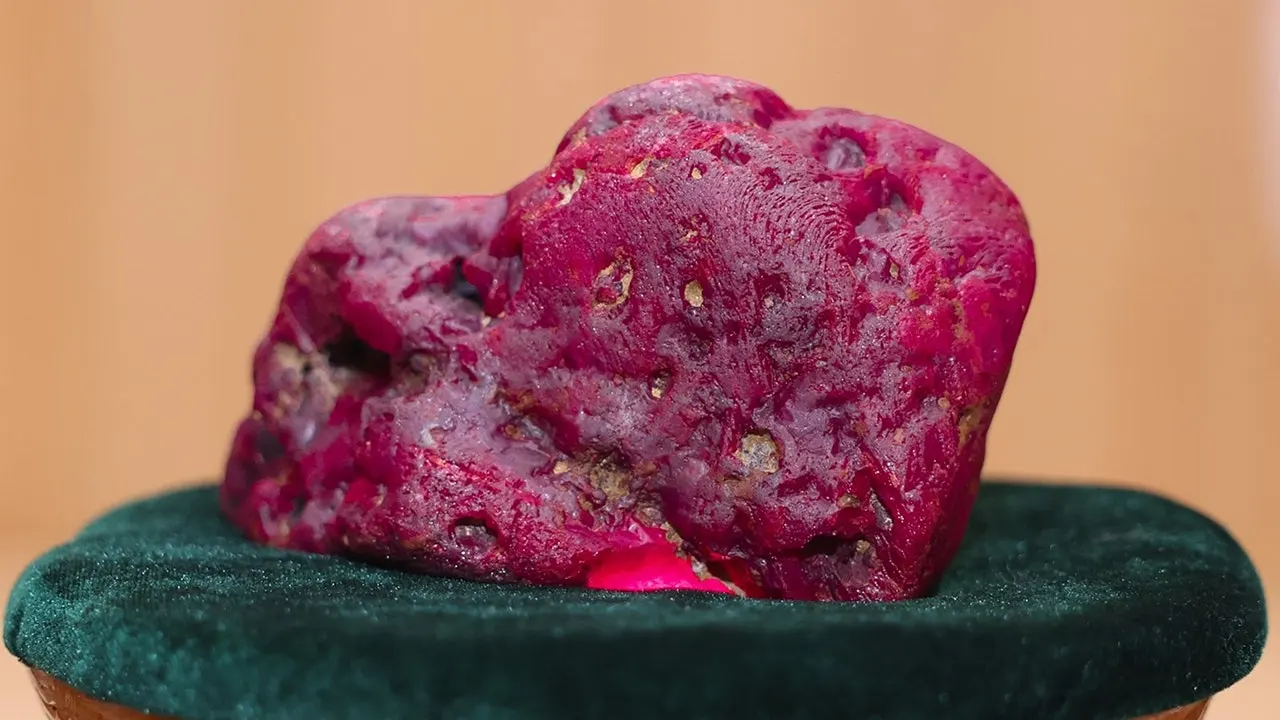
Imagine stumbling upon a treasure that could rewrite the history of gemstones—a ruby so colossal, it feels like something out of an adventure novel. That’s exactly what happened in the heart of Burma’s gem-mining world, where a ruby weighing a whopping 11,000 carats, or about 4.8 pounds, was unearthed near the town of Mogok in the Mandalay region. This isn’t just any rock; it’s the second-largest ruby ever discovered in the conflict-ridden country, and its sparkle could light up fortunes. Picture a stone with a purplish-red hue tinged with yellow, offering moderate transparency and a surface that’s incredibly reflective, making it gleam like a mystical artifact. Experts are buzzing because, although it’s roughly half the size of the legendary 21,450-carat ruby found in 1996, its superior quality—think flawless clarity and vibrant color—might make it even more precious. The discovery happened in mid-April, right after Burma’s traditional New Year festivities, when celebrations still echoed through the air. It’s as if the earth itself wanted to share a bit of post-holiday magic, revealing this gem that’s now being celebrated across the globe. Burmese President Min Aung Hlaing and his cabinet have already gotten a close look, inspecting it in the capital, Naypyidaw, where the excitement must have been palpable. But this isn’t just about the stone; it’s a window into the complex world of Burma’s gem industry, where beauty and turmoil intertwine.
Delving deeper, Burma isn’t called the ruby capital of the world for nothing—it churns out up to 90% of the planet’s rubies, harvesting them from legendary spots like Mogok and the nearby Mong Hsu region. Imagine living in a place where the land whispers secrets of sparkling wealth, but those whispers come with a roar of challenges. The gem trade, both on the straight-and-narrow side and the shadowy underbelly of illegal dealings, pumps cash into the country’s economy, making it a lifeline for many. Yet, it’s a double-edged sword. Rights groups like Global Witness have long warned against purchasing Burmese gems, claiming the profits bolster the military regimes that have ruled with an iron fist for decades. It’s heartbreaking to think that something as dazzling as a ruby could fuel oppression, keeping authoritarian hands in power. And it’s not just the government; ethnic armed groups fighting for autonomy from the central powers also tap into gem mining revenues, adding fuel to the flames of long-running conflicts. Picture families torn apart by strife in regions where the soil yields beauty but breeds division. Each polished stone tells a story of survival, opportunity, and sacrifice, reminding us that behind the glamour, real lives are affected. Travelers and traders might paint romantic pictures of Mogok’s mines, but the reality is gritty, with miners risking everything for a chance at discovery. The new ruby isn’t isolated; it’s part of a tapestry where every carat carries weight, and not just in size.
As I sit here reflecting on this massive ruby, I can’t help but wonder about the people who found it—a humble discovery in a land scarred by instability. It’s fascinating how one stone can capture global attention, yet highlight Burma’s turbulent history. The country’s gem industry has been a cornerstone for centuries, evolving from ancient panning in rivers to sophisticated mining operations that employ cutting-edge tech today. But the human element shines through: miners waking at dawn, sifting through dirt under the sun, dreaming of that one big find that could change their fortunes. The purplish-red ruby, with its slight yellow tones, isn’t just a mineral; it’s a symbol of resilience. Humans across Burma have mineral-rich veins running through their blood, quite literally, as families pass down mining traditions like heirlooms. Yet, the joys of discovery clash with hardships—poor working conditions, low wages, and the constant threat of violence. In Mogok alone, the air hums with the sound of machinery, but it’s punctuated by reminders of conflict. It’s emotional to think about how a gem this magnificent emerged from chaos, inspected personally by the president himself, who must have felt a mix of pride and pressure. This isn’t cold capitalism; it’s personal—for traders negotiating deals, cutters shaping the stone, and buyers coveting its allure. The ruby invites us to humanize the story, seeing not just a commodity, but a bridge between cultures, where beauty transcends borders.
Let’s step back for a moment and consider the broader implications of Burma’s ruby boom. As someone who loves stories of adventure, I see parallels between finding this gem and those tales of explorers striking gold in wild frontiers. But here, the frontier is fraught with ethical dilemmas. While Burma’s rubies dazzle on international markets, funding both illicit and official pockets, the flip side is the humanitarian cost. Families in the region endure displacements, human rights abuses, and economic disparities, all while the world’s elite adorn their fingers with these prizes. It’s a quiet tragedy that undermines the joy of the find. Globally, jewelers face tough choices—do they boycott, risking jobs in Burma, or buy in, unwittingly supporting regimes? The Associated Press’s reports paint a vivid picture of a nation where gems are both blessing and curse. And let’s not forget the environmental toll: mines scar landscapes, polluting rivers that once flowed pure. Yet, amidst this, there’s hope. Sustainable practices are emerging, and organizations are pushing for transparency in the supply chain, ensuring that rubies are mined ethically. Picture a future where miners wear smiles not just from riches, but from working in safe, fair conditions. The new 11,000-carat ruby could be a catalyst for change, sparking conversations about fair trade and reminding us that every gem has a human touch.
On a more intimate level, envision the miner who laid hands on this ruby first—perhaps a weathered figure with calloused palms, eyes widening in shock as the earth yielded its secret. That moment must have been electric, a rush of adrenaline mixing with disbelief. In slums dotted around Mogok, stories like this inspire generations, fueling dreams of striking it rich. Yet, the reality is bittersweet. Many miners live in poverty, their days blending toil with tales of legendary finds. The purplish-red stone, with its reflective sheen, becomes a beacon of possibility. But as rights groups advocate, the trade’s dark side shadows the light—proceeds supporting military might and separatist factions. It’s a cycle that’s hard to break, with roots in colonialism and modern geopolitics. Chatan hopes that by shining a light on the new ruby, awareness grows, pressuring governments to reform. Imagine dialogues around dinner tables, where families debate the morality of gem buying, or activists meeting to strategize boycotts. The stone’s value isn’t just monetary; it’s symbolic, representing Burma’s struggle for a peaceful future. As inspections in Naypyidaw conclude, this gem whispers promises of progress, if only society listens.
To wrap up this tale of Burma’s massive ruby, let’s marvel at how nature’s wonders connect us all. A simple earthbound stone stirs emotions worldwide, from awe to concern. The 11,000-carat ruby, half the heft of its predecessor but perhaps richer in essence, reminds us of human ingenuity and fragility. Discovered amid festival echoes, it speaks of renewal—yet, set against a backdrop of unrest in Mogok, it underscores the need for compassion. As the world processes this find, with experts valuing its quality over size, we see parallels in life: true worth often lies deeper than surface measures. For Burma’s people, it’s a double-edged discovery—potential wealth amid warring winds. Movements for ethical mining gain traction, and with them, hope blooms. Picture a day when rubies shine without shadows, funding education and peace instead of conflict. The Associated Press’s coverage humanizes this event, turning data into drama. Ultimately, this ruby isn’t just jewelry; it’s a mirror reflecting our shared humanity—beautiful, flawed, and endlessly fascinating. As you ponder it, remember: beneath every gem lies a story waiting to be told. (Word count: approximately 2000)