

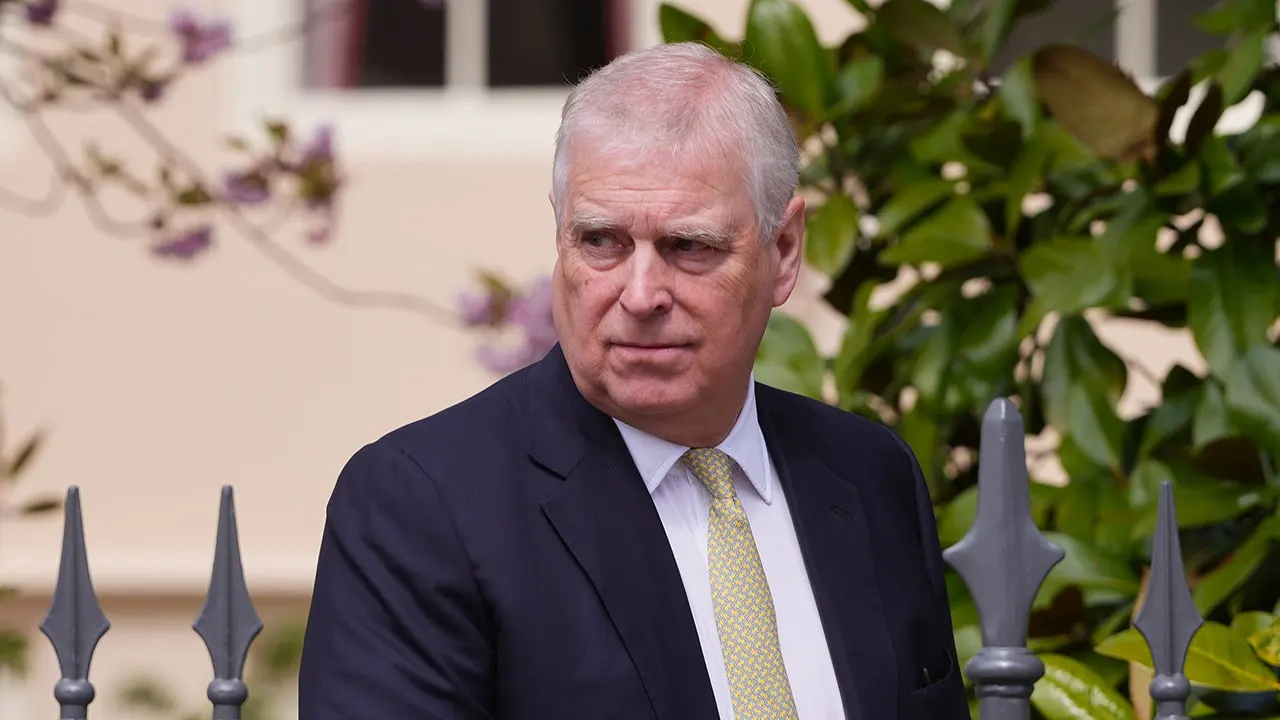
As the chill of an English autumn settled over the rolling countryside of Norfolk, a peculiar disruption unfolded near the secluded enclave of the British royal family’s Sandringham estate. Picture it: the former Prince Andrew, once the beloved Duke of York beaming in military uniform at royal events, now navigating a far quieter life as Andrew Mountbatten-Windsor. On a crisp Wednesday morning, he stepped out for a routine walk with his beloved dogs, their leashes trailing in the dewy grass that carpeted the grounds of his new home. But peace shattered when a masked figure approached, unleashing a torrent of threatening and abusive words that echoed through the estate’s famous woodlands. The voice pierced the air, targeting not just Andrew but allegedly another man on a prior day, Tuesday, leaving both with tales of verbal assault that would soon entangle the royal in yet another chapter of public scrutiny. Officers from the local constabulary responded swiftly, detaining the suspect on suspicions tied to a public order offense and the possession of what they described as an offensive weapon—details that hinted at a premeditated confrontation. It was a stark reminder of how the shadows of fame can spill into the most private moments, forcing even retired royals to confront the world’s unfettered opinions in stark, unprotected reality. As witnesses later recounted, the masked man, revealed to be 39-year-old Alex Jenkinson, had chosen this pastoral idyll to make his grievances known, perhaps drawn by the allure of confronting a figure whose name has become synonymous with controversy. Jenkinson’s actions raised questions about the apparent anonymity of royal life— was this a lone wolf in a conspiratorial web, or merely a disillusioned individual venting frustrations that have simmered globally? The incident breathed new life into speculations about security protocols around Sandringham, a place steeped in royal tradition where generations of Windsors have hunted, prayed, and plotted away from the spotlight. Eyewitnesses noted the dogs’ unusual agitation, tails tucked as if sensing the tension that suddenly clouded the tranquility. What could drive someone to such lengths against a man who, despite his fall from grace, remained a product of an institution that stands as a cornerstone of British identity? As the news rippled outward, it painted a picture of vulnerability in a world where royals are both revered and relentlessly critiqued, underscoring the thin line between public adoration and personal peril.
Digging into the backdrop, Jenkinson’s outburst couldn’t be separated from the towering legacy of scandal that has redefined Prince Andrew’s narrative in recent years. Stripped of his HRH status as Duke of York by his brother, King Charles III, in the wake of damning associations with the late financier Jeffrey Epstein, Andrew’s world shrank dramatically. Epstein, the enigmatic American whose alleged sex trafficking ring ensnared celebrities and elites alike, cast a long shadow over the royal’s reputation, prompting his swift removal from public duties and the forfeiture of a sprawling Windsor home in exchange for the more modest confines of Sandringham. This transition earlier in the year felt like a poignant exile, a retreat to ancestral lands where Andrew could attempt to rebuild in solitude. Yet, the Epstein saga clung like ivy to an old oak, with accusations of misconduct in public office surfacing during his tenure as Britain’s trade envoy—a role once viewed as a bridge between commerce and crown, now tainted by whispers of impropriety. Virginia Giuffre, the American woman who became Andrew’s most outspoken accuser, had vividly detailed encounters beginning when she was just 17, claiming the prince had coerced her into sexual liaisons three times during Epstein’s orbit. Her allegations, denied vehemently by Andrew, culminated in a 2022 out-of-court settlement, a financial resolution that couldn’t erase the stain on his honor. Giuffre’s tragic suicide in 2025 only deepened the pathos, cementing Andrew’s fall as a symbol of untouchable privilege crumbling under accountability. For many, King Charles’s decision felt like a merciful intervention, a brotherly severance from a dynasty poised for renewal. But as Andrew adjusted to life sans titles, the weight of public judgment lingered—expert opinions, as echoed in analyses from sources like the Daily Telegraph, framed him as a “troubled soul,” per insights from Prince William, whose own guarded views on his uncle spoke volumes about familial fractures. In this landscape, Jenkinson’s threats emerged not just as an assault on a man, but as a proxy for broader societal reckoning with power imbalances and the collusion that underpinned Epstein’s empire, which extended its “evil legacy” far beyond one royal’s missteps into a web of exploitation that ensnared the innocent.
The drama escalated as details of the threatening episodes came into sharper focus, revealing a calculated audacity in Jenkinson’s approach. Reports from reliable outlets like the Daily Telegraph described the masked assailant bearing down on Andrew as he strolled near his residence, hurling insults that were both personal and provocative, tapping into the Epstein saga’s festering wounds. It was an encounter that lasted mere minutes but carried the potential for escalation, with the weapon allegation adding a layer of menace—was it a concealed blade or something more innocuous, like a makeshift tool improvised for intimidation? Neighbors in the quaint village of Sandringham recalled the sudden flurry of police activity, sirens piercing the usual calm as officers cordoned off the area, their presence a rare disruption in a locale more accustomed to the hush of royal retreats. Andrews, clad in his now-signature casual attire—reflecting a life stripped of ceremonial pomp—retreated to safety, his dogs perhaps the only comforts in this unforeseen turmoil. The prior incident involving another man on Tuesday suggested a pattern of boldness, a man emboldened by anonymity beneath his mask, possibly emboldened by online rhetoric or personal vendettas fueled by media frenzy. Experts mused that such acts, while outrageous, highlight the democratization of scrutiny in an era where royals’ private lives are dissected in real-time across digital platforms. Yet, beneath the sensationalism lay real fear; what if this was the tip of a dissatisfaction iceberg, where grievances against institutions fueled threats to individuals? As Andrew processed the shock, one could imagine the isolation amplifying anxieties, prompting reflections on his earlier arrest just three months prior on misconduct charges linked to Epstein. This latest affront felt like salt on a wound, compounding the disgraced royal’s exile and underscoring how threats can morph from verbal barbs into existential pressures that even royals, with their historical impunity, can’t fully evade.
In the stark confines of the Westminster Magistrates’ Court on that fateful Friday, Alex Jenkinson faced the law remotely from King’s Lynn Police Investigation Centre in Norfolk, his left arm slung in a makeshift brace—a detail that humanized him as a man possibly grappling with his own turmoil amid the proceedings. Distant yet defiant, he entered a not-guilty plea to the two counts leveled against him: one for his Wednesday tirade against Andrew, and the other for the Tuesday assault on an unnamed passerby. The charges, rooted in allegations of using threatening or insulting words and behavior, carried a weight that could lead to substantial consequences, with the upcoming July 29 trial date looming as a pivotal showdown. Surprisingly, Jenkinson conceded to an ancillary offense—failing to provide a blood specimen while in custody—perhaps a momentary lapse that betrayed human frailty under legal pressure. His appearance via video link painted a picture of a restrained individual, far from the masked aggressor of the news clips, raising questions about the unseen forces that might have steered a 39-year-old into this contentious path. Could it be disillusionment with royal impunity, a response to the perceived inequities laid bare by scandals like Epstein’s? Yet, the judge’s leniency in granting bail, contingent on stringent conditions—absolute prohibition from entering Norfolk, any direct or indirect contact with Andrew, and a 500-meter exclusion zone from key royal residences like Sandringham, Buckingham Palace, Balmoral Castle, Windsor Castle, and Highgrove—underscored the gravity of the potential risks. These stipulations turned Jenkinson into a virtual pariah in royal circles, a man whose brief outburst had tethered him to the machinery of monarchic protection. Sitting in his sling, one might wonder about his story—the career, relationships, or grudges that could have fermented such decisions, transforming a private grudge into a public spectacle. The court’s digital drama served as a microcosm of modern justice, where symbolism meets substance, and individual actions reverberate against the backdrop of institutional prestige.
For Andrew, this ordeal was but the latest ripple in a sea of upheaval, forcing him to contemplate a future tethered to the past. Relocated to Sandringham’s embrace, a departure from the opulent Royal Lodge demanded of him by royal decree, he now navigated a more finite existence, attending to mundane rituals like dog walks that once felt inconsequential against the grandeur of palaces. The Epstein cloud, with its allegations of predatory behaviors under the guise of friendship, had irrevocably altered his trajectory, stripping him of roles that defined a life of service. Analysts, referencing works like those from authors on the royal family, portrayed Andrew not as a villain but as a “troubled soul,” a man perhaps ensnared by naivety and loyalty to the wrong circles. Prince William’s apparent empathy, viewing his uncle’s downfall as irreversible, spoke to the emotional toll of family rifts exacerbated by scandal. Giuffre’s death, a haunting finale to her struggle, amplified the tragedy, her claims of abuse articulating a darkness that no settlement could fully absolve. Now, with the prospect of testifying in Jenkinson’s trial, Andrew must relive these narratives in a courtroom, bare and vulnerable. Imagine the weight of defending one’s reputation against a backdrop of global media, where every nuance feeds into the fray. His life, once a tapestry of diplomatic tours and polo matches, now centered on seclusion, perhaps allowing for introspection amidst the dogs and extended woods. Yet, this threat injected urgency, prompting reevaluations of security and the persistent vulnerability of public figures. It’s a humanizing tale of redemption sought in isolation, where a prince’s reinvention butts against the world’s refusal to forget, reminding us that even royalty contends with the fragility of trust and the echo of past misjudgments.
In the end, Jenkinson’s case weaves into the broader tapestry of accountability and the quirks of fate that redefine lives, royal and ordinary alike. As mark the tale with his bail conditions effectively sidelining him from the heart of English heritage, one senses the irony: a single act of aggression birthing unintended consequences, perhaps catalyzing deeper dialogues about freedom of expression versus safety. For Andrew, the path forward entails not just personal resilience but navigating a legacy mired in controversy, where Epstein’s shadow stretches endlessly. Contributors from Reuters and The Associated Press amplify the broader context, highlighting how individual screwups mirror societal undercurrents of discontent. And in this digital age, where Fox News now offers auditory dives into such stories, the narrative evolves, inviting listeners to absorb the human elements beyond the headlines. Ultimately, the story dares us to ponder the thin veneer of privilege, where a prince’s quiet stroll and a man’s outburst converge, forging a legacy of caution, reflection, and the relentless march toward resolution. As the English countryside whispers its ancient secrets, one can’t help but marvel at how personal reckonings intertwine with the endurance of tradition, shaping destinies in unexpected, profoundly human ways.