





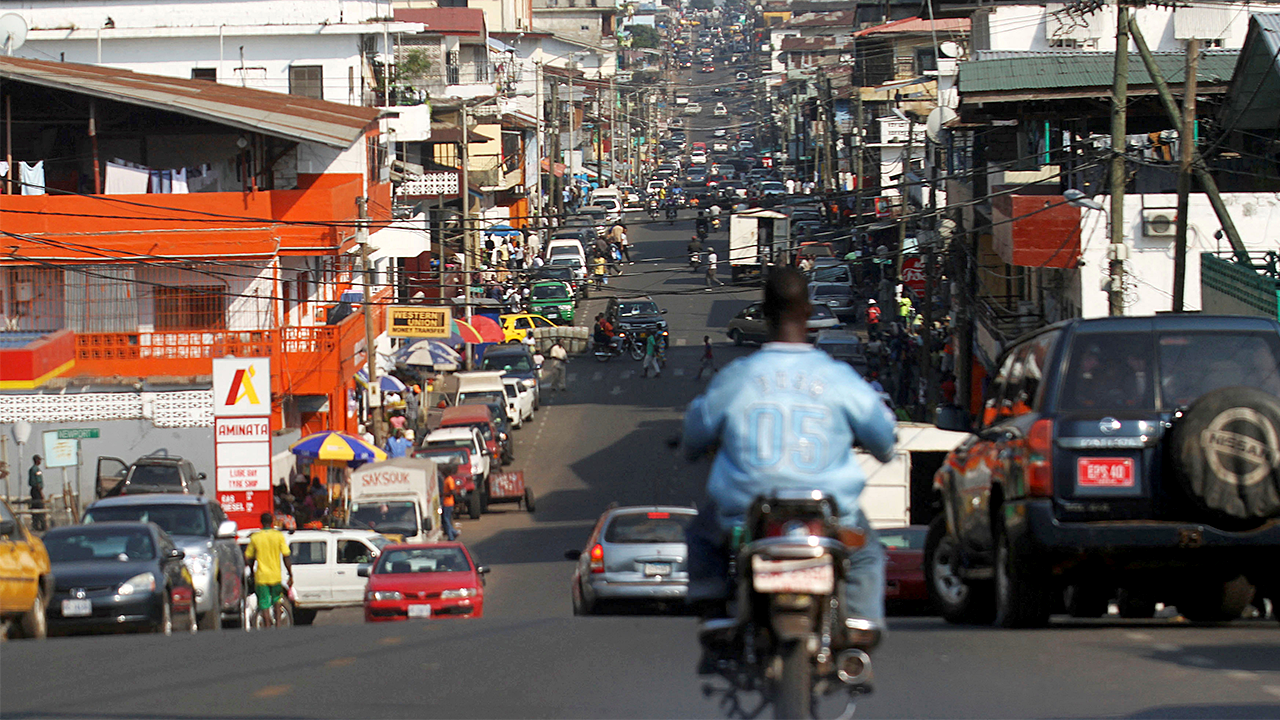
The first plane landed quietly on a Thursday morning, slicing through the humid haze that blankets Roberts International Airport outside Monrovia. The metal stairs were lowered, and twenty weary passengers descended, their faces a mixture of exhaustion, confusion, and cautious relief. They were not returning home, nor were they being welcomed as refugees fleeing a war zone—they were the vanguard of a deeply unusual diplomatic arrangement. Liberia, a small West African nation with a population of just over five million, had agreed to accept them as “guests,” officially marking the beginning of a year-long commitment to house 1,200 individuals who were deported from the United States but who could not easily be returned to their countries of origin. As they stepped onto the tarmac, the passengers were greeted by the warm, humid air and the curious eyes of airport staff, a stark physical and emotional contrast to the cold, bureaucratic process that had deposited them here. For many of them, stepping into Liberia meant stepping into the unknown—a country they had likely never visited, whose language (English) they might share, but whose culture, geography, and challenges were entirely foreign. The announcement from Liberia’s Information Minister, Jerolinmok Piah, had framed this arrival with a surprising grace: “They will be received as guests,” he said, “they can leave when they want and apply for asylum.” It was a statement of intention that sought to soften the hard edges of a global migration crisis, yet the weight of the moment hung heavy in the air, carrying with it the echoes of history and the complexities of modern geopolitics.
Beyond the initial twenty, the scope of this agreement reveals a broader, more intricate tapestry of global displacement. The full cohort of 1,200 people over the next twelve months is not a monolithic group; it is a diverse assembly of Africans, North Americans, South Americans, and Caribbean nationals. These individuals were not necessarily violent criminals or security threats—in fact, Liberia’s Justice Minister, Natu Oswald Tweh, was quick to clarify that most of them “had immigration violations and offenses,” a bureaucratic way of saying they were caught in the tangled web of migration law. They came from places as varied as Haiti and Cameroon, from Central America and the Middle East, though they were specifically routed to Liberia for one essential reason: the United States could not legally or practically send them back to their home countries. Some were stateless, others had protection claims pending, and many were caught in the limbo created by diplomatic standoffs or asylum loopholes. The agreement itself is a testament to the transactional nature of modern immigration policy—the United States, seeking to reduce its detention population and expedite deportations, found a willing partner in Liberia, which in turn received substantial logistical and financial support to handle the influx. This is a story not just of numbers on a spreadsheet, but of lives interrupted, of people who have been essentially handed across an ocean to a country that, on the surface, seems an unlikely host. The diplomatic cables and press releases describe the arrangement in neutral terms—sovereign cooperation, humanitarian assistance, and migration management—but the underlying reality is one of profound vulnerability, where the fate of over a thousand individuals rests on the goodwill of a nation facing its own significant economic and infrastructural hurdles.
From the perspective of Monrovia’s ministries, this decision is framed as a noble, humanitarian gesture, steeped in a sense of historical obligation. Minister Piah insisted that the deal was not a “quid pro quo” and that Liberia was not demanding compensation—though Washington is indeed providing support to strengthen the nation’s migration framework. The government’s stance is one of dignified acceptance; they portray themselves as a global citizen stepping up to offer refuge, echoing the very principles that underpinned their nation’s foundation. Justice Minister Tweh’s emphasis that these individuals are not criminals is a deliberate attempt to soothe domestic anxieties, reminding Liberians that they are welcoming people who simply fell out of legal status in the United States, not dangerous exiles. However, this noble rhetoric is tested against the lived reality of Liberia itself. The country remains one of the poorest in the world, recovering from civil wars and the devastating Ebola epidemic. Unemployment is high, infrastructure is fragile, and the healthcare system is stretched. The government’s pledge to provide support and safety to these newcomers is a bold promise, but one that raises uncomfortable questions about resource allocation. Many Liberians watch the arrival of these “guests” with a mix of empathy and suspicion, wondering whether the influx represents a genuine humanitarian partnership or whether their country is being used as a pawn in a larger geopolitical game. Nevertheless, the historical resonance cannot be ignored. The connection between the United States and Liberia is deep and visceral, dating back to the 19th century when the American Colonization Society established a settlement on the West African coast for freed and formerly enslaved Black Americans. Liberia’s flag, its constitution, and its political structures were modeled almost directly on those of the United States, and for over a century, the nation served as the American beacon in Africa. Therefore, when the U.S. looks for a partner to offload a difficult migrant case, Liberia stands out not just for its strategic position, but for this profound historical kinship—a relationship that makes the word “guest” seem almost poetic, though the practical execution remains precariously complex.
This arrangement, however, does not exist in a vacuum; it is a direct outgrowth of the aggressive immigration policies pursued by the Trump administration. Since returning to the White House, the administration has sought to crack down on undocumented migration with unprecedented vigor, expanding not just border walls and deportation flights, but also forging agreements with various nations to accept “third-country nationals.” Liberia is just one piece of a much larger puzzle. Other African nations, including the Democratic Republic of Congo, the Central African Republic, Equatorial Guinea, Cameroon, Ghana, and Sierra Leone, have also reportedly entered into similar compacts, creating a network of destinations for individuals the United States wants to remove. The legal landscape has been fiercely contested. Rights groups have repeatedly sued the administration, arguing that sending migrants to countries they have never visited—and where they may face persecution or danger—violates international law and puts lives at risk. The administration has defended these moves, citing federal law that permits the removal of migrants to willing third countries. The recent legal battle surrounding Temporary Protected Status (TPS) for Somalis is a prime example of this clash. When a lower court attempted to impose additional procedural requirements on these third-country removals, the Supreme Court stepped in, effectively staying that order and handing the administration a major victory. For the administration, this is a triumph of sovereignty and national security—a clear message that the United States will no longer act as a de facto sanctuary for those who bypass legal processes. For critics, it is an alarming escalation of the “remain in Mexico” style policies, but applied on a global scale, transforming poor nations into repositories for America’s unwanted. The diplomatic arm-twisting involved in such agreements is often opaque, and while officials deny coercion or coercion through aid, the power imbalance between a superpower and a developing nation is undeniable. These are not equal partnerships; they are asymmetrical relationships where the smaller country often has limited leverage to refuse the demands of a long-standing ally, particularly when financial incentives are attached or when broader foreign aid packages hang in the balance.
The most profound chapter of this story belongs to the individuals—the men, women, and possibly children aboard those planes. Consider the typical third-country deportee: they may have fled their home country years ago, escaping violence, political persecution, or abject poverty. They arrived in the United States perhaps illegally, or with a visa that expired, and they worked, built lives, and formed families. When they encountered the immigration system, they lost their freedom, moving through detention centers in Texas, Louisiana, or New Jersey, waiting for a judgment that ultimately landed them on a plane to a country they have no cultural connection to. For many, the experience is a psychological whiplash. They are told they cannot stay in America, but they cannot safely return home. So they are sent to a third country—one that offers a fragile promise of safety but no guarantee of integration. Upon arriving in Liberia, they are theoretically allowed to seek asylum, which means they can start a new legal process in a country with a limited asylum infrastructure. They may be given shelter and basic provisions, but the long-term outlook is daunting. Will they find work? Will they be met with hostility by locals competing for scarce jobs? Will the Liberian government truly uphold its promise of protection, or will they remain in a state of permanent transience, stateless in spirit if not in law? Human rights advocates argue that this is a cynical shell game that shifts America’s moral and legal obligations onto the shoulders of some of the world’s most vulnerable states. The emotional journey of these deportees is one of deep loss—the loss of a home in America, the severing of ties to a native land, and the uncertainty of an entirely new life in a nation whose history ironically mirrors their own ancestors’ return to Africa. Yet, there is also a strange glimmer of hope for some. Liberia offers the chance to start over, far from the violence they fled. The government’s rhetoric of hospitality, though tested by harsh reality, suggests a willingness to integrate them. As the weeks turn into months, these 1,200 individuals will become a living experiment in international solidarity—a test of whether a nation born from the return of exiles can offer a refuge to the new exiles of the modern world.
Ultimately, the agreement between Liberia and the United States is a mirror reflecting the complexities of a globalized world order in which borders are both porous and fortified. It is a political victory for the Trump administration, a display of diplomatic muscle in executing its mandate to deport. It is a historical echo for Liberia, a country that has always seen itself as the “Mother of the Diaspora,” welcoming those who return from the Atlantic. And it is a human drama for the 1,200 lives caught in between. The deal brings financial support and updated migration systems to Liberia, but it also brings risk—risk of social tension, of economic strain, and of moral scrutiny from the international community. Yet, as the sun sets over the Atlantic and the lights of Monrovia flicker on, one cannot help but feel a sense of historical symmetry. Two nations, linked by the chains of history and the hopes of freed slaves, are now linked again by the fate of modern wanderers. Whether this arrangement will be regarded as a generous humanitarian handshake or a cynical dumping of responsibility will depend on the actions of the Liberian government in the coming months—and on the resilience of the people who now call this coastal nation their temporary home. For every flight that lands, the promise must be kept: that these guests will be treated with dignity, allowed to thrive, and given a genuine chance at the safety that was denied to them elsewhere. Only then can the story be told not as a tale of exile, but as one of unexpected homecoming, where the children of American Liberia open their arms to the strangers who, like their ancestors before them, have crossed the ocean seeking a new beginning.