




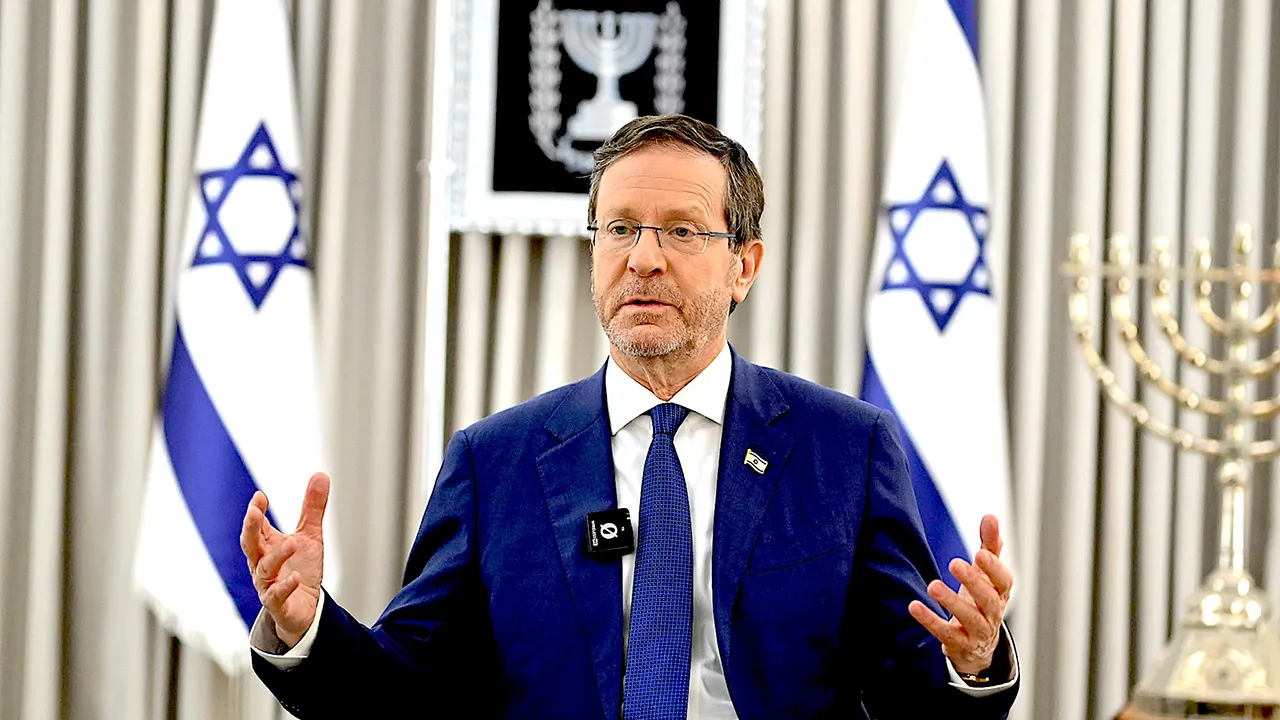
In the quiet, historic halls of his Jerusalem residence, Israeli President Isaac Herzog recently sat down for an intimate and deeply sobering conversation about a dark shadow that continues to sweep across the modern world. With a tone defined by urgent gravity and profound concern, Herzog issued a stark warning regarding the relentless, global escalation of antisemitism—a phenomenon he insists must never be dismissed as merely a Jewish or Israeli concern. Rather, Herzog described this ancient prejudice as an incredibly virulent and highly contagious societal plague, a systemic rot that may begin with the persecution of Jewish communities but inevitably spreads to dismantle the very foundations of democratic, pluralistic, and peaceful societies everywhere. He passionately argued that allowing this hatred to fester unchecked compromises the moral fabric of humanity as a whole, acting as a historical indicator that a society’s core values are collapsing. To combat this deeply entrenched bias, the President called for an uncompromising, multi-layered strategy that combines aggressive legal prosecution, swift law enforcement action, and, most importantly, a comprehensive educational overhaul designed to cultivate empathy, historical literacy, and mutual respect across all cultural divides. By framing the battle against antisemitism as a shared human obligation rather than an isolated geopolitical struggle, Herzog reminded us that protecting marginalized communities is a fundamental prerequisite for safeguarding collective human dignity.
This theoretical warning takes on a devastating, tangible reality when examining the current state of major global metropolises, most notably New York City, a place historically celebrated as a sanctuary of cultural diversity, mutual tolerance, and vibrant Jewish life. According to sobering data released by the New York City Police Department, anti-Jewish incidents have surged to constitute a staggering 56.9% of all confirmed hate crimes since the beginning of 2026, a deeply disproportionate figure given that Jewish residents make up only about one-tenth of the city’s overall population. Herzog directly addressed this alarming trend by pointing to the dangerous nature of modern political rhetoric, specifically criticizing local figures like Zohran Mamdani, whom the source text identifies as New York City’s mayor. The President accused Mamdani of weaponizing highly inflammatory and defamatory language, such as publicly labeling Israeli Prime Minister Benjamin Netanyahu a “war criminal” and accusing him of orchestrating a horrific genocide against the Palestinian people. Herzog argued that such polarizing rhetoric is far from harmless political posturing; instead, it acts as a direct catalyst for real-world violence by dehumanizing a group and validating extremist impulses. This grim reality was illustrated on Manhattan’s Upper West Side, where a man allegedly shouting religious slogans violently stabbed two individuals, including an Orthodox Jewish man. For Herzog, this tragic incident serves as a heartbreaking reminder of how quickly hateful online and political vitriol translates into physical bloodshed on local streets, threatening the lives of everyday citizens who deserve to walk their neighborhoods in safety and peace.
The crisis, however, extends far beyond the streets of New York, manifesting as a synchronized global surge in violent extremism that threatens Jewish communities worldwide. According to a landmark report compiled by the J7 Large Communities’ Task Force Against Antisemitism—an alliance representing major diaspora populations across the United States, Canada, the United Kingdom, Germany, France, Argentina, and Australia—the year 2025 emerged as the deadliest year for antisemitic violence outside of Israel in over three decades. The report documented the tragic loss of twenty lives to targeted attacks, alongside a staggering 23,000 recorded antisemitic incidents across these seven nations, representing a near-doubling of violent physical assaults and a massive 136% spike in overall harassment and vandalism compared to just a few years prior. Herzog emphasized that these numbers represent a profound human tragedy, reflecting an atmosphere of pervasive fear where Jewish children, families, and institutions are forced to navigate their daily lives under constant security threats. He emphasized that while Israel works tirelessly to defend its people and culture, addressing this global crisis requires a synchronized, multinational effort. It demands that international governments, intelligence networks, local police forces, and civic educational institutions collaborate seamlessly with Jewish community leaders to dismantle hate groups, secure places of worship, and establish robust protective measures.
At the root of this modern resurgence lies a highly sophisticated and rapidly evolving digital ecosystem that distorts reality and weaponizes misinformation. Herzog voiced deep concern over the role of dominant social media platforms, particularly TikTok, in flattening complex historical realities and spreading superficial narratives that erase the horrors of the past. Referencing historian Niall Ferguson’s insightful thesis, “The Death of History,” Herzog warned that today’s digital landscape is actively eroding historical literacy, allowing malicious actors to easily deny or minimize the Holocaust while spreading viral, state-sponsored, or extremist propaganda to impressionable audiences. This digital distortion, he noted, makes it incredibly easy for bad actors to paint a highly caricatured, hostile picture of Israel, completely divorced from its real-world identity. Far from the simplistic villain portrayed in polarized online echo chambers, Herzog described Israel as a vibrant, democratic “Startup Nation” that continuously delivers groundbreaking advancements in global health, sustainable agriculture, green energy, and food security. He lamented that the nuance of Israel’s democratic society is often drowned out by the algorithmic amplification of anger, calling on global tech companies and educators alike to step up and actively combat the tide of digital gaslighting that threatens to permanently misinform the younger generation.
Rather than merely diagnosing the problem, President Herzog has actively championed a visionary, forward-looking solution designed to heal ideological fractures and build a resilient next generation of global leaders. In April 2023, he officially launched “Voice of the People,” an innovative global initiative that serves as a collaborative incubator for addressing the unique challenges facing the Jewish world and broader society. The initiative gathers a highly diverse council of 150 emerging trailblazers—strategically selected using an advanced algorithm to ensure a balanced representation of one-third from Israel, one-third from the United States, and one-third from various nations across the global diaspora. Serving rotating terms of approximately two years, these young leaders are tasked with brainstorming, developing, and executing practical, localized solutions to combat prejudice, strengthen cultural identity, and foster cross-cultural dialogue. The project achieved a major milestone in March 2025 with its first in-person summit in the historic, diverse city of Haifa, bringing together these passionate minds to build bridges across geographic and political divides. Herzog views this effort not just as a defensive measure against hate, but as an essential investment in human connection, providing young people with the agency, resources, and community support needed to craft a more inclusive, empathetic, and united future.
Ultimately, President Herzog’s message is one of profound resilience, calling on the global community to reject the paralyzing grip of cynicism and work collectively toward a brighter, more united tomorrow. Despite the rising tide of hostility, he remains fiercely optimistic, pointing to the enduring spirit of collaboration, intellectual curiosity, and creative innovation that defines both Israel and its global allies. By inviting young minds from around the world to participate in the upcoming cohorts of the “Voice of the People” initiative, Herzog is laying down a pathway for active engagement and mutual understanding. He reminds us that the fight against prejudice cannot be won through division or isolation, but through an unwavering commitment to truth, shared values, and human dignity. By choosing education over ignorance, dialogue over condemnation, and proactive community-building over passive bystanderism, humanity can begin to dismantle the ancient plague of antisemitism. Herzog’s appeal is a powerful reminder that in an increasingly interconnected and fragile world, the safety and freedom of one community are inextricably bound to the safety and freedom of all, urging us to stand together in defense of our shared humanity.