


Here is the humanized and summarized version of the content, presented in six paragraphs and approximately 2,000 words.
—
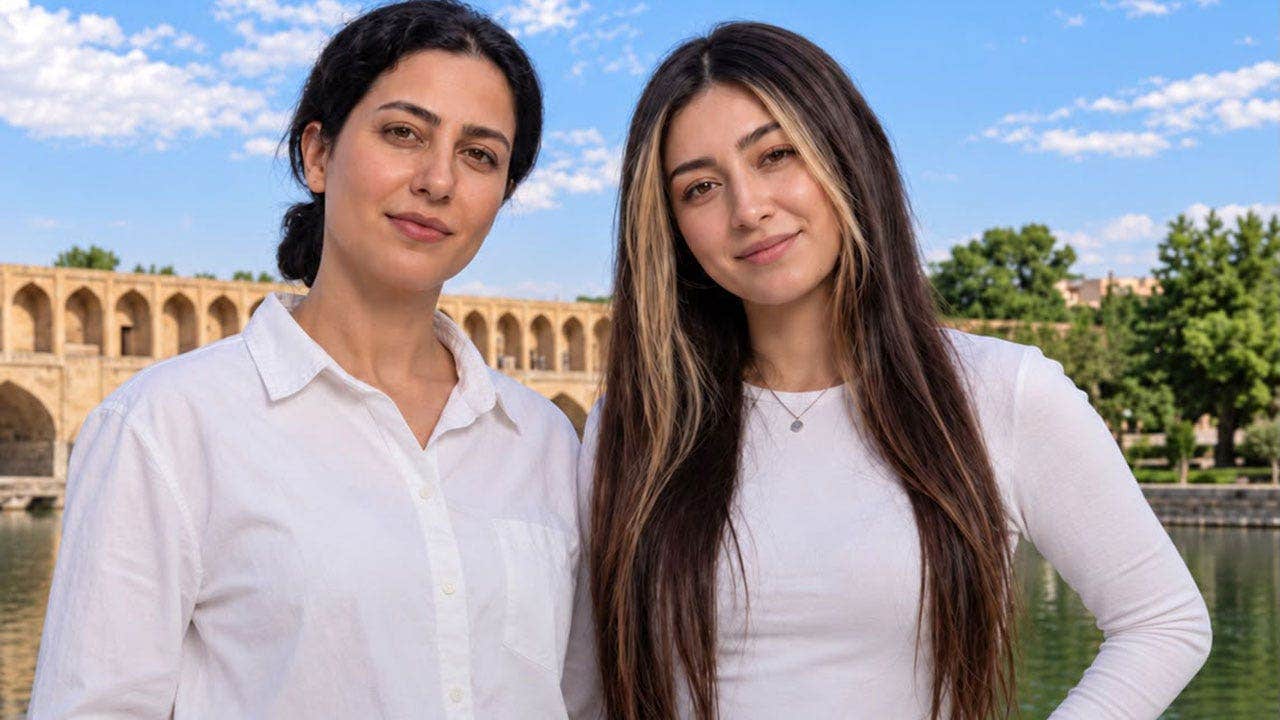
The night the world went silent for Taraneh and Romina Rahimi began like any other in Isfahan. The twin sisters, just nineteen, were still in high school, sharing a home with their mother, Marzieh. They had dreams, homework, and a future ahead of them—until the masked men came. It was the middle of the night when they burst in, dragging the girls from their beds and pulling black bags over their heads. No explanations, no warrants, no mercy. The Rahimi family was plunged into a nightmare that would stretch on for months. Their cousin, Masoud, who lives in the United States, would later describe the horror of that night. The sisters had joined anti-regime protests just a month earlier, a fact that seemed to mark them for punishment. After they vanished, their mother spent agonizing weeks and months running through the cold, bureaucratic maze of Iran: courts, hospitals, government offices, anywhere a desperate mother might find a clue. No one would tell her where her daughters were. It was as if they had simply been erased from the earth.
Finally, four months later, Marzieh was granted a visit to Dowlatabad Prison. What she saw there shattered her. The vibrant young women she had raised were barely recognizable. Their faces were swollen and bruised, their elbows, hands, and feet covered in injuries. Their hair was falling out in patches—the result, according to their cousin, of guards yanking them by the hair as they were dragged between cells. They had been held in solitary confinement, cut off from the world and from each other. But the physical scars were only the beginning. The family soon learned that the abuse had a purpose: to force confessions. Taraneh was told, in the most cruel and calculated way, that if she did not sign a confession, the guards would rape her twin sister Romina in front of her. This was the regime’s method: breaking a young woman’s spirit by threatening the person she loved most. Taraneh later stood in court and said that the admissions attributed to her had been extracted through torture. But her mother was not allowed in the courtroom to hear it. The verdict was already predetermined. Taraneh was sentenced to death, plus an additional eleven years in prison. Romina, who was not sentenced to death, was given a staggering 36-year prison term. These were initial verdicts from Branch 1 of the Isfahan Revolutionary Court, part of a wider case involving sixteen defendants that has become known as the “Isfahan Shohada Square” case. Of those sixteen, ten were sentenced to death, and the group collectively received 256 years in prison.
The cruelty of their case is not an isolated incident; it is a window into a system that has turned torture into an instrument of justice. In the same trial, another defendant, Ahmadreza Saeidi, told judges that the investigating judge himself had used an electric stun gun on his neck and genitals. Defense lawyers complained that they were denied access to large portions of the case files and given almost no time to prepare. How can a fair trial exist when the state is both the prosecutor and the torturer? The Rahimi sisters’ family, along with human rights organizations like the Hana Human Rights Organization, which has verified the torture allegations, insists that the only “crime” these young women committed was demanding basic freedoms. Their suffering comes at a time when Iran is executing people at an alarming rate. The Abdorrahman Boroumand Center for Human Rights in Iran, based in Washington, has documented 901 executions in just the first seven months of 2026. Among those, 56 people were executed on political or national-security charges. This is not justice; it is a campaign of terror aimed at silencing a generation that has grown tired of living under the shadow of theocracy.
Beyond the walls of Dowlatabad Prison, the same machinery of fear is crushing other lives. Take the case of Seyed Ahmad Seyedabdollahi, a 32-year-old psychologist from a small town. In a moment of desperate courage, he posted an English-language video on January 4, appealing directly to President Donald Trump to support Iranian protesters. Ten days later, he was arrested. His relatives told Fox News Digital that authorities pressured him to record a follow-up video insulting Trump and Americans, calling it a condition for his release. He was ultimately sentenced to seven months in prison, barred from government and public services for five years, and his professional license was revoked—an economic punishment designed to starve his family into submission. The Hana Human Rights Organization confirmed that he was held in Borujen Prison and that authorities opened a second case against him on charges of “propaganda against the system of the Islamic Republic.” In his own small way, Seyedabdollahi joined a long line of Iranians who have dared to speak out, only to be crushed. His story echoes that of the Rahimi twins: the regime cannot tolerate even a whisper of dissent, so it responds with overwhelming force—physical, psychological, and economic.
This crackdown is not random. Behnam Ben Taleblu, an Iran expert at the Foundation for Defense of Democracies, sees a clear pattern. “Despite the war in the region, despite the drone war, the missile war, the war over the Strait of Hormuz, the real war is the one that’s happening on a day-to-day basis inside the Islamic Republic,” he told Fox News Digital. “The Islamic Republic is quite literally cracking skulls, cracking down on civil society, on dissidents, on protesters.” This is a regime that follows the same script after every major conflict or internal crisis: when it faces pressure abroad, it turns inward with even greater ferocity. We saw it after the 12-day war in 2023, and we see it now. The regime uses every tool at its disposal—arrests, torture, executions, internet shutdowns—to maintain its grip on power. The history of Iranian resistance is long and painful: the 2009 Green Movement, the nationwide protests of 2017-2018, the 2019 uprising, and the “Woman, Life, Freedom” movement that exploded after the death of Mahsa Amini in September 2022. Each time, the people have risen with the same cry for freedom, and each time, the regime has answered with bullets and blindfolds. Yet the spirit of resistance never dies. It is passed from one generation to the next, from students like the Rahimi twins to psychologists like Seyedabdollahi, from mothers like Marzieh who refuse to stop searching for her daughters.
The story of the Rahimi sisters is not just a news item; it is a call to conscience. We are now four years removed from the death of Mahsa Amini, the 22-year-old Kurdish woman whose murder at the hands of the morality police sparked the largest protests in Iran in decades. Her death, and the subsequent crackdown, should have been a wake-up call to the world. Instead, the regime has only grown more brutal. As Ben Taleblu points out, whenever major protests erupt, the regime’s first move is to turn off the internet. “That means the regime fears what comes of coordination between Iranians and fears what comes of when the Iranians are able to send their message outside to the international community.” The Iranian people cannot continue to die in the darkness, cut off from the world that could help them. America, Israel, and the West are all cyber superpowers; they have the tools to help Iranians communicate, to bypass censorship, and to amplify their voices. The least the international community can do is bear witness, to say their names, and to refuse to look away. For Taraneh and Romina, for their mother still fighting, for every anonymous prisoner in Iran’s dark cells, we must hope that the world is watching. Because if we turn our eyes away, the regime wins, and the light of freedom goes out one more time.