


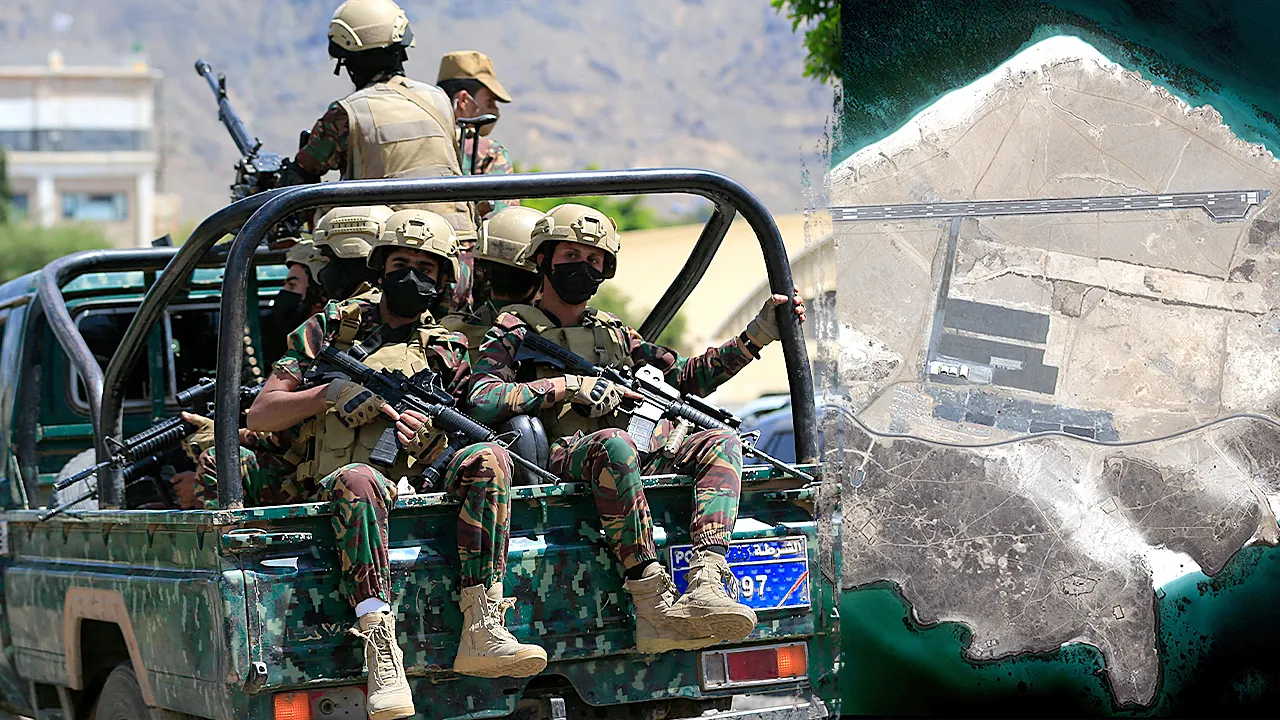
Imagine a small, craggy lump of volcanic rock sitting in one of the busiest stretches of ocean on Earth—a place where countless ships pass every day carrying oil, grain, and goods that keep the world running. That rock is Perim Island, also known as Mayun, and in mid-September it fell into the hands of Iran-backed Houthi rebels. The capture happened quietly but with enormous consequences: the Houthis took control of an island that sits squarely in the Bab el-Mandeb Strait, the narrow waterway connecting the Red Sea to the Gulf of Aden and, ultimately, to the Suez Canal. For anyone who cares about global trade, this is like watching someone take over the tollbooth on the busiest bridge in the world. A former Pentagon press secretary and retired Navy captain, Morgan Murphy, described it as gaining “the cork in the Red Sea bottle,” a vivid image that captures both the strategic prize and the fragility of the situation. The island itself is desolate—no water, no vegetation, no real reason for people to live there—but its location makes it priceless. Whoever controls Perim can watch, threaten, or even block the maritime passage that millions of barrels of oil and a vast share of global commerce rely on every single day.
The fall of Perim did not happen in a vacuum. It was the result of a brutal, month-long offensive along Yemen’s western coast, a campaign that reportedly killed more than 1,500 soldiers and left Yemen’s internationally recognized government reeling. According to the Associated Press, officials in Yemen were forced to admit a “painful” defeat, and the loss of the island came as part of a broader Houthi push backed by Iranian weaponry and tactical guidance. The human cost is staggering, not just in numbers but in the lived reality of people swept up in a conflict that has already devastated Yemen. This is not a clean, distant chess move; it is messy, bloody, and deeply destabilizing. Perim Island itself has a long and complicated history, having served as a strategic vantage point for centuries. The British Empire held it for more than a hundred years, and before that, French forces had their eyes on it. It has always been a place that empires wanted to control, precisely because it offers a commanding view of one of the world’s most important maritime arteries. But there is a strange irony here: the island is essentially uninhabitable. It has a long runway—about 6,000 feet—and a few military hangars, reportedly built by the United Arab Emirates at some point, but no fresh water and no vegetation. It is a harsh, windswept outpost, and yet the Houthis chose to mass their troops there, turning a rocky speck into a sharply contested symbol of power.
That decision, according to Murphy, might be a serious tactical mistake. While controlling Perim gives the Houthis a vantage point, it also puts them in what the Navy calls a “kill box”—an area where they are extremely vulnerable to concentrated military force. Murphy explained that the strait is only about 18 miles wide at that point, and Perim sits right in the middle, effectively splitting it in two. For centuries, holding that spot meant controlling the passage, but in the modern era, it also means being an easy target. The United States has overwhelming firepower in the region, including a major installation at Camp Lemonnier in Djibouti, just about 20 miles away on the Horn of Africa. That proximity means American forces can see the island, track what is happening there, and, if ordered, respond with devastating precision. Murphy did not mince words when describing the potential outcome: “We could wipe that rock into glass.” He noted that the Houthis know this, which is why they have been careful not to provoke a direct confrontation with American forces. They have taken a strategically valuable piece of ground, but they have also placed themselves in a position where they could be annihilated if a U.S. president ever decides to make an example of them. It is a high-stakes gamble, and the Houthis seem aware that their new prize is both a shield and a target.
The diplomatic maneuvering around this crisis has been just as dramatic as the military developments. Sources told Fox News Digital that Saudi Arabia’s Crown Prince Mohammed bin Salman called President Donald Trump twice on September 10, urging him to authorize U.S. military strikes against Houthi positions. The Saudis have long viewed the Houthis as a direct threat, and for years they have been fighting a costly and inconclusive war in Yemen. Now, with the Houthis tightening their grip on a global chokehold, Riyadh wanted Washington to step in with real force. Trump, however, declined to order direct combat involvement, at least for the time being, with U.S. officials saying the administration would continue to provide intelligence assistance but had no immediate plans for direct intervention. Then, in a separate development, Trump told reporters in Dublin on September 12 that the Houthis had reached out to signal they did not want a fight with the United States. “The Houthis called us, and they don’t want to fight with us,” he said. That statement was striking, not just because it revealed backchannel communication, but because it highlighted the strange mixture of bravado and caution that defines this moment. The Houthis are bold enough to seize Perim and escalate the conflict, but they also seem to understand that provoking the United States directly could bring destruction upon themselves.
Beyond the immediate standoff, there is the deeper question of Iran’s role and what this all means for the global economy. The Houthi advance was reportedly sustained by Iranian weapons and tactical direction from the Islamic Revolutionary Guard Corps, or IRGC, with U.S. officials estimating that hundreds of IRGC officers remain active in Yemen. Tehran’s strategy seems designed to drive up global fuel prices by threatening the shipping lanes that carry so much of the world’s energy. It is a pressure tactic, a way to use a proxy force to create chaos far beyond the borders of Yemen. Murphy drew a comparison to historical naval power struggles, noting that regional powers have always tried to “bottle up” shipping lanes, whether in the Strait of Malacca, the Strait of Hormuz, or now the Red Sea. The Houthis, he argued, are using a 19th-century playbook in a 21st-century world. They are not a sophisticated military force by global standards; they lack the advanced air power, naval capacity, and technological edge that major powers possess. But they do not necessarily need those things to cause enormous damage. A few well-placed missiles, a swarm of drones, or a disabled tanker in the Bab el-Mandeb could disrupt supply chains, spike insurance rates, and send shockwaves through the global economy. That is the asymmetrical threat that keeps naval planners awake at night.
So where does this leave us? Murphy believes that the next several days and weeks will likely bring a coordinated effort by the Trump administration to rally allies and keep critical waterways open, free, and clear for navigation. He emphasized that this crisis is a reminder of why great powers need strong navies—why Great Britain invested so heavily in its fleet, and why the United States continues to maintain a global naval presence. The Houthis may have grabbed the “cork” in the Red Sea bottle, but what they do with it remains to be seen. They have put themselves in a kill box, and they know it. They have also delivered a powerful reminder that even a tiny, uninhabitable island can become a flashpoint for global conflict. For the people of Yemen, this is another chapter in a tragic story of war and suffering. For the rest of the world, it is a warning that the arteries of global trade are more fragile than they seem, and that the decisions made in distant capitals and on remote island outposts can touch the lives of everyone—from the price of gasoline at a local pump to the shelves of grocery stores thousands of miles away. The situation is fluid, the stakes are enormous, and the only certainty is that the world will be watching the Red Sea with far more attention than before.